 Add to Chrome
 Add to Firefox
 Add to Edge
Learning to Theorize the World from Observation
May 05, 2026
What does it mean to understand the world? Contemporary world models often operationalize understanding as accurate future prediction in latent or observation space. Developmental cognitive science, however, suggests a different view: human understanding emerges through the construction of internal theories of how the world works, even before mature language is acquired. Inspired by this theory-building view of cognition, we introduce Learning-to-Theorize, a learning paradigm for inferring explicit explanatory theories of the world from raw, non-textual observations. We instantiate this paradigm with the Neural Theorizer (NEO), a probabilistic neural model that induces latent programs as a learned Language of Thought and executes them through a shared transition model. In NEO, a theory is represented as an executable, compositional program whose learned primitives can be systematically recombined to explain novel phenomena. Experiments show that this formulation enables explanation-driven generalization, allowing observations to be understood in terms of the programs that generate them.

Discrete JEPA: Learning Discrete Token Representations without Reconstruction
Jun 17, 2025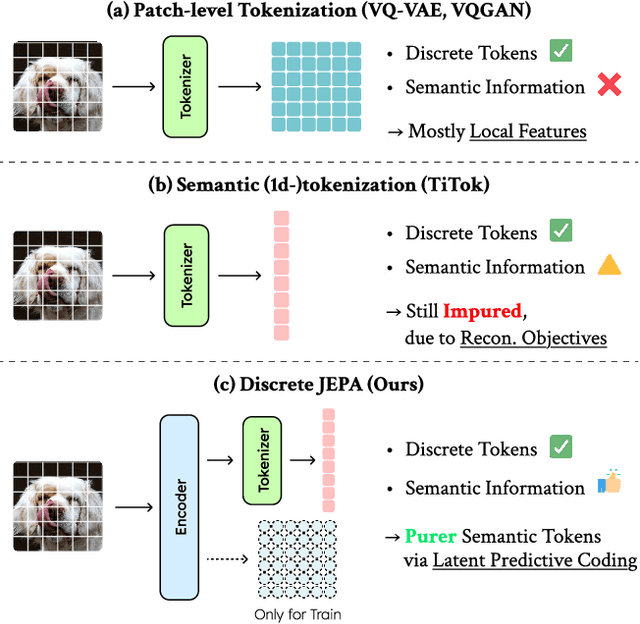
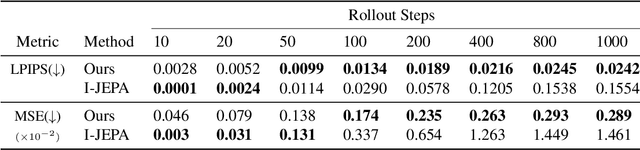
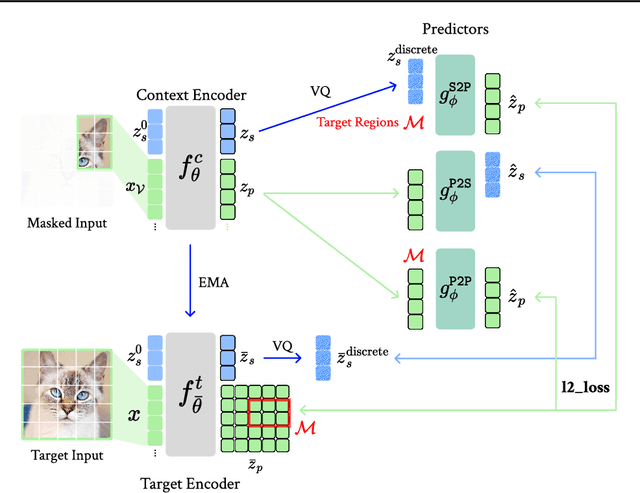
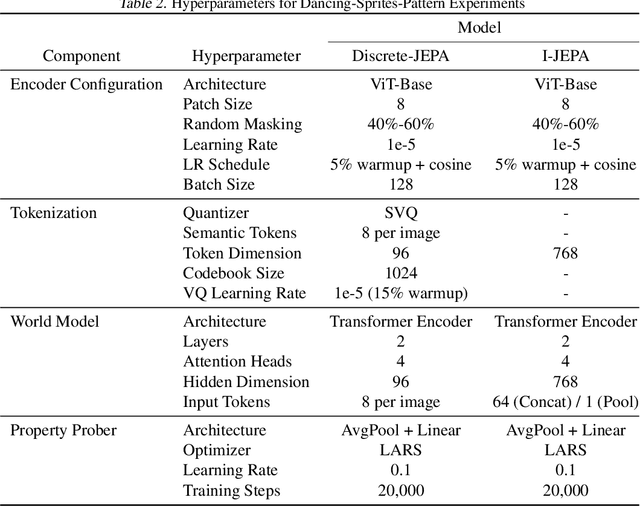
The cornerstone of cognitive intelligence lies in extracting hidden patterns from observations and leveraging these principles to systematically predict future outcomes. However, current image tokenization methods demonstrate significant limitations in tasks requiring symbolic abstraction and logical reasoning capabilities essential for systematic inference. To address this challenge, we propose Discrete-JEPA, extending the latent predictive coding framework with semantic tokenization and novel complementary objectives to create robust tokenization for symbolic reasoning tasks. Discrete-JEPA dramatically outperforms baselines on visual symbolic prediction tasks, while striking visual evidence reveals the spontaneous emergence of deliberate systematic patterns within the learned semantic token space. Though an initial model, our approach promises a significant impact for advancing Symbolic world modeling and planning capabilities in artificial intelligence systems.
Addressing and Visualizing Misalignments in Human Task-Solving Trajectories
Sep 21, 2024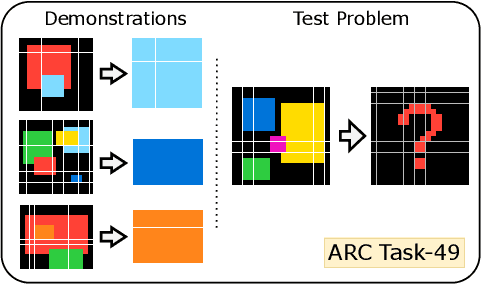
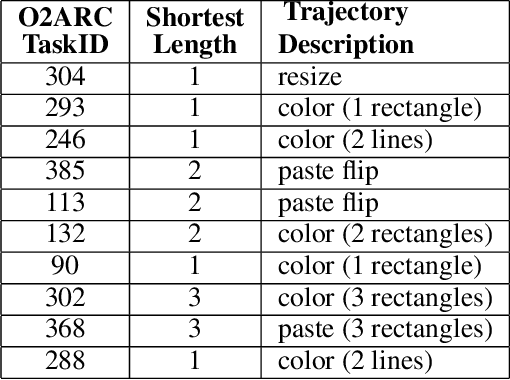
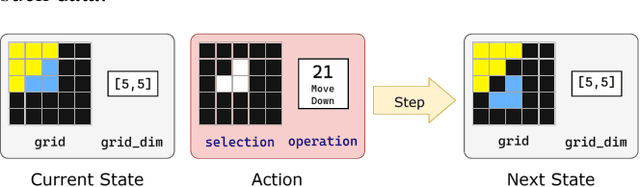
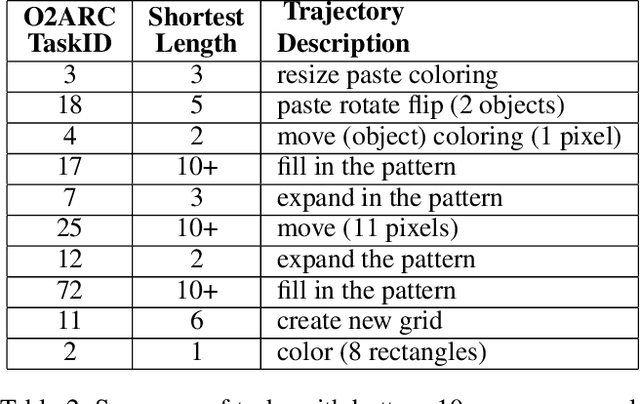
The effectiveness of AI model training hinges on the quality of the trajectory data used, particularly in aligning the model's decision with human intentions. However, in the human task-solving trajectories, we observe significant misalignments between human intentions and the recorded trajectories, which can undermine AI model training. This paper addresses the challenges of these misalignments by proposing a visualization tool and a heuristic algorithm designed to detect and categorize discrepancies in trajectory data. Although the heuristic algorithm requires a set of predefined human intentions to function, which we currently cannot extract, the visualization tool offers valuable insights into the nature of these misalignments. We expect that eliminating these misalignments could significantly improve the utility of trajectory data for AI model training. We also propose that future work should focus on developing methods, such as Topic Modeling, to accurately extract human intentions from trajectory data, thereby enhancing the alignment between user actions and AI learning processes.
ARCLE: The Abstraction and Reasoning Corpus Learning Environment for Reinforcement Learning
Jul 30, 2024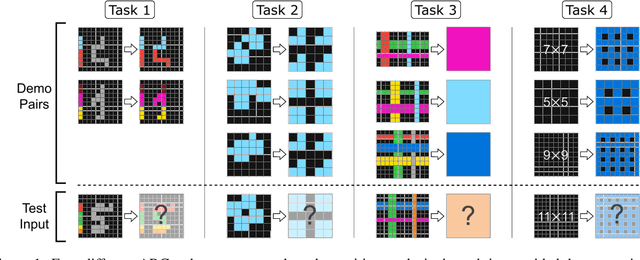
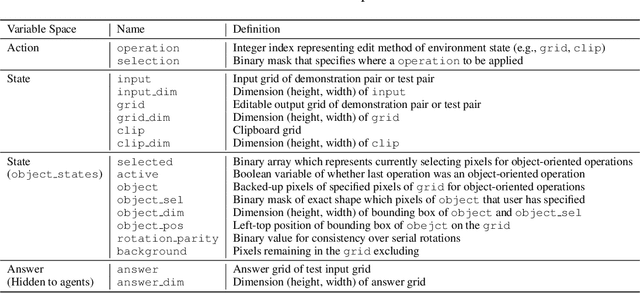
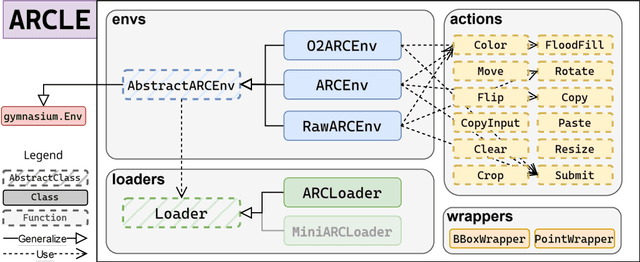

This paper introduces ARCLE, an environment designed to facilitate reinforcement learning research on the Abstraction and Reasoning Corpus (ARC). Addressing this inductive reasoning benchmark with reinforcement learning presents these challenges: a vast action space, a hard-to-reach goal, and a variety of tasks. We demonstrate that an agent with proximal policy optimization can learn individual tasks through ARCLE. The adoption of non-factorial policies and auxiliary losses led to performance enhancements, effectively mitigating issues associated with action spaces and goal attainment. Based on these insights, we propose several research directions and motivations for using ARCLE, including MAML, GFlowNets, and World Models.