 Add to Chrome
 Add to Firefox
 Add to Edge
Physics-governed executable modelling of triboelectric nanogenerators
Jun 22, 2026
Predictive modelling of triboelectric nanogenerators (TENGs) remains fragmented across analytical theories, finite-geometry solvers and disconnected simulation workflows. These disparate approaches must be unified into an executable framework to advance quantitative TENG research.Here we introduce a charge-defined modelling framework and implement it as TENG-CLAW, a physics-governed platform for traceable TENG simulation. The framework establishes a self-consistent electrostatic hierarchy in which triboelectric charges, pre-charging charges and compensating electrode charges serve as defining state variables.This hierarchy connects the infinite plate analytical limit for near-uniform fields with finite-geometry numerical formulations required for edge-dominated devices. Built on this basis, TENG-CLAW converts user-defined research requests into physically admissible simulation tasks, so that generated outputs are tied to explicit charge states, boundary conditions, solver routes and reusable artifacts across spatial, temporal, field-level, comparative and reporting workflows. This work establishes a rigorous computational basis for interpreting TENG mechanisms and provides reproducible research infrastructure for simulation and physics-guided device design.

Unsupervised Trajectory Segmentation and Promoting of Multi-Modal Surgical Demonstrations
Oct 01, 2018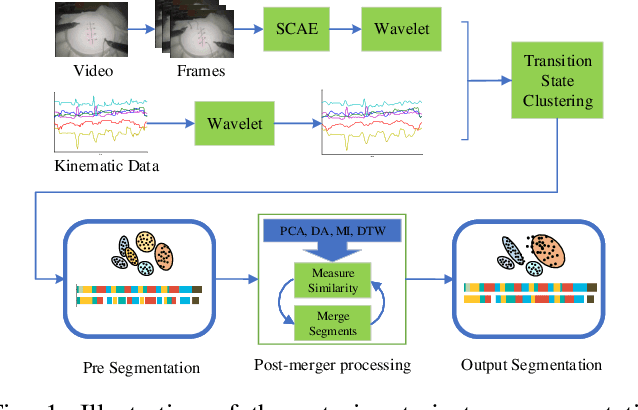
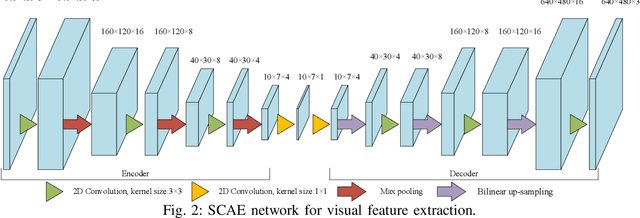
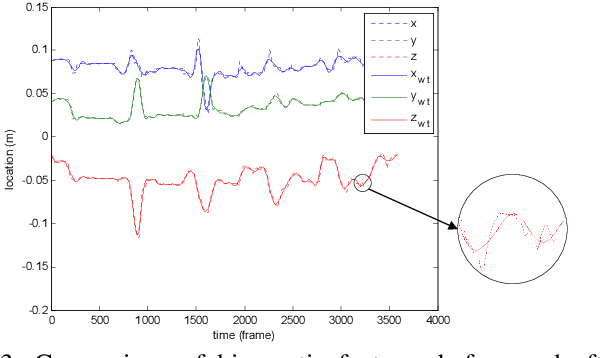
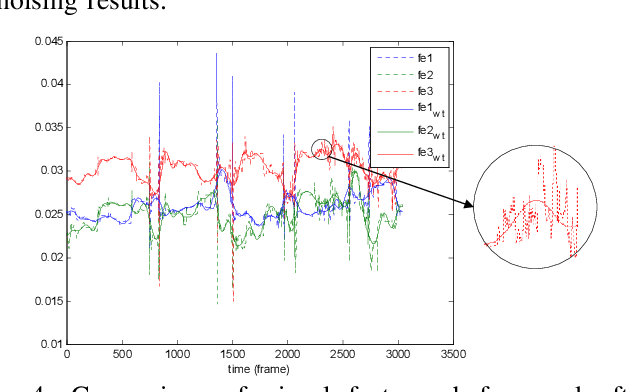
To improve the efficiency of surgical trajectory segmentation for robot learning in robot-assisted minimally invasive surgery, this paper presents a fast unsupervised method using video and kinematic data, followed by a promoting procedure to address the over-segmentation issue. Unsupervised deep learning network, stacking convolutional auto-encoder, is employed to extract more discriminative features from videos in an effective way. To further improve the accuracy of segmentation, on one hand, wavelet transform is used to filter out the noises existed in the features from video and kinematic data. On the other hand, the segmentation result is promoted by identifying the adjacent segments with no state transition based on the predefined similarity measurements. Extensive experiments on a public dataset JIGSAWS show that our method achieves much higher accuracy of segmentation than state-of-the-art methods in the shorter time.