 Add to Chrome
 Add to Firefox
 Add to Edge
RETRACE: Resilience-Guided Trait-Conditioned Craving Estimation from Wearable Physiology in Opioid Use Disorder
Aug 18, 2026
Detecting opioid craving from wearable physiological signals is critical yet difficult, with the potential to support proactive interventions for individuals with opioid use disorder (OUD). This challenge is especially pronounced under subject-independent evaluation because craving is subjective, heterogeneous, and often physiologically entangled with stress. Our empirical analysis shows that stress elicits strong and reproducible autonomic responses, while craving-related signals are weaker, sparse, and largely embedded within stress-related physiology. We further show that psychological resilience, which shapes stress regulation and craving vulnerability, is not reliably observable from short-term wearable windows, but can be captured through reusable subject-level proxies, including post-stress heart-rate recovery and autobiographical memory recall. Motivated by these findings, we introduce RETRACE, a resilience-guided trait-conditioned framework for subject-independent craving estimation from wearable physiology. RETRACE reframes craving detection as trait-conditioned physiological interpretation: rather than assuming the same physiological pattern has the same meaning across individuals, it uses resilience-related subject context to guide inference. Technically, RETRACE introduces a novel dual-encoder design that separates generalizable stress physiology from subject-specific craving interpretation. It combines a frozen stress-pretrained encoder with resilience-conditioned craving encoder, using feature-level gating and representation-level fusion to enable lightweight personalization without target-user craving labels or per-user retraining. We evaluate RETRACE on a novel multimodal OUD dataset containing wearable physiology, stress and craving annotations, and autobiographical narratives. Under LOSO setup, RETRACE achieves up to 7% absolute improvement over the strongest baseline.

Representation Is Not Enough: Body-Localized Thermal Evidence for Contactless Stress and Craving Sensing in Opioid Use Disorder
Aug 17, 2026Removing wearables from physiological monitoring also removes their supervision: the signal indicating where and when a stress response occurred. Contactless stress sensing therefore becomes a weakly supervised evidence-localization problem, where a clip-level label must be traced to the body regions and moments that produced it. We address this with FABLE-Therm, a weakly supervised architecture that preserves localized evidence across body regions, time, and encoder-specific representations until the final decision. FABLE-Therm fuses frozen foundation-model encoders at the embedding level, with theory explaining why localized fusion can outperform feature concatenation and prediction averaging. We study this problem in opioid use disorder (OUD), where stress is a major relapse trigger and sustained wearable use can be difficult during early recovery. Using fixed thermal video, FABLE-Therm achieves 0.938 AUROC on held-out participants, and its learned representation transfers to self-reported craving, providing, to our knowledge, the first evidence that craving can be recovered from contactless thermal video. Localized evidence also enables participant-level analysis of deployment failure. We find that improving representation alone is insufficient for equitable deployment: additional data from the underserved group would recover only about half of the cohort gap, while the remainder reflects person-to-person heterogeneity. This modality-agnostic decomposition applies to models with identifiable subpopulations. Together with the first cohort-structured contactless thermal OUD benchmark, our results show that preserving localized evidence supports both accurate sensing and principled analysis of who a model fails and why.
Ethical Fairness without Demographics in Human-Centered AI
Mar 17, 2026Computational models are increasingly embedded in human-centered domains such as healthcare, education, workplace analytics, and digital well-being, where their predictions directly influence individual outcomes and collective welfare. In such contexts, achieving high accuracy alone is insufficient; models must also act ethically and equitably across diverse populations. However, fair AI approaches that rely on demographic attributes are impractical, as such information is often unavailable, privacy-sensitive, or restricted by regulatory frameworks. Moreover, conventional parity-based fairness approaches, while aiming for equity, can inadvertently violate core ethical principles by trading off subgroup performance or stability. To address this challenge, we present Flare (Fisher-guided LAtent-subgroup learning with do-no-harm REgularization), the first demographic-agnostic framework that aligns algorithmic fairness with ethical principles through the geometry of optimization. Flare leverages Fisher Information to regularize curvature, uncovering latent disparities in model behavior without access to demographic or sensitive attributes. By integrating representation, loss, and curvature signals, it identifies hidden performance strata and adaptively refines them through collaborative but do-no-harm optimization, enhancing each subgroup's performance while preserving global stability and ethical balance. We also introduce BHE (Beneficence-Harm Avoidance-Equity), a novel metric suite that operationalizes ethical fairness evaluation beyond statistical parity. Extensive evaluations across diverse physiological (EDA), behavioral (IHS), and clinical (OhioT1DM) datasets show that Flare consistently enhances ethical fairness compared to state-of-the-art baselines.
CRoP: Context-wise Robust Static Human-Sensing Personalization
Sep 26, 2024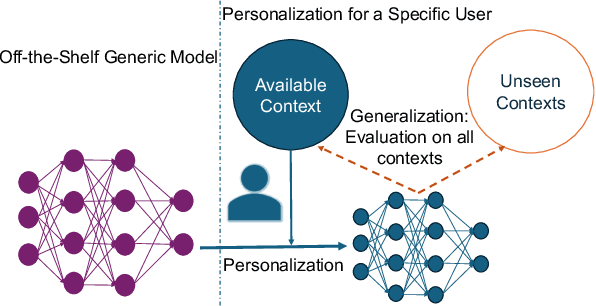
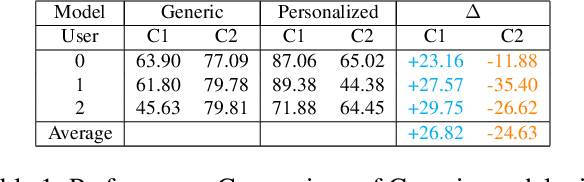
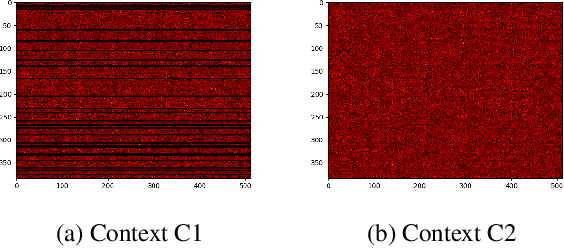

The advancement in deep learning and internet-of-things have led to diverse human sensing applications. However, distinct patterns in human sensing, influenced by various factors or contexts, challenge generic neural network model's performance due to natural distribution shifts. To address this, personalization tailors models to individual users. Yet most personalization studies overlook intra-user heterogeneity across contexts in sensory data, limiting intra-user generalizability. This limitation is especially critical in clinical applications, where limited data availability hampers both generalizability and personalization. Notably, intra-user sensing attributes are expected to change due to external factors such as treatment progression, further complicating the challenges.This work introduces CRoP, a novel static personalization approach using an off-the-shelf pre-trained model and pruning to optimize personalization and generalization. CRoP shows superior personalization effectiveness and intra-user robustness across four human-sensing datasets, including two from real-world health domains, highlighting its practical and social impact. Additionally, to support CRoP's generalization ability and design choices, we provide empirical justification through gradient inner product analysis, ablation studies, and comparisons against state-of-the-art baselines.
"Reading Between the Heat": Co-Teaching Body Thermal Signatures for Non-intrusive Stress Detection
Oct 15, 2023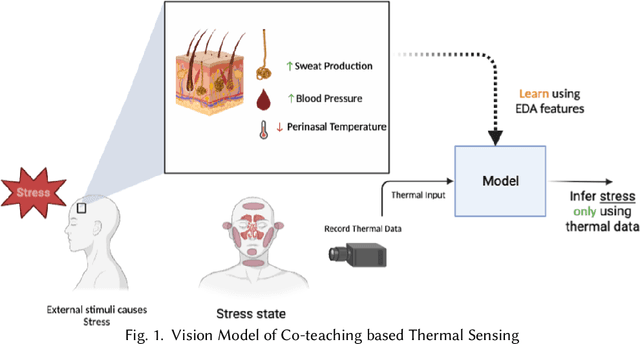
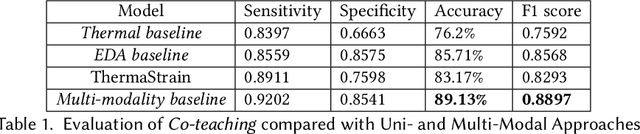
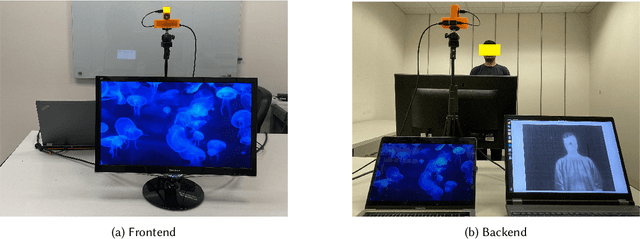
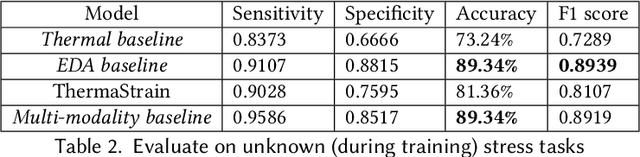
Stress impacts our physical and mental health as well as our social life. A passive and contactless indoor stress monitoring system can unlock numerous important applications such as workplace productivity assessment, smart homes, and personalized mental health monitoring. While the thermal signatures from a user's body captured by a thermal camera can provide important information about the "fight-flight" response of the sympathetic and parasympathetic nervous system, relying solely on thermal imaging for training a stress prediction model often lead to overfitting and consequently a suboptimal performance. This paper addresses this challenge by introducing ThermaStrain, a novel co-teaching framework that achieves high-stress prediction performance by transferring knowledge from the wearable modality to the contactless thermal modality. During training, ThermaStrain incorporates a wearable electrodermal activity (EDA) sensor to generate stress-indicative representations from thermal videos, emulating stress-indicative representations from a wearable EDA sensor. During testing, only thermal sensing is used, and stress-indicative patterns from thermal data and emulated EDA representations are extracted to improve stress assessment. The study collected a comprehensive dataset with thermal video and EDA data under various stress conditions and distances. ThermaStrain achieves an F1 score of 0.8293 in binary stress classification, outperforming the thermal-only baseline approach by over 9%. Extensive evaluations highlight ThermaStrain's effectiveness in recognizing stress-indicative attributes, its adaptability across distances and stress scenarios, real-time executability on edge platforms, its applicability to multi-individual sensing, ability to function on limited visibility and unfamiliar conditions, and the advantages of its co-teaching approach.
Classifying Rhoticity of /r/ in Speech Sound Disorder using Age-and-Sex Normalized Formants
May 25, 2023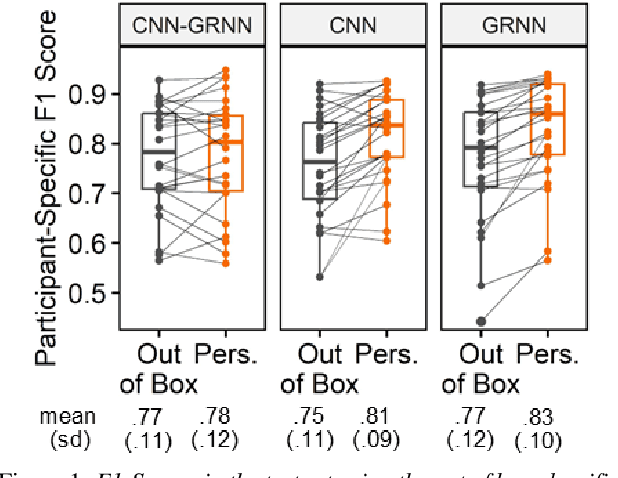
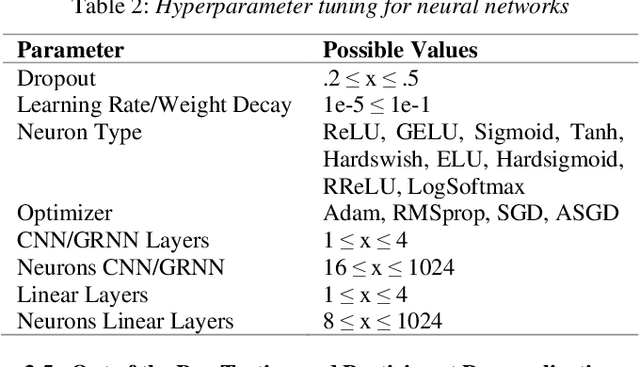
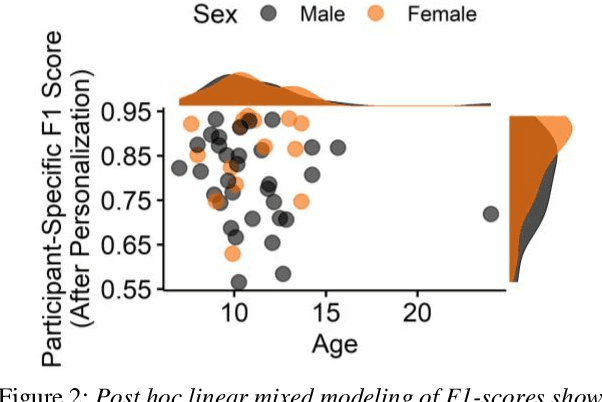
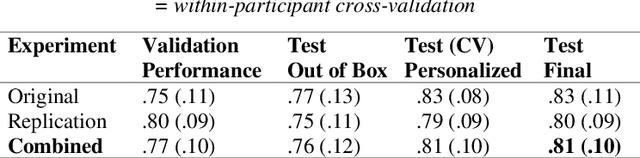
Mispronunciation detection tools could increase treatment access for speech sound disorders impacting, e.g., /r/. We show age-and-sex normalized formant estimation outperforms cepstral representation for detection of fully rhotic vs. derhotic /r/ in the PERCEPT-R Corpus. Gated recurrent neural networks trained on this feature set achieve a mean test participant-specific F1-score =.81 ({\sigma}x=.10, med = .83, n = 48), with post hoc modeling showing no significant effect of child age or sex.
Psychophysiology-aided Perceptually Fluent Speech Analysis of Children Who Stutter
Nov 16, 2022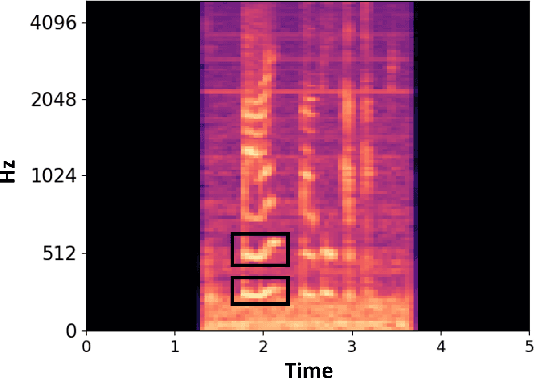
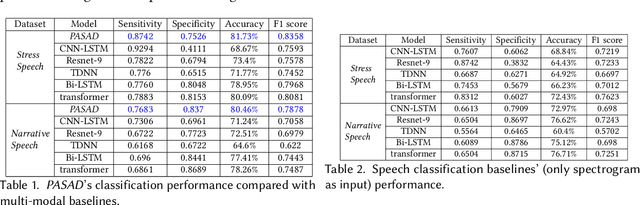
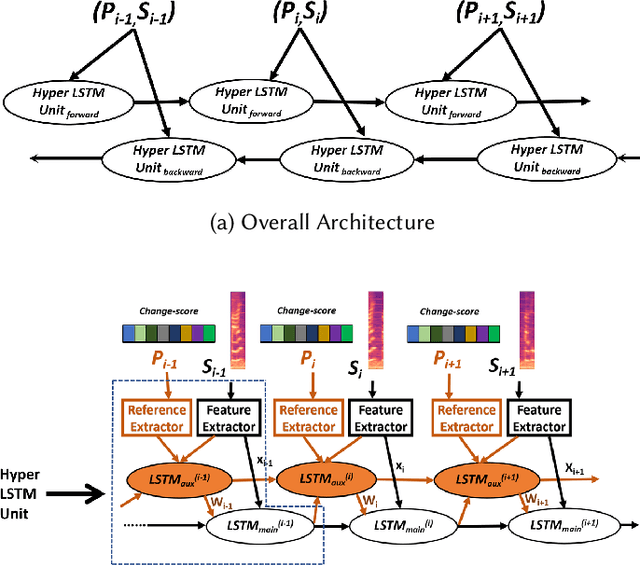
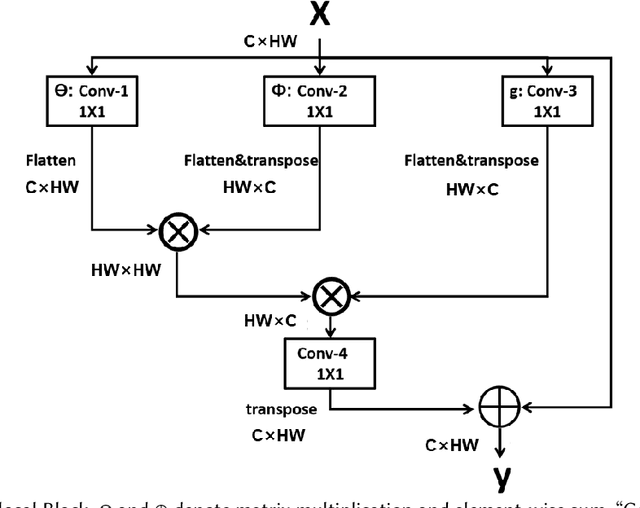
This first-of-its-kind paper presents a novel approach named PASAD that detects changes in perceptually fluent speech acoustics of young children. Particularly, analysis of perceptually fluent speech enables identifying the speech-motor-control factors that are considered as the underlying cause of stuttering disfluencies. Recent studies indicate that the speech production of young children, especially those who stutter, may get adversely affected by situational physiological arousal. A major contribution of this paper is leveraging the speaker's situational physiological responses in real-time to analyze the speech signal effectively. The presented PASAD approach adapts a Hyper-Network structure to extract temporal speech importance information leveraging physiological parameters. In addition, a novel non-local acoustic spectrogram feature extraction network identifies meaningful acoustic attributes. Finally, a sequential network utilizes the acoustic attributes and the extracted temporal speech importance for effective classification. We collected speech and physiological sensing data from 73 preschool-age children who stutter (CWS) and who don't stutter (CWNS) in different conditions. PASAD's unique architecture enables visualizing speech attributes distinct to a CWS's fluent speech and mapping them to the speaker's respective speech-motor-control factors (i.e., speech articulators). Extracted knowledge can enhance understanding of children's fluent speech, speech-motor-control (SMC), and stuttering development. Our comprehensive evaluation shows that PASAD outperforms state-of-the-art multi-modal baseline approaches in different conditions, is expressive and adaptive to the speaker's speech and physiology, generalizable, robust, and is real-time executable on mobile and scalable devices.
Towards Credit-Fraud Detection via Sparsely Varying Gaussian Approximations
Jul 14, 2020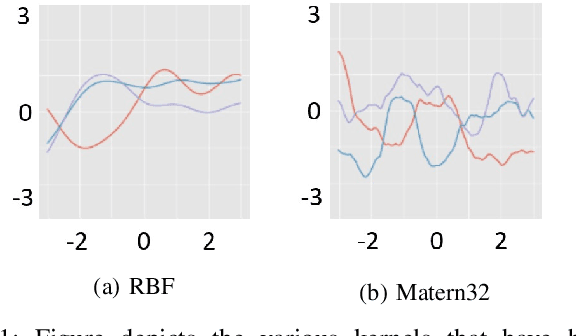
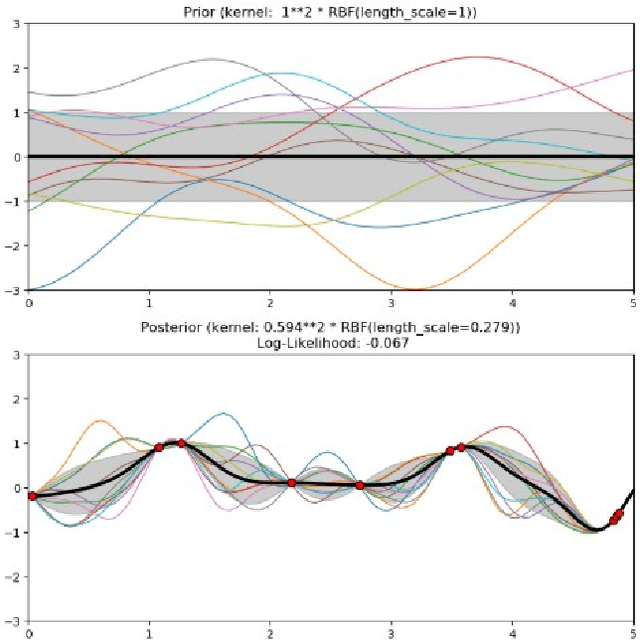

Fraudulent activities are an expensive problem for many financial institutions, costing billions of dollars to corporations annually. More commonly occurring activities in this regard are credit card frauds. In this context, the credit card fraud detection concept has been developed over the lines of incorporating the uncertainty in our prediction system to ensure better judgment in such a crucial task. We propose to use a sparse Gaussian classification method to work with the large data-set and use the concept of pseudo or inducing inputs. We perform the same with different sets of kernels and the different number of inducing data points to show the best accuracy was obtained with the selection of RBF kernel with a higher number of inducing points. Our approach was able to work over large financial data given the stochastic nature of our method employed and also good test accuracy with low variance over the prediction suggesting confidence and robustness in our model. Using the methodologies of Bayesian learning techniques with the incorporated inducing points phenomenon, are successfully able to obtain a healthy accuracy and a high confidence score.