 Add to Chrome
 Add to Firefox
 Add to Edge
ZIPP:Zero-shot Image Personalization from Personas
Jun 07, 2026
Text-to-image diffusion models are increasingly deployed in open-ended creative contexts, yet their outputs remain impersonal, optimized for aggregate aesthetics rather than individual taste. Human preferences are pluralistic: one user favoring muted, nostalgic portraits may prefer vibrant street photography, while another gravitates toward dreamy film aesthetics. Existing methods require dense interaction histories or per-user fine-tuning, failing in cold-start settings and collapsing context-dependent preferences into a static representation. We introduce zero-shot image personalization from personas (ZIPP), which conditions image generation on natural-language personas (concise descriptors of a user's identity and aesthetic sensibilities) without any user-specific data or weight updates. ZIPP uses an LLM to rewrite prompts from the perspective of a given persona, steering diffusion models toward personalized outputs. To mine personas at scale, we train an inductive Graph Attention Network over a 22M-user Reddit interaction graph with dual contrastive objectives aligning graph structure with visual behavior, then verbalize learned representations into natural-language personas via an MLLM. We introduce ZIPBench, the first zero-shot personalization benchmark with 1.5K users, graph-mined personas, and 40K generated images. Across four benchmarks and 14 LLMs spanning five model families, persona conditioning yields consistent gains (13-20%), with frontier models benefiting most. In the few-shot setting, ZIPP matches or exceeds fine-tuned baselines trained on 100+ examples per user. ZIPP achieves the lowest preference distributional divergence (CMMD 0.16 vs. 0.55), and IPF-normalized demographic evaluation shows it substantially reduces subpopulation bias present in existing methods. Human evaluation confirms a 79% win rate over generic generation and 58-65% over all fine-tuned baselines.

Accelerating Social Science Research via Agentic Hypothesization and Experimentation
Feb 08, 2026Data-driven social science research is inherently slow, relying on iterative cycles of observation, hypothesis generation, and experimental validation. While recent data-driven methods promise to accelerate parts of this process, they largely fail to support end-to-end scientific discovery. To address this gap, we introduce EXPERIGEN, an agentic framework that operationalizes end-to-end discovery through a Bayesian optimization inspired two-phase search, in which a Generator proposes candidate hypotheses and an Experimenter evaluates them empirically. Across multiple domains, EXPERIGEN consistently discovers 2-4x more statistically significant hypotheses that are 7-17 percent more predictive than prior approaches, and naturally extends to complex data regimes including multimodal and relational datasets. Beyond statistical performance, hypotheses must be novel, empirically grounded, and actionable to drive real scientific progress. To evaluate these qualities, we conduct an expert review of machine-generated hypotheses, collecting feedback from senior faculty. Among 25 reviewed hypotheses, 88 percent were rated moderately or strongly novel, 70 percent were deemed impactful and worth pursuing, and most demonstrated rigor comparable to senior graduate-level research. Finally, recognizing that ultimate validation requires real-world evidence, we conduct the first A/B test of LLM-generated hypotheses, observing statistically significant results with p less than 1e-6 and a large effect size of 344 percent.
Measuring and Improving Persuasiveness of Generative Models
Oct 03, 2024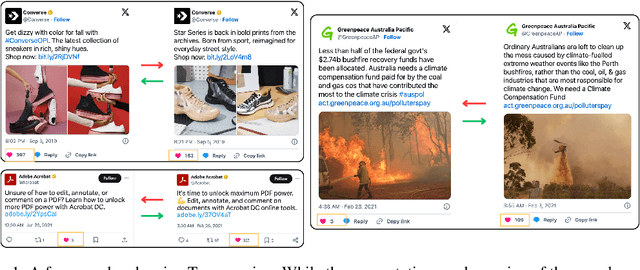
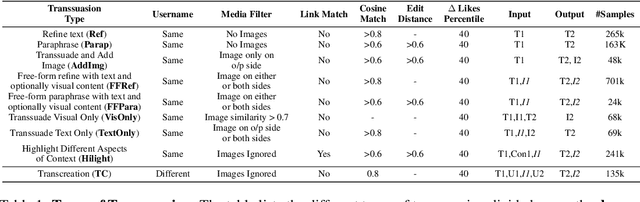
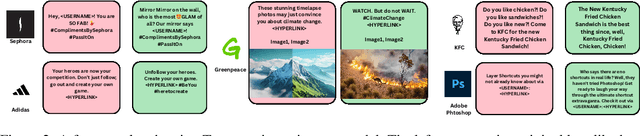
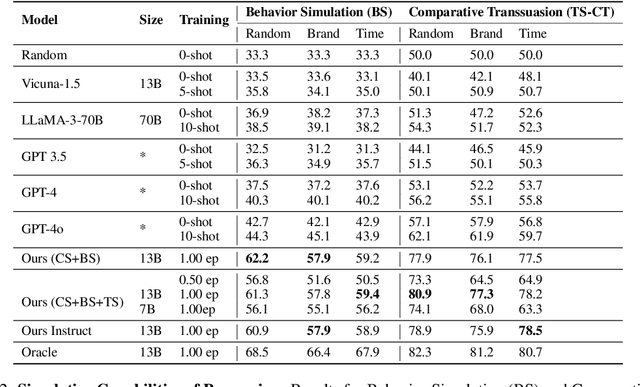
LLMs are increasingly being used in workflows involving generating content to be consumed by humans (e.g., marketing) and also in directly interacting with humans (e.g., through chatbots). The development of such systems that are capable of generating verifiably persuasive messages presents both opportunities and challenges for society. On the one hand, such systems could positively impact domains like advertising and social good, such as addressing drug addiction, and on the other, they could be misused for spreading misinformation and shaping political opinions. To channel LLMs' impact on society, we need to develop systems to measure and benchmark their persuasiveness. With this motivation, we introduce PersuasionBench and PersuasionArena, the first large-scale benchmark and arena containing a battery of tasks to measure the persuasion ability of generative models automatically. We investigate to what extent LLMs know and leverage linguistic patterns that can help them generate more persuasive language. Our findings indicate that the persuasiveness of LLMs correlates positively with model size, but smaller models can also be made to have a higher persuasiveness than much larger models. Notably, targeted training using synthetic and natural datasets significantly enhances smaller models' persuasive capabilities, challenging scale-dependent assumptions. Our findings carry key implications for both model developers and policymakers. For instance, while the EU AI Act and California's SB-1047 aim to regulate AI models based on the number of floating point operations, we demonstrate that simple metrics like this alone fail to capture the full scope of AI's societal impact. We invite the community to explore and contribute to PersuasionArena and PersuasionBench, available at https://bit.ly/measure-persuasion, to advance our understanding of AI-driven persuasion and its societal implications.