 Add to Chrome
 Add to Firefox
 Add to Edge
AgentPanel: Toward a New Paradigm for Human--AI Collaboration in Exploring Scientific Questions
Aug 04, 2026
Identifying promising scientific ideas remains an important challenge in research practice. Researchers commonly rely on small-group discussions or one-to-one interactions with a single large language model, yet these approaches often expose them to only a limited range of perspectives and directions. We present AgentPanel, a multi-agent forum for human--AI collaboration in scientific exploration. Heterogeneous agents asynchronously discuss scientific questions in a forum-style environment, while researchers can submit questions, browse and organize candidate ideas, engage agents in follow-up interactions, and optionally generate post-hoc summary reports. We evaluate AgentPanel in terms of idea quality, exploration breadth, interaction effectiveness, candidate-selection efficiency, and practical utility. Offline experiments show that AgentPanel outperforms a centralized multi-agent debate baseline. A human study with 20 participants further shows that users value AgentPanel for perspective diversity and exploration support. In experience-based comparisons with commonly used LLM tools, 65\% of participants favored AgentPanel for both breadth of research directions and overall suitability for early-stage exploration. The platform is publicly available at https://agentpanel.cc/.

Single-Agent Scaling Fails Multi-Agent Intelligence: Towards Foundation Models with Native Multi-Agent Intelligence
Dec 16, 2025Foundation models (FMs) are increasingly assuming the role of the ''brain'' of AI agents. While recent efforts have begun to equip FMs with native single-agent abilities -- such as GUI interaction or integrated tool use -- we argue that the next frontier is endowing FMs with native multi-agent intelligence. We identify four core capabilities of FMs in multi-agent contexts: understanding, planning, efficient communication, and adaptation. Contrary to assumptions about the spontaneous emergence of such abilities, we provide extensive empirical evidence, across 41 large language models and 7 challenging benchmarks, showing that scaling single-agent performance alone does not automatically yield robust multi-agent intelligence. To address this gap, we outline key research directions -- spanning dataset construction, evaluation, training paradigms, and safety considerations -- for building FMs with native multi-agent intelligence.
Learning dynamic and hierarchical traffic spatiotemporal features with Transformer
Apr 12, 2021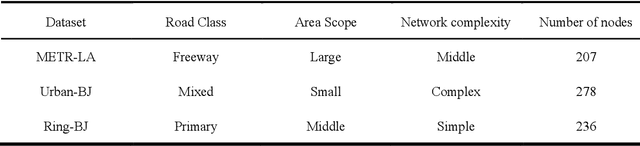
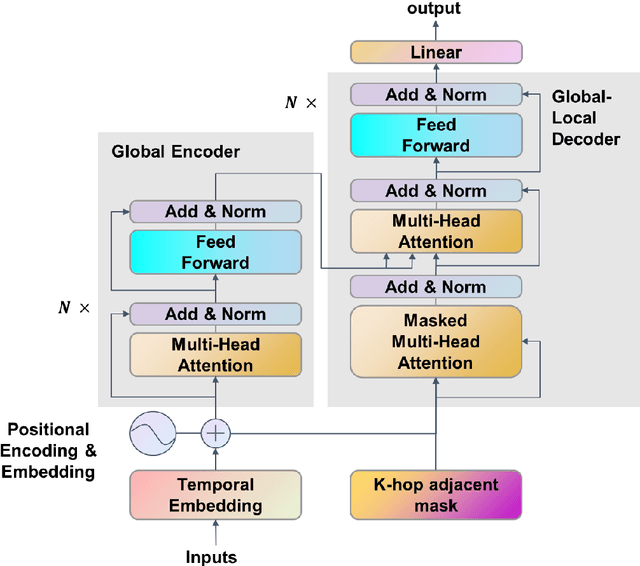
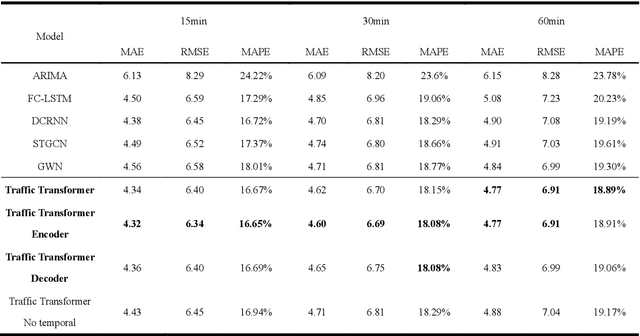
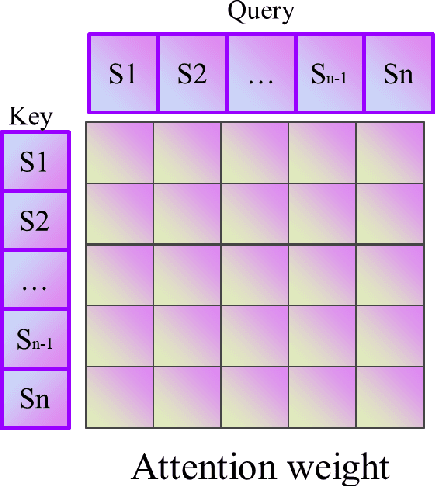
Traffic forecasting is an indispensable part of Intelligent transportation systems (ITS), and long-term network-wide accurate traffic speed forecasting is one of the most challenging tasks. Recently, deep learning methods have become popular in this domain. As traffic data are physically associated with road networks, most proposed models treat it as a spatiotemporal graph modeling problem and use Graph Convolution Network (GCN) based methods. These GCN-based models highly depend on a predefined and fixed adjacent matrix to reflect the spatial dependency. However, the predefined fixed adjacent matrix is limited in reflecting the actual dependence of traffic flow. This paper proposes a novel model, Traffic Transformer, for spatial-temporal graph modeling and long-term traffic forecasting to overcome these limitations. Transformer is the most popular framework in Natural Language Processing (NLP). And by adapting it to the spatiotemporal problem, Traffic Transformer hierarchically extracts spatiotemporal features through data dynamically by multi-head attention and masked multi-head attention mechanism, and fuse these features for traffic forecasting. Furthermore, analyzing the attention weight matrixes can find the influential part of road networks, allowing us to learn the traffic networks better. Experimental results on the public traffic network datasets and real-world traffic network datasets generated by ourselves demonstrate our proposed model achieves better performance than the state-of-the-art ones.