 Add to Chrome
 Add to Firefox
 Add to Edge
TransMem: Transforming Hidden States into Memory for Large Language Models
Jul 31, 2026
Large language model (LLM) agents increasingly operate over long interaction histories, where effective reasoning requires identifying and exploiting task-relevant evidence distributed across past observations and actions. However, useful information encoded in previously computed representations is often underutilized during subsequent generation. We propose \textbf{TransMem}, a lightweight inference-time parametric memory module that transforms sparse historical hidden states from a frozen LLM backbone into reusable memory representations. TransMem uses a lightweight gating network to dynamically apply the latent intervention to the current hidden states, without repeatedly encoding the preceding context. To learn transferable memory utilization rather than task-specific knowledge, we introduce evidence-conditioned self-distillation. A memory-augmented student processes the full context and matches the predictive distribution of an evidence-only teacher that shares the same frozen backbone. Experiments on LoCoMo, HotpotQA, and MemoryAgentBench demonstrate consistent improvements across different model architectures and scales. TransMem yields gains of 11.58--29.25 $F_1$ on LoCoMo and 10.20--13.03 $F_1$ on HotpotQA, while improving the average MemoryAgentBench accuracy from 29.54\% to 40.00\%. These results establish sparse historical hidden states as an effective and efficient memory substrate for long-context LLM agents. Our code is available at https://github.com/Haodong-Lei-Ray/TransMem.

PathRelax: Parallel-Path Relaxed Speculative Jacobi Decoding for Accelerating Auto-Regressive Text-to-Image Generation
Jun 09, 2026The growing need for high-resolution image generation in autoregressive text-to-image models has resulted in extended token sequences, significantly increasing computational costs and inference times. However, existing state-of-the-art methods for accelerating autoregressive text-to-image models rely on chain-structured draft token sequences, leading to inefficient draft token search and limited acceptance lengths. To address this, we propose parallel-path cross-relaxed speculative Jacobi decoding (\textbf{PathSpec}), a novel framework that enhances efficiency through a multi-sequence draft tree structure. Our parallel-path speculative Jacobi decoding (\textbf{PathExplore}) expands the token search space, achieving a higher speedup ratio without sacrificing image quality. Additionally, we introduce cross-path relaxed verification (\textbf{PathRelax}) that exploits semantic similarities across sequences to further boost token acceptance rates. Evaluated on the Parti-Prompts, MSCOCO2017, and T2ICompBench datasets, our method achieves a speedup ratio of 4.14 $\times$, 3.95$\times$, and 4.18$\times$, respectively. Remarkably, PathExplore, without any relaxed sampling, outperforms relaxed sampling methods in the speedup ratio, such as GSD and LANTERN. Moreover, PathRelax's relaxation mechanism can be seamlessly integrated with other relaxation techniques, enabling further acceleration and providing an efficient solution for real-time text-to-image generation. Our code is available at https://github.com/Haodong-Lei-Ray/PathSpec.
Hierarchical Memory Orchestration for Personalized Persistent Agents
Apr 02, 2026While long-term memory is essential for intelligent agents to maintain consistent historical awareness, the accumulation of extensive interaction data often leads to performance bottlenecks. Naive storage expansion increases retrieval noise and computational latency, overwhelming the reasoning capacity of models deployed on constrained personal devices. To address this, we propose Hierarchical Memory Orchestration (HMO), a framework that organizes interaction history into a three-tiered directory driven by user-centric contextual relevance. Our system maintains a compact primary cache, coupling recent and pivotal memories with an evolving user profile to ensure agent reasoning remains aligned with individual behavioral traits. This primary cache is complemented by a high-priority secondary layer, both of which are managed within a global archive of the full interaction history. Crucially, the user persona dictates memory redistribution across this hierarchy, promoting records mapped to long-term patterns toward more active tiers while relegating less relevant information. This targeted orchestration surfaces historical knowledge precisely when needed while maintaining a lean and efficient active search space. Evaluations on multiple benchmarks achieve state-of-the-art performance. Real-world deployments in ecosystems like OpenClaw demonstrate that HMO significantly enhances agent fluidity and personalization.
EasyTune: Efficient Step-Aware Fine-Tuning for Diffusion-Based Motion Generation
Feb 08, 2026In recent years, motion generative models have undergone significant advancement, yet pose challenges in aligning with downstream objectives. Recent studies have shown that using differentiable rewards to directly align the preference of diffusion models yields promising results. However, these methods suffer from (1) inefficient and coarse-grained optimization with (2) high memory consumption. In this work, we first theoretically and empirically identify the key reason of these limitations: the recursive dependence between different steps in the denoising trajectory. Inspired by this insight, we propose EasyTune, which fine-tunes diffusion at each denoising step rather than over the entire trajectory. This decouples the recursive dependence, allowing us to perform (1) a dense and fine-grained, and (2) memory-efficient optimization. Furthermore, the scarcity of preference motion pairs restricts the availability of motion reward model training. To this end, we further introduce a Self-refinement Preference Learning (SPL) mechanism that dynamically identifies preference pairs and conducts preference learning. Extensive experiments demonstrate that EasyTune outperforms DRaFT-50 by 8.2% in alignment (MM-Dist) improvement while requiring only 31.16% of its additional memory overhead and achieving a 7.3x training speedup. The project page is available at this link {https://xiaofeng-tan.github.io/projects/EasyTune/index.html}.
Fast Inference of Visual Autoregressive Model with Adjacency-Adaptive Dynamical Draft Trees
Dec 26, 2025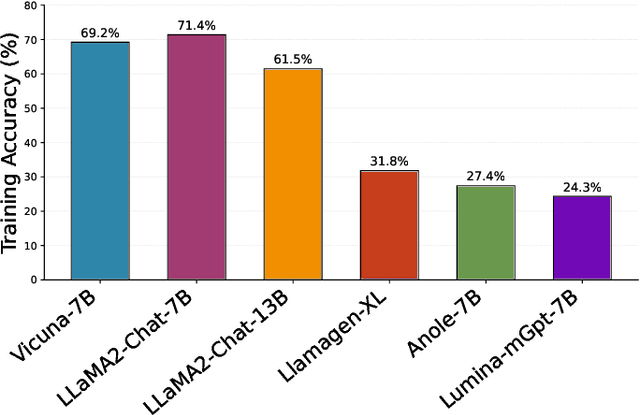
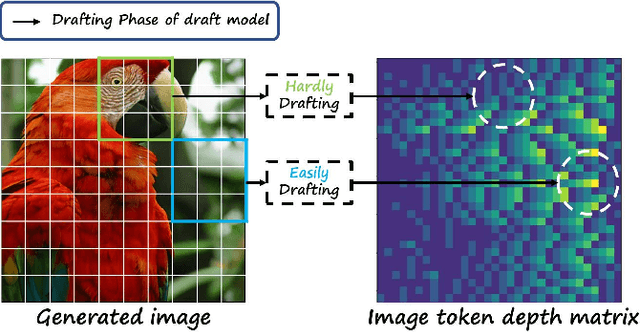
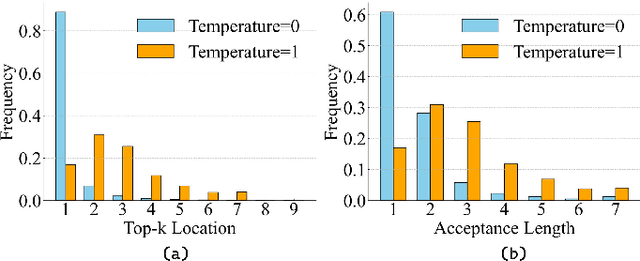
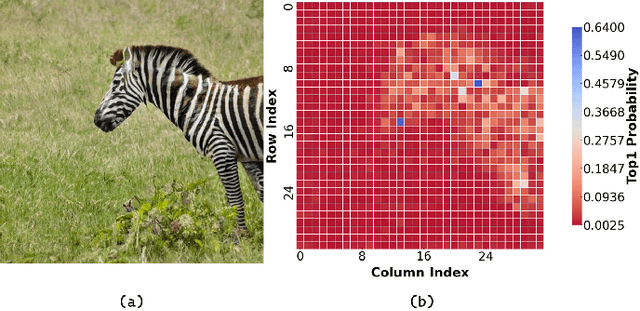
Autoregressive (AR) image models achieve diffusion-level quality but suffer from sequential inference, requiring approximately 2,000 steps for a 576x576 image. Speculative decoding with draft trees accelerates LLMs yet underperforms on visual AR models due to spatially varying token prediction difficulty. We identify a key obstacle in applying speculative decoding to visual AR models: inconsistent acceptance rates across draft trees due to varying prediction difficulties in different image regions. We propose Adjacency-Adaptive Dynamical Draft Trees (ADT-Tree), an adjacency-adaptive dynamic draft tree that dynamically adjusts draft tree depth and width by leveraging adjacent token states and prior acceptance rates. ADT-Tree initializes via horizontal adjacency, then refines depth/width via bisectional adaptation, yielding deeper trees in simple regions and wider trees in complex ones. The empirical evaluations on MS-COCO 2017 and PartiPrompts demonstrate that ADT-Tree achieves speedups of 3.13xand 3.05x, respectively. Moreover, it integrates seamlessly with relaxed sampling methods such as LANTERN, enabling further acceleration. Code is available at https://github.com/Haodong-Lei-Ray/ADT-Tree.