 Add to Chrome
 Add to Firefox
 Add to Edge
A Machine-Learning-Based Gas Lift Optimization Workflow for Unconventional Fields
Jul 28, 2026
In this paper, we present an automated data-driven workflow using Machine Learning (ML) for gas lift optimization in unconventional fields. This workflow integrates a ML model that accurately forecasts the Gas Lift Performance Curve, and a Bayesian Optimization Framework to solve for the optimal gas injection rates under the constraints of facility capacity. The ML model leverages the historical production time series data without requiring downhole gauges or multi-rate well tests. We piloted this workflow on 30 wells across 5 well pads in Bakken and obtained >5% production uplift on average. With the success of the pilot, we have now fully-deployed this workflow in Bakken across 200+ gas lift and plunger-assisted gas lift (PAGL) wells. Moreover, the ML-based gas lift optimization workflow presented in this paper is an effective and economic solution for other assets where downhole data or multi-rate testing are not available/feasible due to cost or facility constraints.
* 11 pages, 13 figures

A Picture Says Thousands of Words - Harnessing Dermal Exposure Data from Images through Hybrid Deep Learning for Enhanced Safety Assessment
Jul 28, 2026This study developed a hybrid computer vision method to quantify exposed skin from images for dermal exposure assessment. Using 170 indoor-painting images, Mask R-CNN first identified human subjects and removed background interference; a color-based algorithm then segmented exposed skin. The resulting exposed-skin-to-body pixel ratios showed approximately 80% agreement with human estimates. The approach demonstrates a scalable way to extract semi-quantitative exposure information from images, with future extensions to body-part recognition, PPE detection, and video-based exposure analysis.
* 3 pages, 2 figures
Separating Capability from Permission: A Governance Framework for Agentic AI Autonomy Levels
Jul 26, 2026As AI systems increasingly exhibit agentic behavior, discussions of autonomy often conflate what systems are technically capable of doing with what they should be permitted to do in practice. This paper introduces a governance framework that explicitly separates Allowed Autonomy Levels (AAL), which define the degree of autonomy an AI agent is authorized to exercise given risk, oversight, and accountability considerations, from Autonomous Capability Levels (ACL), which characterize an agent's inherent technical abilities. We present a structured set of autonomy levels spanning reactive execution, decision support, supervised action, goal-directed autonomy, and delegated operational authority, and describe how control, reversibility, and accountability change as autonomy increases. To operationalize this framework, we propose a risk-aware decision process for assigning allowed autonomy, analyze how risk and accountability evolve across autonomy levels, and demonstrate its application through a deployed enterprise data engineering agent, illustrating how a system assessed at a high capability level can be deliberately constrained to a lower allowed autonomy based on risk, reversibility, and organizational readiness. By distinguishing authorization from capability, this work provides practical guidance for the design, deployment, and governance of Agentic AI systems.
Assessing Machine Learning Approaches to Address IoT Sensor Drift
Sep 02, 2021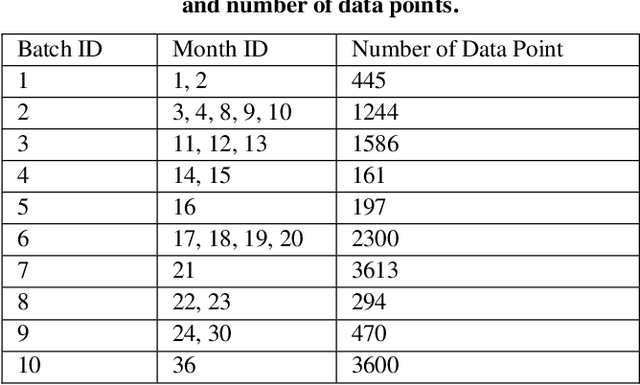
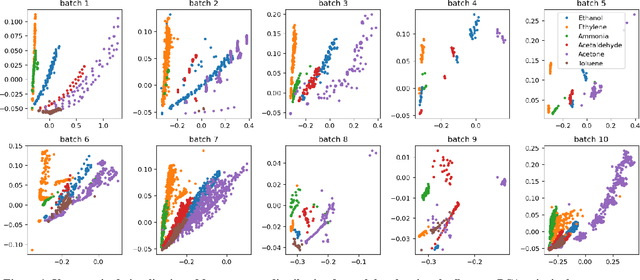
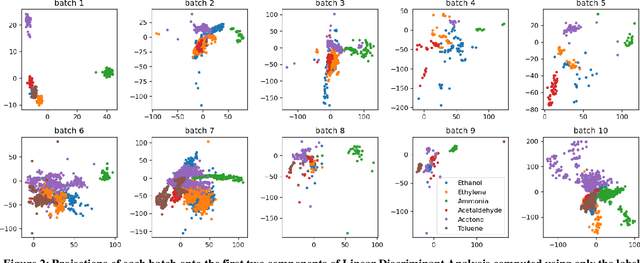
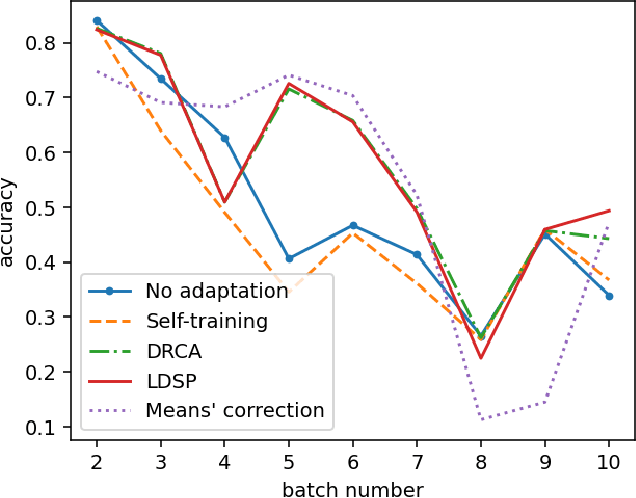
The proliferation of IoT sensors and their deployment in various industries and applications has brought about numerous analysis opportunities in this Big Data era. However, drift of those sensor measurements poses major challenges to automate data analysis and the ability to effectively train and deploy models on a continuous basis. In this paper we study and test several approaches from the literature with regard to their ability to cope with and adapt to sensor drift under realistic conditions. Most of these approaches are recent and thus are representative of the current state-of-the-art. The testing was performed on a publicly available gas sensor dataset exhibiting drift over time. The results show substantial drops in sensing performance due to sensor drift in spite of the approaches. We then discuss several issues identified with current approaches and outline directions for future research to tackle them.
Advancing from Predictive Maintenance to Intelligent Maintenance with AI and IIoT
Sep 01, 2020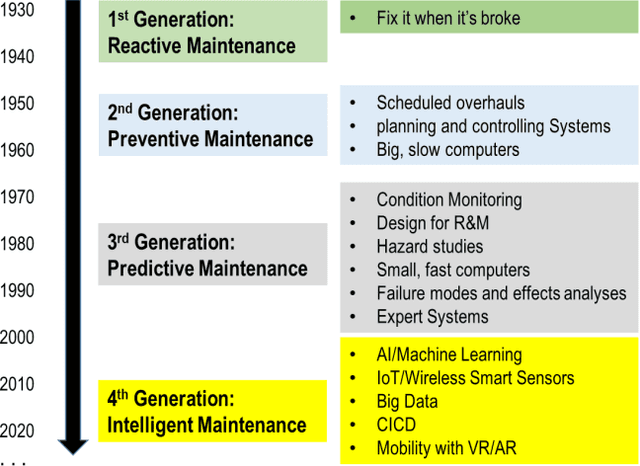
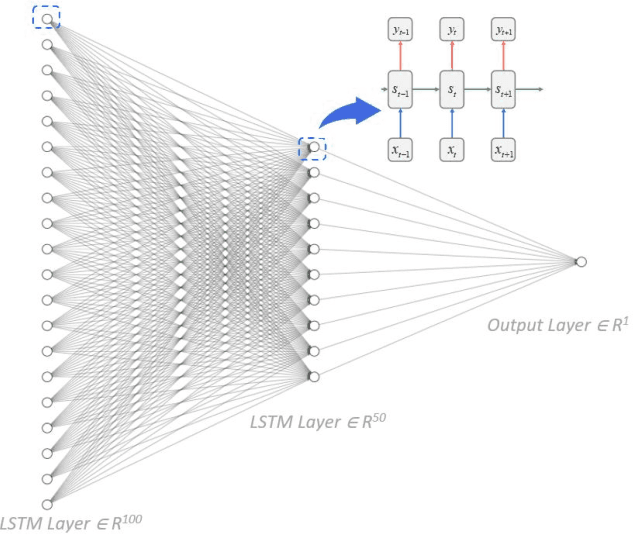
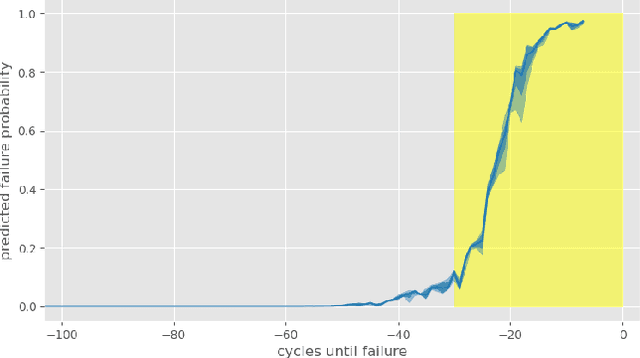
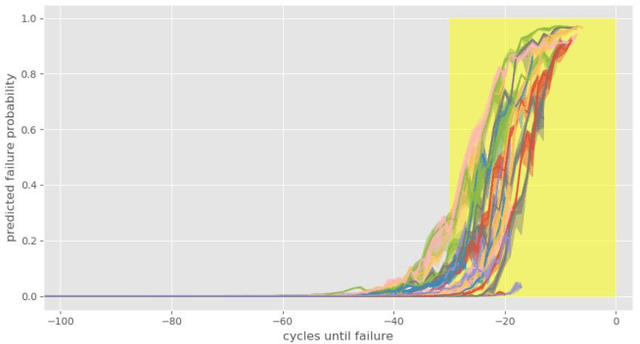
As Artificial Intelligent (AI) technology advances and increasingly large amounts of data become readily available via various Industrial Internet of Things (IIoT) projects, we evaluate the state of the art of predictive maintenance approaches and propose our innovative framework to improve the current practice. The paper first reviews the evolution of reliability modelling technology in the past 90 years and discusses major technologies developed in industry and academia. We then introduce the next generation maintenance framework - Intelligent Maintenance, and discuss its key components. This AI and IIoT based Intelligent Maintenance framework is composed of (1) latest machine learning algorithms including probabilistic reliability modelling with deep learning, (2) real-time data collection, transfer, and storage through wireless smart sensors, (3) Big Data technologies, (4) continuously integration and deployment of machine learning models, (5) mobile device and AR/VR applications for fast and better decision-making in the field. Particularly, we proposed a novel probabilistic deep learning reliability modelling approach and demonstrate it in the Turbofan Engine Degradation Dataset.
DEEVA: A Deep Learning and IoT Based Computer Vision System to Address Safety and Security of Production Sites in Energy Industry
Mar 02, 2020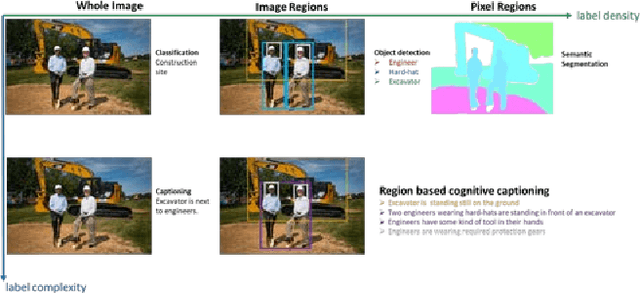
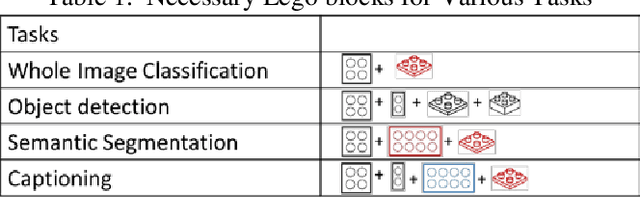
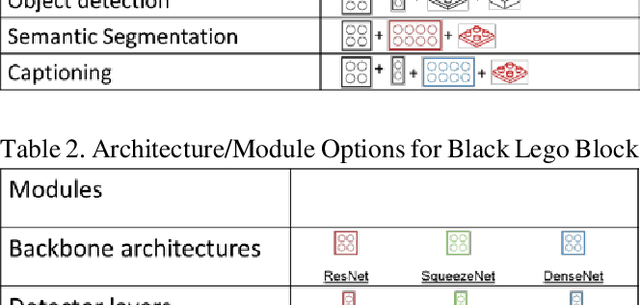
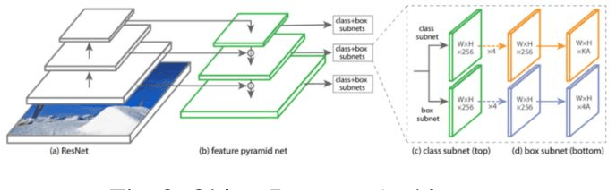
When it comes to addressing the safety/security related needs at different production/construction sites, accurate detection of the presence of workers, vehicles, equipment important and formed an integral part of computer vision-based surveillance systems (CVSS). Traditional CVSS systems focus on the use of different computer vision and pattern recognition algorithms overly reliant on manual extraction of features and small datasets, limiting their usage because of low accuracy, need for expert knowledge and high computational costs. The main objective of this paper is to provide decision makers at sites with a practical yet comprehensive deep learning and IoT based solution to tackle various computer vision related problems such as scene classification, object detection in scenes, semantic segmentation, scene captioning etc. Our overarching goal is to address the central question of What is happening at this site and where is it happening in an automated fashion minimizing the need for human resources dedicated to surveillance. We developed Deep ExxonMobil Eye for Video Analysis (DEEVA) package to handle scene classification, object detection, semantic segmentation and captioning of scenes in a hierarchical approach. The results reveal that transfer learning with the RetinaNet object detector is able to detect the presence of workers, different types of vehicles/construction equipment, safety related objects at a high level of accuracy (above 90%). With the help of deep learning to automatically extract features and IoT technology to automatic capture, transfer and process vast amount of realtime images, this framework is an important step towards the development of intelligent surveillance systems aimed at addressing myriads of open ended problems in the realm of security/safety monitoring, productivity assessments and future decision making.