 Add to Chrome
 Add to Firefox
 Add to Edge
Expressivity of Spiking Neural Networks
Aug 16, 2023
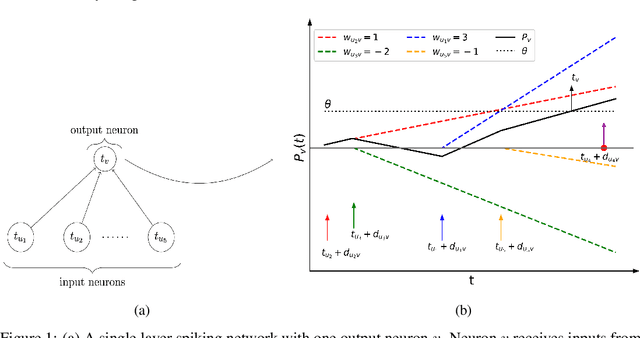
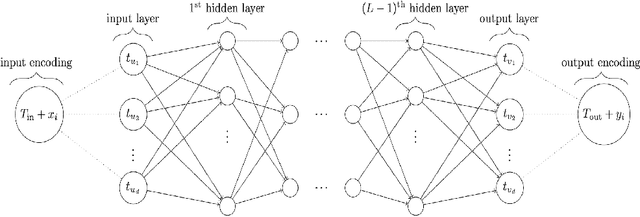
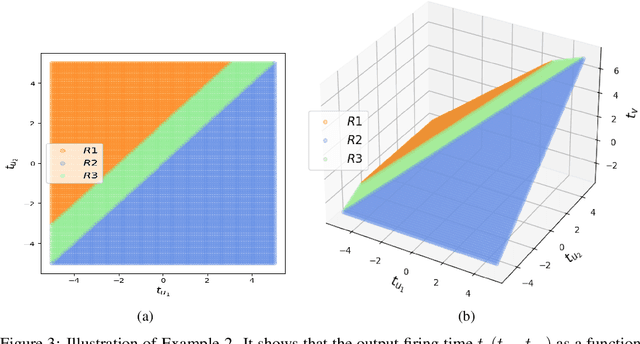
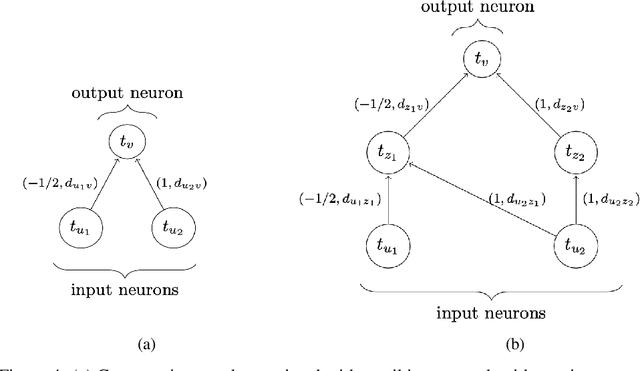
This article studies the expressive power of spiking neural networks where information is encoded in the firing time of neurons. The implementation of spiking neural networks on neuromorphic hardware presents a promising choice for future energy-efficient AI applications. However, there exist very few results that compare the computational power of spiking neurons to arbitrary threshold circuits and sigmoidal neurons. Additionally, it has also been shown that a network of spiking neurons is capable of approximating any continuous function. By using the Spike Response Model as a mathematical model of a spiking neuron and assuming a linear response function, we prove that the mapping generated by a network of spiking neurons is continuous piecewise linear. We also show that a spiking neural network can emulate the output of any multi-layer (ReLU) neural network. Furthermore, we show that the maximum number of linear regions generated by a spiking neuron scales exponentially with respect to the input dimension, a characteristic that distinguishes it significantly from an artificial (ReLU) neuron. Our results further extend the understanding of the approximation properties of spiking neural networks and open up new avenues where spiking neural networks can be deployed instead of artificial neural networks without any performance loss.

PoissonNet: Resolution-Agnostic 3D Shape Reconstruction using Fourier Neural Operators
Aug 04, 2023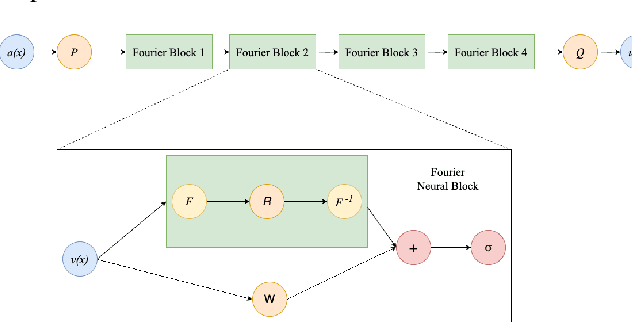
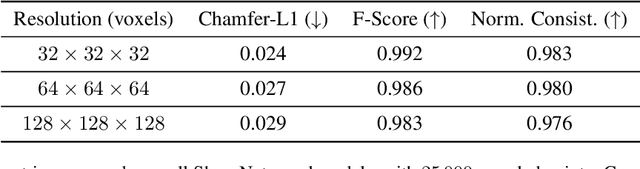
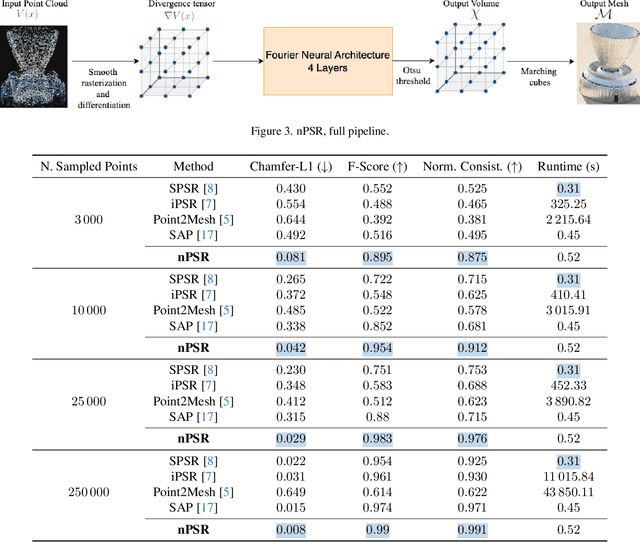
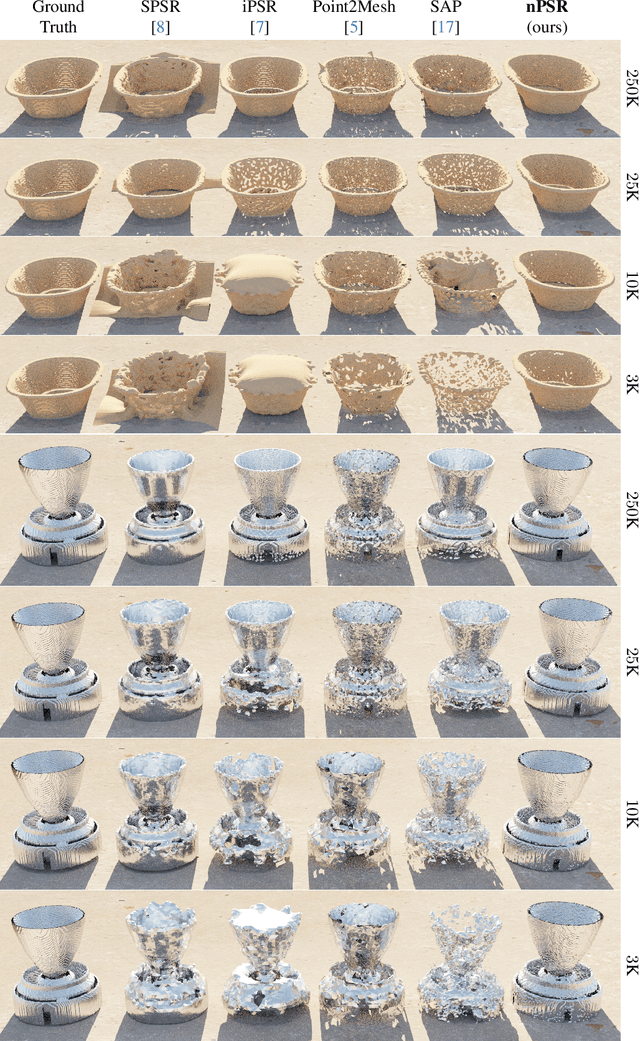
We introduce PoissonNet, an architecture for shape reconstruction that addresses the challenge of recovering 3D shapes from points. Traditional deep neural networks face challenges with common 3D shape discretization techniques due to their computational complexity at higher resolutions. To overcome this, we leverage Fourier Neural Operators (FNOs) to solve the Poisson equation and reconstruct a mesh from oriented point cloud measurements. PoissonNet exhibits two main advantages. First, it enables efficient training on low-resolution data while achieving comparable performance at high-resolution evaluation, thanks to the resolution-agnostic nature of FNOs. This feature allows for one-shot super-resolution. Second, our method surpasses existing approaches in reconstruction quality while being differentiable. Overall, our proposed method not only improves upon the limitations of classical deep neural networks in shape reconstruction but also achieves superior results in terms of reconstruction quality, running time, and resolution flexibility. Furthermore, we demonstrate that the Poisson surface reconstruction problem is well-posed in the limit case by showing a universal approximation theorem for the solution operator of the Poisson equation with distributional data utilizing the Fourier Neural Operator, which provides a theoretical foundation for our numerical results. The code to reproduce the experiments is available on: \url{https://github.com/arsenal9971/PoissonNet}.
Reliable AI: Does the Next Generation Require Quantum Computing?
Jul 06, 2023In this survey, we aim to explore the fundamental question of whether the next generation of artificial intelligence requires quantum computing. Artificial intelligence is increasingly playing a crucial role in many aspects of our daily lives and is central to the fourth industrial revolution. It is therefore imperative that artificial intelligence is reliable and trustworthy. However, there are still many issues with reliability of artificial intelligence, such as privacy, responsibility, safety, and security, in areas such as autonomous driving, healthcare, robotics, and others. These problems can have various causes, including insufficient data, biases, and robustness problems, as well as fundamental issues such as computability problems on digital hardware. The cause of these computability problems is rooted in the fact that digital hardware is based on the computing model of the Turing machine, which is inherently discrete. Notably, our findings demonstrate that digital hardware is inherently constrained in solving problems about optimization, deep learning, or differential equations. Therefore, these limitations carry substantial implications for the field of artificial intelligence, in particular for machine learning. Furthermore, although it is well known that the quantum computer shows a quantum advantage for certain classes of problems, our findings establish that some of these limitations persist when employing quantum computing models based on the quantum circuit or the quantum Turing machine paradigm. In contrast, analog computing models, such as the Blum-Shub-Smale machine, exhibit the potential to surmount these limitations.
Sumformer: Universal Approximation for Efficient Transformers
Jul 05, 2023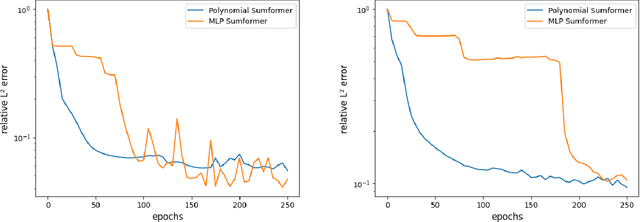

Natural language processing (NLP) made an impressive jump with the introduction of Transformers. ChatGPT is one of the most famous examples, changing the perception of the possibilities of AI even outside the research community. However, besides the impressive performance, the quadratic time and space complexity of Transformers with respect to sequence length pose significant limitations for handling long sequences. While efficient Transformer architectures like Linformer and Performer with linear complexity have emerged as promising solutions, their theoretical understanding remains limited. In this paper, we introduce Sumformer, a novel and simple architecture capable of universally approximating equivariant sequence-to-sequence functions. We use Sumformer to give the first universal approximation results for Linformer and Performer. Moreover, we derive a new proof for Transformers, showing that just one attention layer is sufficient for universal approximation.
On the Interplay of Subset Selection and Informed Graph Neural Networks
Jun 15, 2023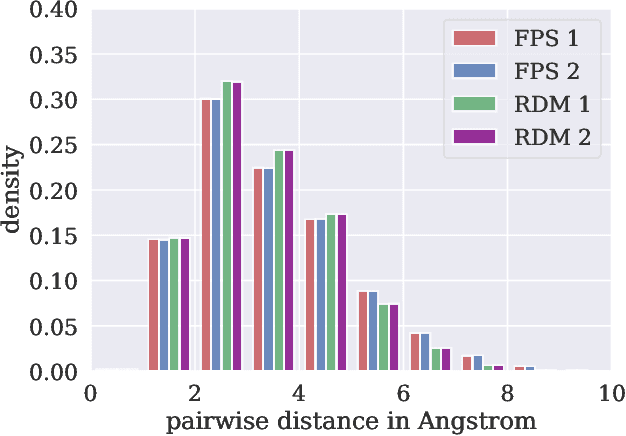
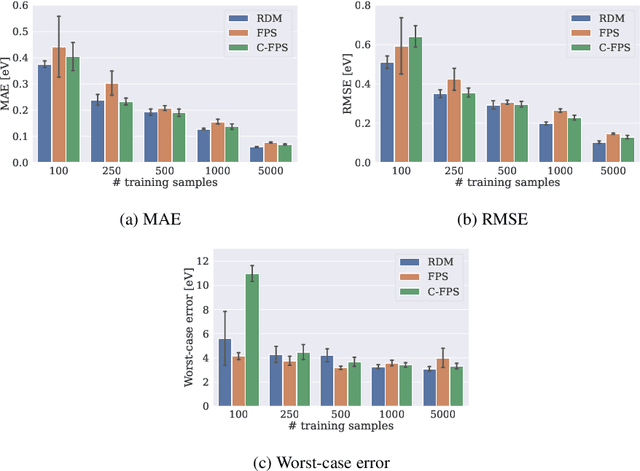


Machine learning techniques paired with the availability of massive datasets dramatically enhance our ability to explore the chemical compound space by providing fast and accurate predictions of molecular properties. However, learning on large datasets is strongly limited by the availability of computational resources and can be infeasible in some scenarios. Moreover, the instances in the datasets may not yet be labelled and generating the labels can be costly, as in the case of quantum chemistry computations. Thus, there is a need to select small training subsets from large pools of unlabelled data points and to develop reliable ML methods that can effectively learn from small training sets. This work focuses on predicting the molecules atomization energy in the QM9 dataset. We investigate the advantages of employing domain knowledge-based data sampling methods for an efficient training set selection combined with informed ML techniques. In particular, we show how maximizing molecular diversity in the training set selection process increases the robustness of linear and nonlinear regression techniques such as kernel methods and graph neural networks. We also check the reliability of the predictions made by the graph neural network with a model-agnostic explainer based on the rate distortion explanation framework.
Learning optimal controllers: a dynamical motion primitive approach
Jun 10, 2023Real-time computation of optimal control is a challenging problem and, to solve this difficulty, many frameworks proposed to use learning techniques to learn (possibly sub-optimal) controllers and enable their usage in an online fashion. Among these techniques, the optimal motion framework is a simple, yet powerful technique, that obtained success in many complex real-world applications. The main idea of this approach is to take advantage of dynamic motion primitives, a widely used tool in robotics to learn trajectories from demonstrations. While usually these demonstrations come from humans, the optimal motion framework is based on demonstrations coming from optimal solutions, such as the ones obtained by numeric solvers. As usual in many learning techniques, a drawback of this approach is that it is hard to estimate the suboptimality of learned solutions, since finding easily computable and non-trivial upper bounds to the error between an optimal solution and a learned solution is, in general, unfeasible. However, we show in this paper that it is possible to estimate this error for a broad class of problems. Furthermore, we apply this estimation technique to achieve a novel and more efficient sampling scheme to be used within the optimal motion framework, enabling the usage of this framework in some scenarios where the computational resources are limited.
Neural (Tangent Kernel) Collapse
May 25, 2023This work bridges two important concepts: the Neural Tangent Kernel (NTK), which captures the evolution of deep neural networks (DNNs) during training, and the Neural Collapse (NC) phenomenon, which refers to the emergence of symmetry and structure in the last-layer features of well-trained classification DNNs. We adopt the natural assumption that the empirical NTK develops a block structure aligned with the class labels, i.e., samples within the same class have stronger correlations than samples from different classes. Under this assumption, we derive the dynamics of DNNs trained with mean squared (MSE) loss and break them into interpretable phases. Moreover, we identify an invariant that captures the essence of the dynamics, and use it to prove the emergence of NC in DNNs with block-structured NTK. We provide large-scale numerical experiments on three common DNN architectures and three benchmark datasets to support our theory.
A Fractional Graph Laplacian Approach to Oversmoothing
May 22, 2023
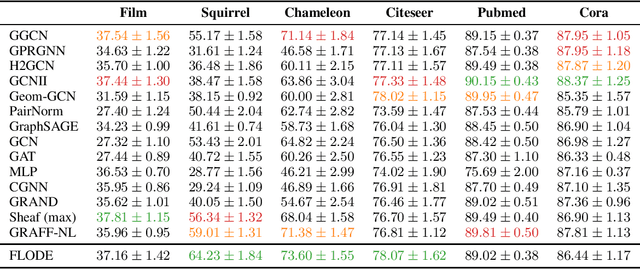

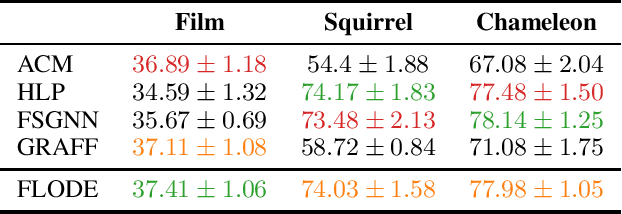
Graph neural networks (GNNs) have shown state-of-the-art performances in various applications. However, GNNs often struggle to capture long-range dependencies in graphs due to oversmoothing. In this paper, we generalize the concept of oversmoothing from undirected to directed graphs. To this aim, we extend the notion of Dirichlet energy by considering a directed symmetrically normalized Laplacian. As vanilla graph convolutional networks are prone to oversmooth, we adopt a neural graph ODE framework. Specifically, we propose fractional graph Laplacian neural ODEs, which describe non-local dynamics. We prove that our approach allows propagating information between distant nodes while maintaining a low probability of long-distance jumps. Moreover, we show that our method is more flexible with respect to the convergence of the graph's Dirichlet energy, thereby mitigating oversmoothing. We conduct extensive experiments on synthetic and real-world graphs, both directed and undirected, demonstrating our method's versatility across diverse graph homophily levels. Our code is available at https://github.com/RPaolino/fLode .
Graph Scattering beyond Wavelet Shackles
Jan 26, 2023This work develops a flexible and mathematically sound framework for the design and analysis of graph scattering networks with variable branching ratios and generic functional calculus filters. Spectrally-agnostic stability guarantees for node- and graph-level perturbations are derived; the vertex-set non-preserving case is treated by utilizing recently developed mathematical-physics based tools. Energy propagation through the network layers is investigated and related to truncation stability. New methods of graph-level feature aggregation are introduced and stability of the resulting composite scattering architectures is established. Finally, scattering transforms are extended to edge- and higher order tensorial input. Theoretical results are complemented by numerical investigations: Suitably chosen cattering networks conforming to the developed theory perform better than traditional graph-wavelet based scattering approaches in social network graph classification tasks and significantly outperform other graph-based learning approaches to regression of quantum-chemical energies on QM7.
Computability of Optimizers
Jan 15, 2023Optimization problems are a staple of today's scientific and technical landscape. However, at present, solvers of such problems are almost exclusively run on digital hardware. Using Turing machines as a mathematical model for any type of digital hardware, in this paper, we analyze fundamental limitations of this conceptual approach of solving optimization problems. Since in most applications, the optimizer itself is of significantly more interest than the optimal value of the corresponding function, we will focus on computability of the optimizer. In fact, we will show that in various situations the optimizer is unattainable on Turing machines and consequently on digital computers. Moreover, even worse, there does not exist a Turing machine, which approximates the optimizer itself up to a certain constant error. We prove such results for a variety of well-known problems from very different areas, including artificial intelligence, financial mathematics, and information theory, often deriving the even stronger result that such problems are not Banach-Mazur computable, also not even in an approximate sense.