 Add to Chrome
 Add to Firefox
 Add to Edge
The Two-Hump Problem: Bridging the Difficulty Gap in Mathematical Reinforcement Learning
Jun 19, 2026
Mathematical search problems present a unique challenge for Reinforcement Learning (RL) due to vast search spaces and sparse rewards. In previous works, the Andrews-Curtis (AC) conjecture was established as an illustrative example of such problems. In this work, we identify a critical structural barrier in the AC landscape: a "Two-Hump" distribution, where problem instances are either trivially solvable or effectively impossible, with a scarcity of intermediate "hard-but-solvable" instances required for effective learning. We tackle this challenge through two primary avenues: novel data generation techniques to populate the difficulty gap, and significant algorithmic enhancements including the introduction of supermoves and Transformer-based architectures. We demonstrate substantial performance improvements over previous baselines, and release new comprehensive benchmark datasets including AC-19 (125,192 AC-trivial presentations of varying difficulty with length at most 19) and AC-1M (1,136,154 hard AC-trivial presentations of length at most 30), the first large-scale, publicly available datasets of this kind.

Interpretable Machine Learning for Kronecker Coefficients
Feb 17, 2025We analyze the saliency of neural networks and employ interpretable machine learning models to predict whether the Kronecker coefficients of the symmetric group are zero or not. Our models use triples of partitions as input features, as well as b-loadings derived from the principal component of an embedding that captures the differences between partitions. Across all approaches, we achieve an accuracy of approximately 83% and derive explicit formulas for a decision function in terms of b-loadings. Additionally, we develop transformer-based models for prediction, achieving the highest reported accuracy of over 99%.
Learning Fricke signs from Maass form Coefficients
Jan 03, 2025
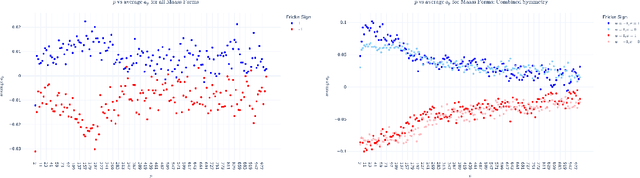

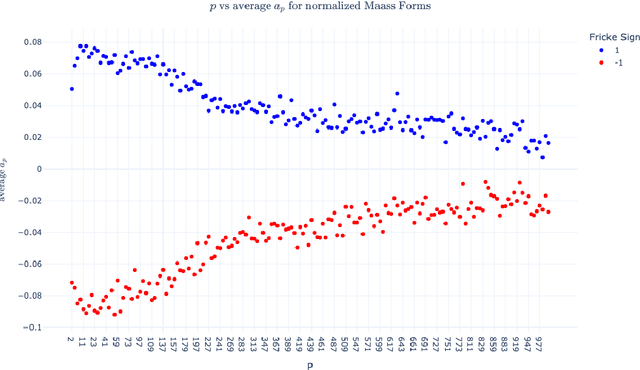
In this paper, we conduct a data-scientific investigation of Maass forms. We find that averaging the Fourier coefficients of Maass forms with the same Fricke sign reveals patterns analogous to the recently discovered "murmuration" phenomenon, and that these patterns become more pronounced when parity is incorporated as an additional feature. Approximately 43% of the forms in our dataset have an unknown Fricke sign. For the remaining forms, we employ Linear Discriminant Analysis (LDA) to machine learn their Fricke sign, achieving 96% (resp. 94%) accuracy for forms with even (resp. odd) parity. We apply the trained LDA model to forms with unknown Fricke signs to make predictions. The average values based on the predicted Fricke signs are computed and compared to those for forms with known signs to verify the reasonableness of the predictions. Additionally, a subset of these predictions is evaluated against heuristic guesses provided by Hejhal's algorithm, showing a match approximately 95% of the time. We also use neural networks to obtain results comparable to those from the LDA model.
Neural Vector Tomography for Reconstructing a Magnetization Vector Field
Dec 13, 2024Discretized techniques for vector tomographic reconstructions are prone to producing artifacts in the reconstructions. The quality of these reconstructions may further deteriorate as the amount of noise increases. In this work, we instead model the underlying vector fields using smooth neural fields. Owing to the fact that the activation functions in the neural network may be chosen to be smooth and the domain is no longer pixelated, the model results in high-quality reconstructions, even under presence of noise. In the case where we have underlying global continuous symmetry, we find that the neural network substantially improves the accuracy of the reconstruction over the existing techniques.
cymyc -- Calabi-Yau Metrics, Yukawas, and Curvature
Oct 25, 2024We introduce \texttt{cymyc}, a high-performance Python library for numerical investigation of the geometry of a large class of string compactification manifolds and their associated moduli spaces. We develop a well-defined geometric ansatz to numerically model tensor fields of arbitrary degree on a large class of Calabi-Yau manifolds. \texttt{cymyc} includes a machine learning component which incorporates this ansatz to model tensor fields of interest on these spaces by finding an approximate solution to the system of partial differential equations they should satisfy.
Machine Learned Calabi--Yau Metrics and Curvature
Nov 17, 2022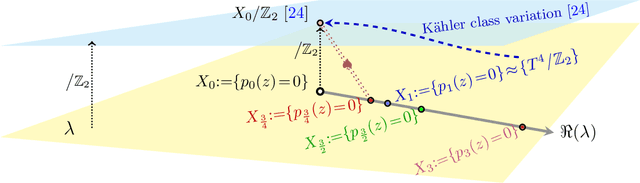
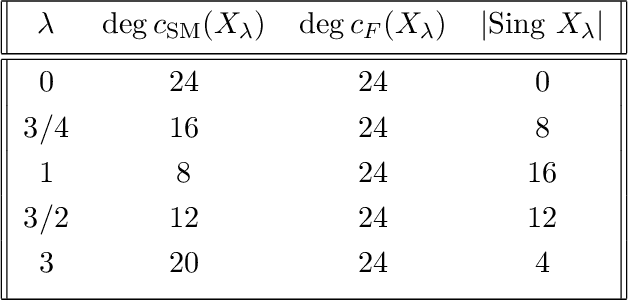
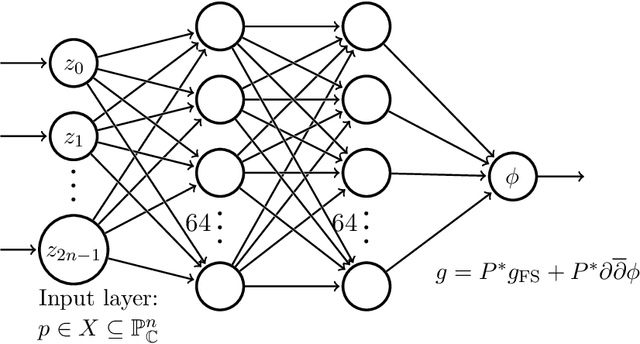
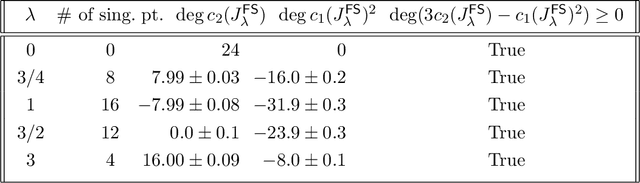
Finding Ricci-flat (Calabi--Yau) metrics is a long standing problem in geometry with deep implications for string theory and phenomenology. A new attack on this problem uses neural networks to engineer approximations to the Calabi--Yau metric within a given K\"ahler class. In this paper we investigate numerical Ricci-flat metrics over smooth and singular K3 surfaces and Calabi--Yau threefolds. Using these Ricci-flat metric approximations for the Cefal\'u and Dwork family of quartic twofolds and the Dwork family of quintic threefolds, we study characteristic forms on these geometries. Using persistent homology, we show that high curvature regions of the manifolds form clusters near the singular points, but also elsewhere. For our neural network approximations, we observe a Bogomolov--Yau type inequality $3c_2 \geq c_1^2$ and observe an identity when our geometries have isolated $A_1$ type singularities. We sketch a proof that $\chi(X~\smallsetminus~\mathrm{Sing}\,{X}) + 2~|\mathrm{Sing}\,{X}| = 24$ also holds for our numerical approximations.