 Add to Chrome
 Add to Firefox
 Add to Edge
Evaluation of Winning Solutions of 2025 Low Power Computer Vision Challenge
Apr 22, 2026
The IEEE Low-Power Computer Vision Challenge (LPCVC) aims to promote the development of efficient vision models for edge devices, balancing accuracy with constraints such as latency, memory capacity, and energy use. The 2025 challenge featured three tracks: (1) Image classification under various lighting conditions and styles, (2) Open-Vocabulary Segmentation with Text Prompt, and (3) Monocular Depth Estimation. This paper presents the design of LPCVC 2025, including its competition structure and evaluation framework, which integrates the Qualcomm AI Hub for consistent and reproducible benchmarking. The paper also introduces the top-performing solutions from each track and outlines key trends and observations. The paper concludes with suggestions for future computer vision competitions.

Impact of Architectural Modifications on Deep Learning Adversarial Robustness
May 03, 2024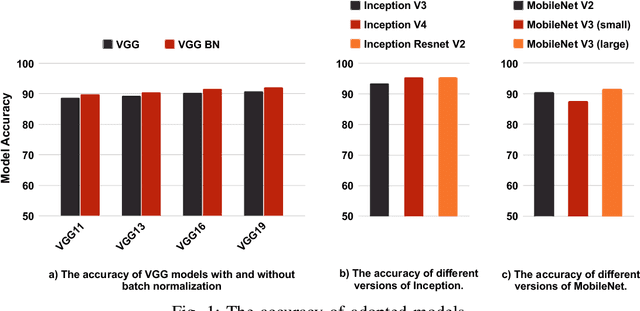
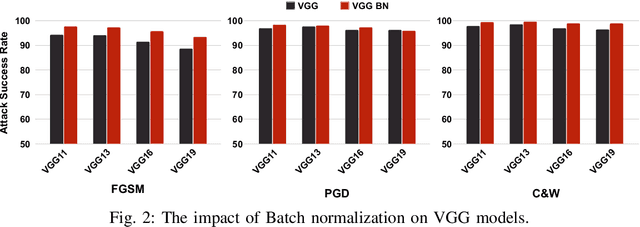

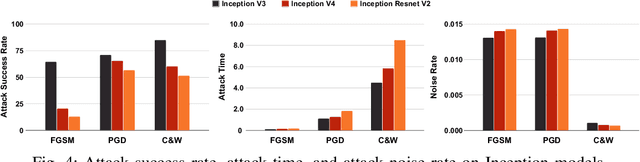
Rapid advancements of deep learning are accelerating adoption in a wide variety of applications, including safety-critical applications such as self-driving vehicles, drones, robots, and surveillance systems. These advancements include applying variations of sophisticated techniques that improve the performance of models. However, such models are not immune to adversarial manipulations, which can cause the system to misbehave and remain unnoticed by experts. The frequency of modifications to existing deep learning models necessitates thorough analysis to determine the impact on models' robustness. In this work, we present an experimental evaluation of the effects of model modifications on deep learning model robustness using adversarial attacks. Our methodology involves examining the robustness of variations of models against various adversarial attacks. By conducting our experiments, we aim to shed light on the critical issue of maintaining the reliability and safety of deep learning models in safety- and security-critical applications. Our results indicate the pressing demand for an in-depth assessment of the effects of model changes on the robustness of models.