 Add to Chrome
 Add to Firefox
 Add to Edge
Mixing-Free and Signal-Optimal Learning of Gaussian Graphical Models from Glauber Dynamics
Jul 20, 2026
Gaussian graphical model selection is usually studied under independent sampling, but in many applications the data arise as a single trajectory of a dependent stochastic process. We study exact recovery of the graph from one trajectory of random-scan Gaussian Glauber dynamics. Existing techniques for this problem either inherit the mixing time of the chain, which can be super-polynomial in the dimension $p$ without strong assumptions, or are suboptimal in the minimum normalized edge strength $κ$. We propose two algorithms that are mixing-free and attain the $κ^{-2}$ dependence of the information-theoretic lower bounds. Both instantiate a shared dueling-neighborhood search meta-algorithm with a local statistic built directly from the update sequence. The first fits a least-squares regression at the updates of each node and recovers the graph from $\widetilde O(pd^{2}/κ^{2})$ updates, where $d$ is the maximum degree. This algorithm's data requirement depends on a local conditioning quantity, but only logarithmically and is provably optimal even when the underlying chain mixes slowly. The second algorithm is based on counting occurences of a specific update pattern and requires $\widetilde O(pd^{4}/κ^{2})$ updates, with no dependence on any condition number. The central technical challenge is that both statistics are built from dependent, non-stationary observations. Our analysis tackles this by demonstrating how to extract fresh Gaussian innovations from the update sequence, which yields mixing-free control of appropriate quantities. Neither the algorithms nor their analyses invoke stationarity, a spectral gap, or mixing conditions, and all guarantees hold from an arbitrary initialization.

Stochastic Linear Bandits with Partially Observed Actions
Jul 09, 2026The stochastic linear bandit, where actions are represented as vectors and rewards are linear, is a central paradigm for sequential decision making. We study a partially observed variant of this problem in which the learning agent only sees a random subset of coordinates for each action. Such partial observability arises naturally in settings like recommendation and healthcare, where full action descriptions can be expensive or even impossible to obtain. In general, this makes sublinear regret information-theoretically impossible. However, we show that this barrier can be overcome when the action vectors have low intrinsic dimension. We propose an algorithm, TOFU-POV, that estimates the latent action subspace using the masked actions, imputes current actions using an epoch-wise frozen representation, and runs OFUL in the resulting low-dimensional coordinates. Our theory shows that TOFU-POV enjoys a $\sqrt{T}$ regret that scales with the intrinsic action subspace dimension as opposed to the ambient dimension and quantifies the interaction between these quantities and the missingness, decision set size, and subspace conditioning. We also devise a rank-adaptive algorithm that does not require the knowledge of the intrinsic dimension. We complement these guarantees with a lower bound based on a novel product construction that separates usual reward-learning uncertainty from a missingness-dependent cost intrinsic to partial observation. Synthetic and real data experiments support our theory and show that TOFU-POV can substantially improve upon natural baselines in this challenging problem.
Statistically Valid Post-Deployment Monitoring Should Be Standard for AI-Based Digital Health
Jun 06, 2025This position paper argues that post-deployment monitoring in clinical AI is underdeveloped and proposes statistically valid and label-efficient testing frameworks as a principled foundation for ensuring reliability and safety in real-world deployment. A recent review found that only 9% of FDA-registered AI-based healthcare tools include a post-deployment surveillance plan. Existing monitoring approaches are often manual, sporadic, and reactive, making them ill-suited for the dynamic environments in which clinical models operate. We contend that post-deployment monitoring should be grounded in label-efficient and statistically valid testing frameworks, offering a principled alternative to current practices. We use the term "statistically valid" to refer to methods that provide explicit guarantees on error rates (e.g., Type I/II error), enable formal inference under pre-defined assumptions, and support reproducibility--features that align with regulatory requirements. Specifically, we propose that the detection of changes in the data and model performance degradation should be framed as distinct statistical hypothesis testing problems. Grounding monitoring in statistical rigor ensures a reproducible and scientifically sound basis for maintaining the reliability of clinical AI systems. Importantly, it also opens new research directions for the technical community--spanning theory, methods, and tools for statistically principled detection, attribution, and mitigation of post-deployment model failures in real-world settings.
Advanced Tutorial: Label-Efficient Two-Sample Tests
Jan 07, 2025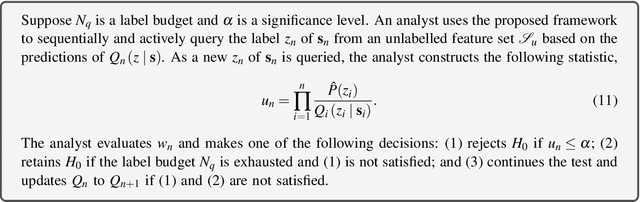
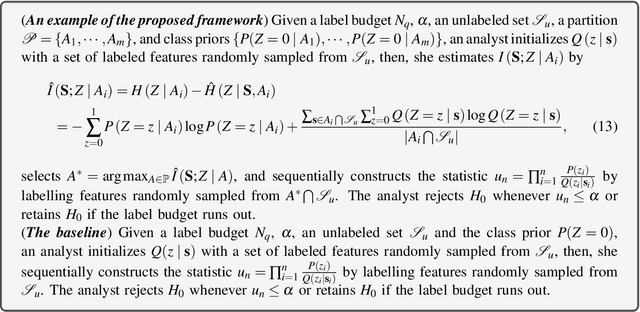
Hypothesis testing is a statistical inference approach used to determine whether data supports a specific hypothesis. An important type is the two-sample test, which evaluates whether two sets of data points are from identical distributions. This test is widely used, such as by clinical researchers comparing treatment effectiveness. This tutorial explores two-sample testing in a context where an analyst has many features from two samples, but determining the sample membership (or labels) of these features is costly. In machine learning, a similar scenario is studied in active learning. This tutorial extends active learning concepts to two-sample testing within this \textit{label-costly} setting while maintaining statistical validity and high testing power. Additionally, the tutorial discusses practical applications of these label-efficient two-sample tests.
Structure Learning in Gaussian Graphical Models from Glauber Dynamics
Dec 24, 2024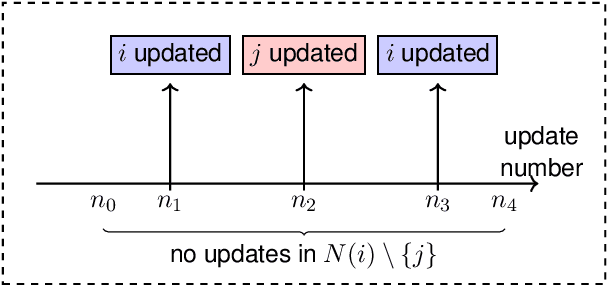
Gaussian graphical model selection is an important paradigm with numerous applications, including biological network modeling, financial network modeling, and social network analysis. Traditional approaches assume access to independent and identically distributed (i.i.d) samples, which is often impractical in real-world scenarios. In this paper, we address Gaussian graphical model selection under observations from a more realistic dependent stochastic process known as Glauber dynamics. Glauber dynamics, also called the Gibbs sampler, is a Markov chain that sequentially updates the variables of the underlying model based on the statistics of the remaining model. Such models, aside from frequently being employed to generate samples from complex multivariate distributions, naturally arise in various settings, such as opinion consensus in social networks and clearing/stock-price dynamics in financial networks. In contrast to the extensive body of existing work, we present the first algorithm for Gaussian graphical model selection when data are sampled according to the Glauber dynamics. We provide theoretical guarantees on the computational and statistical complexity of the proposed algorithm's structure learning performance. Additionally, we provide information-theoretic lower bounds on the statistical complexity and show that our algorithm is nearly minimax optimal for a broad class of problems.
Learning Networks from Wide-Sense Stationary Stochastic Processes
Dec 04, 2024Complex networked systems driven by latent inputs are common in fields like neuroscience, finance, and engineering. A key inference problem here is to learn edge connectivity from node outputs (potentials). We focus on systems governed by steady-state linear conservation laws: $X_t = {L^{\ast}}Y_{t}$, where $X_t, Y_t \in \mathbb{R}^p$ denote inputs and potentials, respectively, and the sparsity pattern of the $p \times p$ Laplacian $L^{\ast}$ encodes the edge structure. Assuming $X_t$ to be a wide-sense stationary stochastic process with a known spectral density matrix, we learn the support of $L^{\ast}$ from temporally correlated samples of $Y_t$ via an $\ell_1$-regularized Whittle's maximum likelihood estimator (MLE). The regularization is particularly useful for learning large-scale networks in the high-dimensional setting where the network size $p$ significantly exceeds the number of samples $n$. We show that the MLE problem is strictly convex, admitting a unique solution. Under a novel mutual incoherence condition and certain sufficient conditions on $(n, p, d)$, we show that the ML estimate recovers the sparsity pattern of $L^\ast$ with high probability, where $d$ is the maximum degree of the graph underlying $L^{\ast}$. We provide recovery guarantees for $L^\ast$ in element-wise maximum, Frobenius, and operator norms. Finally, we complement our theoretical results with several simulation studies on synthetic and benchmark datasets, including engineered systems (power and water networks), and real-world datasets from neural systems (such as the human brain).
Unraveling overoptimism and publication bias in ML-driven science
May 23, 2024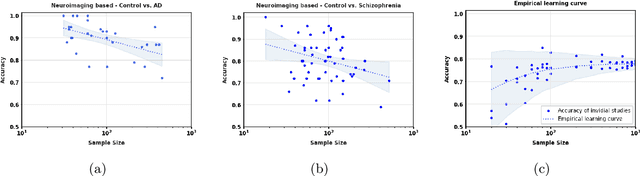

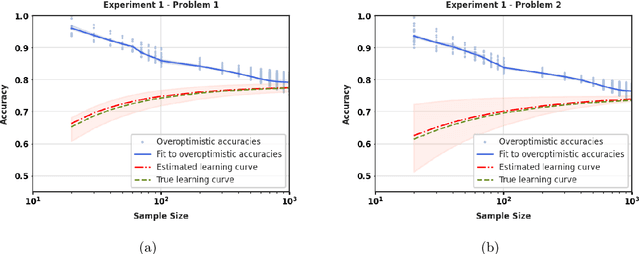

Machine Learning (ML) is increasingly used across many disciplines with impressive reported results across many domain areas. However, recent studies suggest that the published performance of ML models are often overoptimistic and not reflective of true accuracy were these models to be deployed. Validity concerns are underscored by findings of a concerning inverse relationship between sample size and reported accuracy in published ML models across several domains. This is in contrast with the theory of learning curves in ML, where we expect accuracy to improve or stay the same with increasing sample size. This paper investigates the factors contributing to overoptimistic accuracy reports in ML-based science, focusing on data leakage and publication bias. Our study introduces a novel stochastic model for observed accuracy, integrating parametric learning curves and the above biases. We then construct an estimator based on this model that corrects for these biases in observed data. Theoretical and empirical results demonstrate that this framework can estimate the underlying learning curve that gives rise to the observed overoptimistic results, thereby providing more realistic performance assessments of ML performance from a collection of published results. We apply the model to various meta-analyses in the digital health literature, including neuroimaging-based and speech-based classifications of several neurological conditions. Our results indicate prevalent overoptimism across these fields and we estimate the inherent limits of ML-based prediction in each domain.
Active Sequential Two-Sample Testing
Feb 02, 2023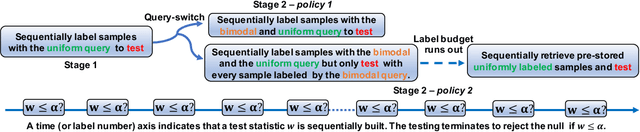
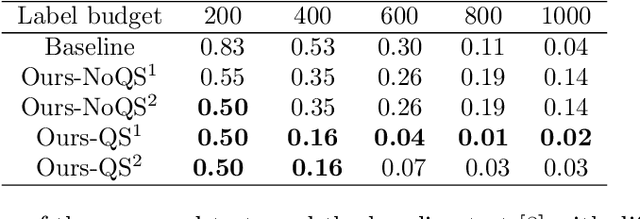
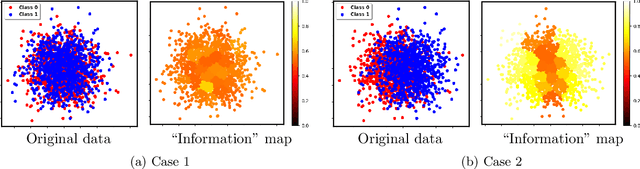
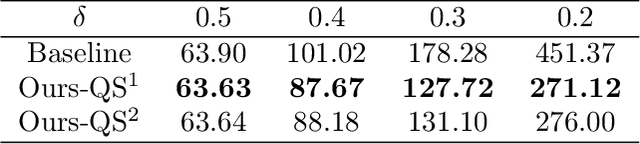
Two-sample testing tests whether the distributions generating two samples are identical. We pose the two-sample testing problem in a new scenario where the sample measurements (or sample features) are inexpensive to access, but their group memberships (or labels) are costly. We devise the first \emph{active sequential two-sample testing framework} that not only sequentially but also \emph{actively queries} sample labels to address the problem. Our test statistic is a likelihood ratio where one likelihood is found by maximization over all class priors, and the other is given by a classification model. The classification model is adaptively updated and then used to guide an active query scheme called bimodal query to label sample features in the regions with high dependency between the feature variables and the label variables. The theoretical contributions in the paper include proof that our framework produces an \emph{anytime-valid} $p$-value; and, under reachable conditions and a mild assumption, the framework asymptotically generates a minimum normalized log-likelihood ratio statistic that a passive query scheme can only achieve when the feature variable and the label variable have the highest dependence. Lastly, we provide a \emph{query-switching (QS)} algorithm to decide when to switch from passive query to active query and adapt bimodal query to increase the testing power of our test. Extensive experiments justify our theoretical contributions and the effectiveness of QS.
Robust Model Selection of Non Tree-Structured Gaussian Graphical Models
Nov 10, 2022We consider the problem of learning the structure underlying a Gaussian graphical model when the variables (or subsets thereof) are corrupted by independent noise. A recent line of work establishes that even for tree-structured graphical models, only partial structure recovery is possible and goes on to devise algorithms to identify the structure up to an (unavoidable) equivalence class of trees. We extend these results beyond trees and consider the model selection problem under noise for non tree-structured graphs, as tree graphs cannot model several real-world scenarios. Although unidentifiable, we show that, like the tree-structured graphs, the ambiguity is limited to an equivalence class. This limited ambiguity can help provide meaningful clustering information (even with noise), which is helpful in computer and social networks, protein-protein interaction networks, and power networks. Furthermore, we devise an algorithm based on a novel ancestral testing method for recovering the equivalence class. We complement these results with finite sample guarantees for the algorithm in the high-dimensional regime.
Transmission Line Parameter Estimation Under Non-Gaussian Measurement Noise
Aug 28, 2022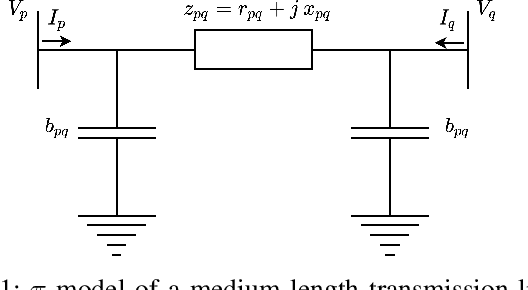
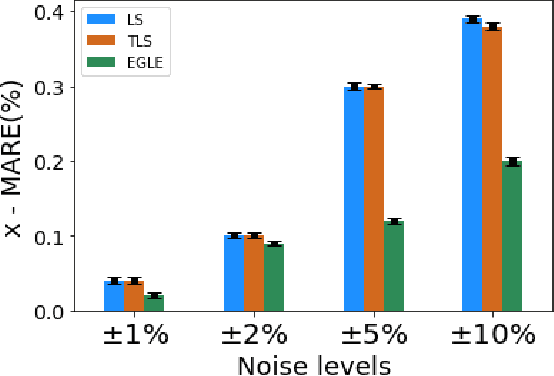
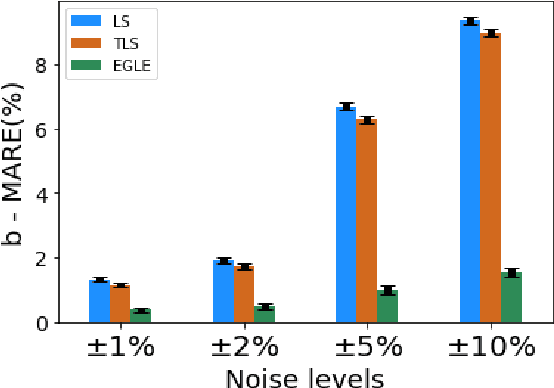
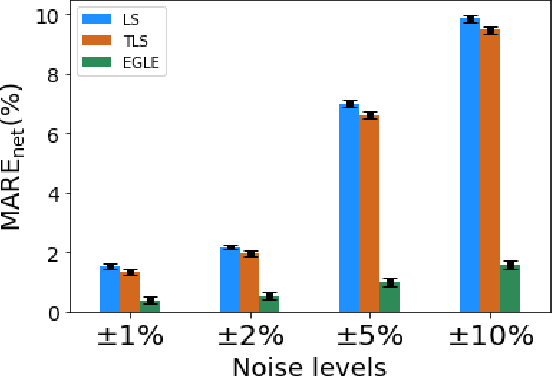
Accurate knowledge of transmission line parameters is essential for a variety of power system monitoring, protection, and control applications. The use of phasor measurement unit (PMU) data for transmission line parameter estimation (TLPE) is well-documented. However, existing literature on PMU-based TLPE implicitly assumes the measurement noise to be Gaussian. Recently, it has been shown that the noise in PMU measurements (especially in the current phasors) is better represented by Gaussian mixture models (GMMs), i.e., the noises are non-Gaussian. We present a novel approach for TLPE that can handle non-Gaussian noise in the PMU measurements. The measurement noise is expressed as a GMM, whose components are identified using the expectation-maximization (EM) algorithm. Subsequently, noise and parameter estimation is carried out by solving a maximum likelihood estimation problem iteratively until convergence. The superior performance of the proposed approach over traditional approaches such as least squares and total least squares as well as the more recently proposed minimum total error entropy approach is demonstrated by performing simulations using the IEEE 118-bus system as well as proprietary PMU data obtained from a U.S. power utility.