 Add to Chrome
 Add to Firefox
 Add to Edge
Age Matters: Analyzing Age-Related Discussions in App Reviews
Jan 29, 2026
In recent years, mobile applications have become indispensable tools for managing various aspects of life. From enhancing productivity to providing personalized entertainment, mobile apps have revolutionized people's daily routines. Despite this rapid growth and popularity, gaps remain in how these apps address the needs of users from different age groups. Users of varying ages face distinct challenges when interacting with mobile apps, from younger users dealing with inappropriate content to older users having difficulty with usability due to age-related vision and cognition impairments. Although there have been initiatives to create age-inclusive apps, a limited understanding of user perspectives on age-related issues may hinder developers from recognizing specific challenges and implementing effective solutions. In this study, we explore age discussions in app reviews to gain insights into how mobile apps should cater to users across different age groups.We manually curated a dataset of 4,163 app reviews from the Google Play Store and identified 1,429 age-related reviews and 2,734 non-age-related reviews. We employed eight machine learning, deep learning, and large language models to automatically detect age discussions, with RoBERTa performing the best, achieving a precision of 92.46%. Additionally, a qualitative analysis of the 1,429 age-related reviews uncovers six dominant themes reflecting user concerns.

Speak2Label: Using Domain Knowledge for Creating a Large Scale Driver Gaze Zone Estimation Dataset
May 13, 2020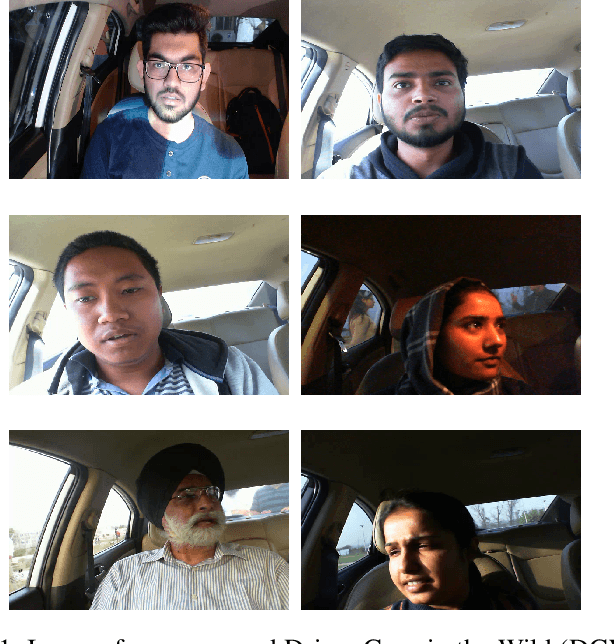
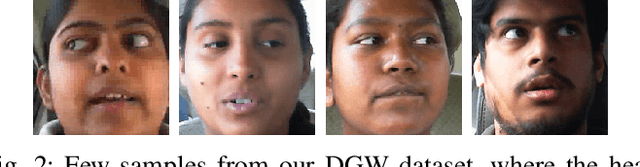
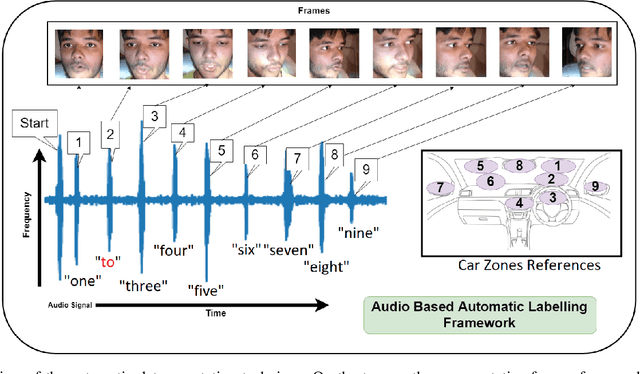
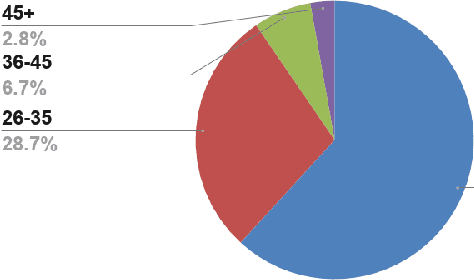
Labelling of human behavior analysis data is a complex and time consuming task. In this paper, a fully automatic technique for labelling an image based gaze behavior dataset for driver gaze zone estimation is proposed. Domain knowledge can be added to the data recording paradigm and later labels can be generated in an automatic manner using speech to text conversion. In order to remove the noise in STT due to different ethnicity, the speech frequency and energy are analysed. The resultant Driver Gaze in the Wild DGW dataset contains 586 recordings, captured during different times of the day including evening. The large scale dataset contains 338 subjects with an age range of 18-63 years. As the data is recorded in different lighting conditions, an illumination robust layer is proposed in the Convolutional Neural Network (CNN). The extensive experiments show the variance in the database resembling real-world conditions and the effectiveness of the proposed CNN pipeline. The proposed network is also fine-tuned for the eye gaze prediction task, which shows the discriminativeness of the representation learnt by our network on the proposed DGW dataset.