 Add to Chrome
 Add to Firefox
 Add to Edge
ArcAD: Anomaly-Rectified Calibration for Cold-Start Supervised Anomaly Detection
Jul 02, 2026
The deployment of Industrial Anomaly Detection (IAD) in real-world manufacturing frequently encounters a challenging cold-start bottleneck, in which limited normal samples fail to represent the full normal distribution and only a few anomalies are available. Under such a regime, existing methods struggle to form compact normal boundaries and fail to effectively exploit supervised signals from rare defects. To address this challenge, we propose Anomaly-Rectified Cold-start AD (ArcAD), a plug-and-play calibration framework for reconstruction-based IAD baselines. ArcAD follows a push-pull learning paradigm to construct a compact and discriminative normal boundary under data scarcity. On the one hand, ArcAD projects limited normal samples onto a hypersphere and pulls them into multiple compact clusters to maximize coverage of the normal manifold. On the other hand, it synthesizes pseudo-anomalies on the hypersphere and leverages real anomalies to push the boundary inward and sharpen anomaly discrimination. Extensive experiments on MVTec-AD, VisA, Real-IAD, and MANTA demonstrate that ArcAD significantly outperforms state-of-the-art supervised and unsupervised methods in both single-class and multi-class settings under cold-start conditions. Code is available at: https://github.com/LGC-AD/ArcAD.

HuiduRep: A Robust Self-Supervised Framework for Learning Neural Representations from Extracellular Spikes
Jul 23, 2025Extracellular recordings are brief voltage fluctuations recorded near neurons, widely used in neuroscience as the basis for decoding brain activity at single-neuron resolution. Spike sorting, which assigns each spike to its source neuron, is a critical step in brain sensing pipelines. However, it remains challenging under low signal-to-noise ratio (SNR), electrode drift, and cross-session variability. In this paper, we propose HuiduRep, a robust self-supervised representation learning framework that extracts discriminative and generalizable features from extracellular spike waveforms. By combining contrastive learning with a denoising autoencoder, HuiduRep learns latent representations that are robust to noise and drift. Built on HuiduRep, we develop a spike sorting pipeline that clusters spike representations without supervision. Experiments on hybrid and real-world datasets demonstrate that HuiduRep achieves strong robustness and the pipeline matches or outperforms state-of-the-art tools such as KiloSort4 and MountainSort5. These findings demonstrate the potential of self-supervised spike representation learning as a foundational tool for robust and generalizable processing of extracellular recordings.
CNMBert: A Model For Hanyu Pinyin Abbreviation to Character Conversion Task
Nov 18, 2024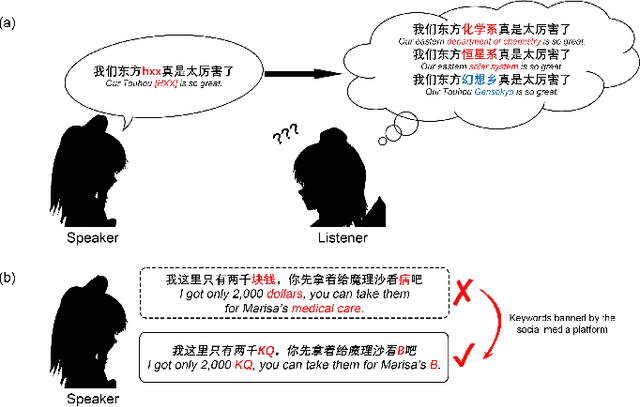
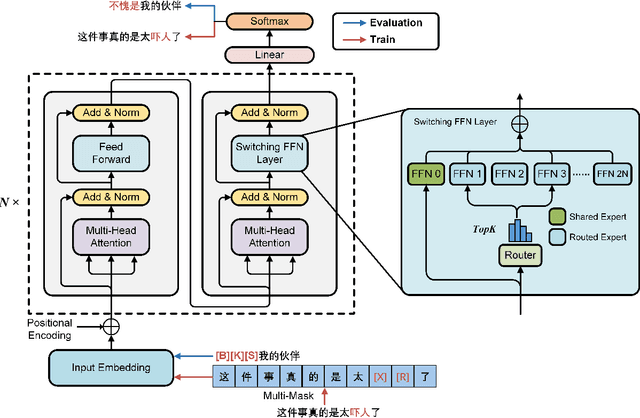


The task of converting Hanyu Pinyin abbreviations to Chinese characters represents a significant branch within the domain of Chinese Spelling Correction (CSC). This task is typically one of text-length alignment, however, due to the limited informational content in pinyin abbreviations, achieving accurate conversion is challenging. In this paper, we propose CNMBert which stands for zh-CN Pinyin Multi-mask Bert Model as a solution to this issue. CNMBert surpasses few-shot GPT models, achieving a 59.63% MRR on a 10,424-sample Hanyu Pinyin abbreviation test dataset.
Insect-Computer Hybrid System for Autonomous Search and Rescue Mission
Jun 04, 2021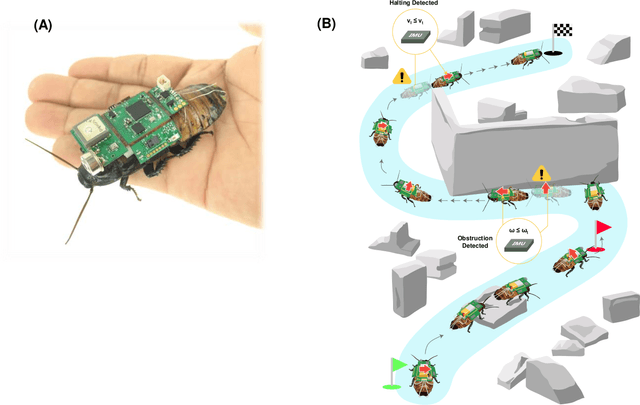
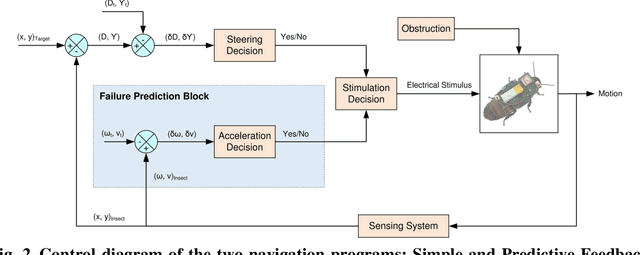
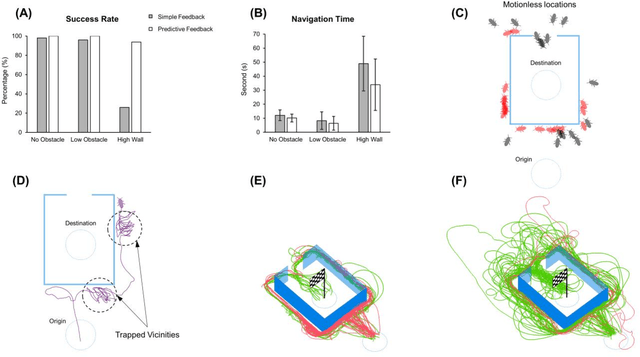
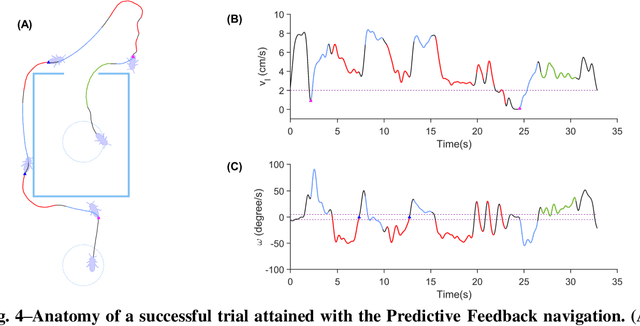
There is still a long way to go before artificial mini robots are really used for search and rescue missions in disaster-hit areas due to hindrance in power consumption, computation load of the locomotion, and obstacle-avoidance system. Insect-computer hybrid system, which is the fusion of living insect platform and microcontroller, emerges as an alternative solution. This study demonstrates the first-ever insect-computer hybrid system conceived for search and rescue missions, which is capable of autonomous navigation and human presence detection in an unstructured environment. Customized navigation control algorithm utilizing the insect's intrinsic navigation capability achieved exploration and negotiation of complex terrains. On-board high-accuracy human presence detection using infrared camera was achieved with a custom machine learning model. Low power consumption suggests system suitability for hour-long operations and its potential for realization in real-life missions.