 Add to Chrome
 Add to Firefox
 Add to Edge
LingLanMiDian: Systematic Evaluation of LLMs on TCM Knowledge and Clinical Reasoning
Feb 02, 2026
Large language models (LLMs) are advancing rapidly in medical NLP, yet Traditional Chinese Medicine (TCM) with its distinctive ontology, terminology, and reasoning patterns requires domain-faithful evaluation. Existing TCM benchmarks are fragmented in coverage and scale and rely on non-unified or generation-heavy scoring that hinders fair comparison. We present the LingLanMiDian (LingLan) benchmark, a large-scale, expert-curated, multi-task suite that unifies evaluation across knowledge recall, multi-hop reasoning, information extraction, and real-world clinical decision-making. LingLan introduces a consistent metric design, a synonym-tolerant protocol for clinical labels, a per-dataset 400-item Hard subset, and a reframing of diagnosis and treatment recommendation into single-choice decision recognition. We conduct comprehensive, zero-shot evaluations on 14 leading open-source and proprietary LLMs, providing a unified perspective on their strengths and limitations in TCM commonsense knowledge understanding, reasoning, and clinical decision support; critically, the evaluation on Hard subset reveals a substantial gap between current models and human experts in TCM-specialized reasoning. By bridging fundamental knowledge and applied reasoning through standardized evaluation, LingLan establishes a unified, quantitative, and extensible foundation for advancing TCM LLMs and domain-specific medical AI research. All evaluation data and code are available at https://github.com/TCMAI-BJTU/LingLan and http://tcmnlp.com.

Federated Evaluation and Tuning for On-Device Personalization: System Design & Applications
Feb 16, 2021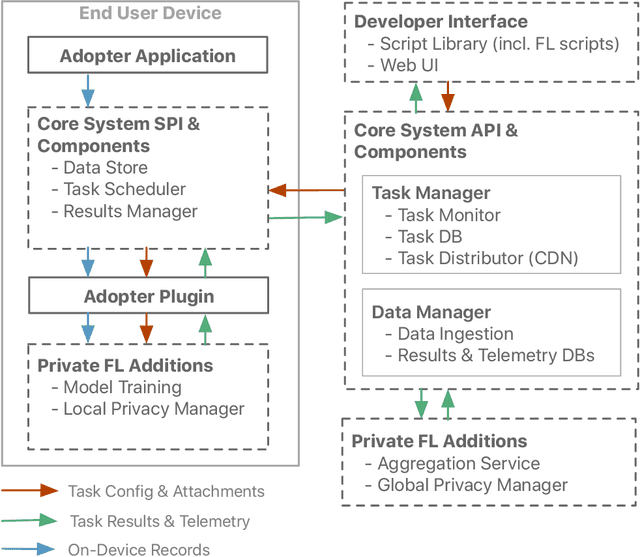
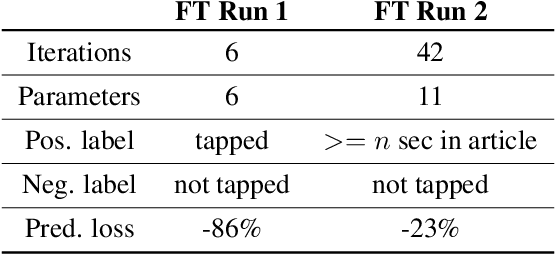
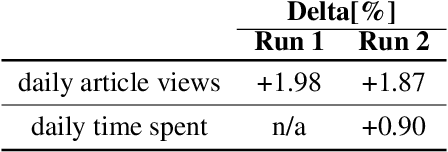
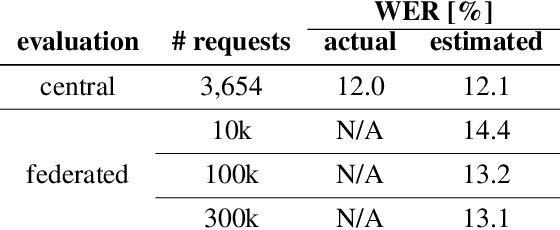
We describe the design of our federated task processing system. Originally, the system was created to support two specific federated tasks: evaluation and tuning of on-device ML systems, primarily for the purpose of personalizing these systems. In recent years, support for an additional federated task has been added: federated learning (FL) of deep neural networks. To our knowledge, only one other system has been described in literature that supports FL at scale. We include comparisons to that system to help discuss design decisions and attached trade-offs. Finally, we describe two specific large scale personalization use cases in detail to showcase the applicability of federated tuning to on-device personalization and to highlight application specific solutions.
Neural Reranking for Named Entity Recognition
Jul 17, 2017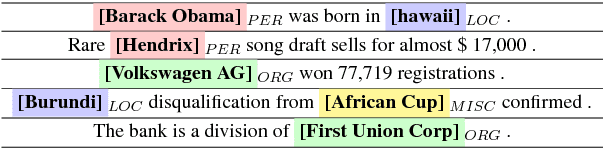
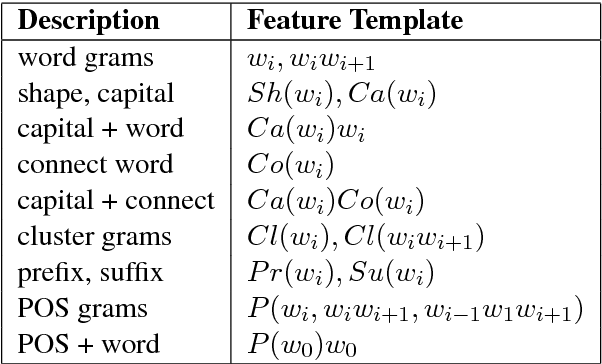

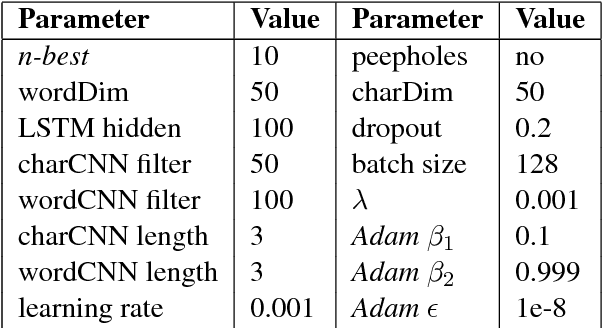
We propose a neural reranking system for named entity recognition (NER). The basic idea is to leverage recurrent neural network models to learn sentence-level patterns that involve named entity mentions. In particular, given an output sentence produced by a baseline NER model, we replace all entity mentions, such as \textit{Barack Obama}, into their entity types, such as \textit{PER}. The resulting sentence patterns contain direct output information, yet is less sparse without specific named entities. For example, "PER was born in LOC" can be such a pattern. LSTM and CNN structures are utilised for learning deep representations of such sentences for reranking. Results show that our system can significantly improve the NER accuracies over two different baselines, giving the best reported results on a standard benchmark.
Neural Word Segmentation with Rich Pretraining
Apr 28, 2017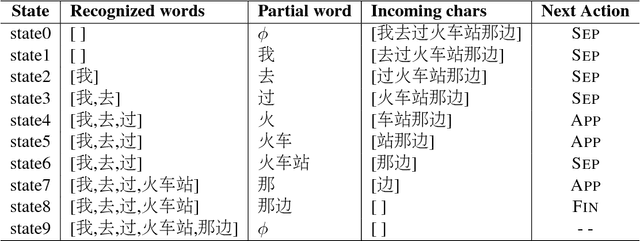
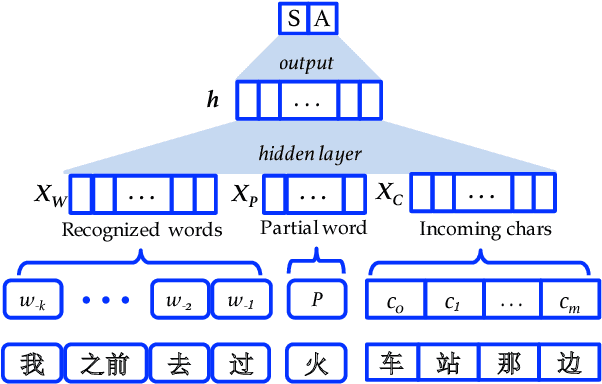
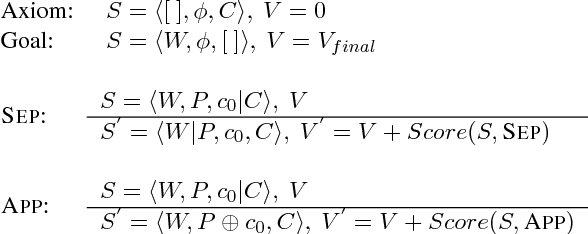
Neural word segmentation research has benefited from large-scale raw texts by leveraging them for pretraining character and word embeddings. On the other hand, statistical segmentation research has exploited richer sources of external information, such as punctuation, automatic segmentation and POS. We investigate the effectiveness of a range of external training sources for neural word segmentation by building a modular segmentation model, pretraining the most important submodule using rich external sources. Results show that such pretraining significantly improves the model, leading to accuracies competitive to the best methods on six benchmarks.