 Add to Chrome
 Add to Firefox
 Add to Edge
ORAN-DEFEND: Subspace Detection and Sanitization of Backdoor DRL xApps in Open RAN
Jul 07, 2026
Open Radio Access Networks (O-RAN) increasingly delegate near-real-time control to deep reinforcement learning (DRL) xApps obtained from third-party vendors, creating a new supply-chain attack surface. A backdoor policy behaves optimally until an adversary injects a covert trigger into the observed key performance indicator (KPI) telemetry, at which point it issues harmful control actions that degrade quality of service (QoS). We present ORAN-DEFEND, a retraining-free wrapper that sanitizes a frozen, potentially compromised xApp by projecting each KPI window onto a safe subspace estimated from a small number of trusted clean rollouts via singular value decomposition (SVD). We establish, both analytically and empirically, a precise recovery condition: the defense succeeds if the trigger energy concentrates in the orthogonal complement of the safe subspace, and we quantify this boundary through the trigger's $\Eperp$ energy fraction. On the Colosseum COLORAN dataset, we evaluate four structurally distinct DRL backdoor attacks, like TrojDRL, SleeperNets, BadRL, and Q-Incept, spanning inner-loop and outer-loop poisoning regimes and demonstrate $100\%$ return recovery and $\geq99.5\%$ defense success rate across all four when the subspace assumption holds. A geometry ablation reveals an intrinsic and previously uncharacterized limit of any linear projection defense: when the trigger collocates with the legitimate signal, the $\Eperp$ energy fraction governs recovery monotonically, and the linear residual detector collapses to chance even while a nonlinear classifier retains perfect separability.

SAMPLe: SAM-based Optimizer for Prompt Learning in VLMs
Jul 07, 2026Pre-trained Vision-Language Models (VLMs) like CLIP have proven highly effective as foundation models for various downstream applications. However, prompt learning in VLMs encounters a performance-generalization dilemma: while prompts can be tuned to achieve high accuracy on seen distributions, this tuning process often undermines their generalizability to unseen data. The limited set of learnable prompts, which contextualize and condition the input to steer it toward the task within the pretrained VLM, tends to overfit the training data, leading to a trade-off between task-specific performance and preserving generalization. To address this dilemma, we introduce SAMPLe (Sharpness-Aware Minimization Prompt Learning), a plug-in sharpness-aware optimizer that enhances prompt generalizability by accounting for loss landscape sharpness. Unlike conventional methods, SAMPLe balances exploration and exploitation by satisfying objective function constraints at each step, dynamically adapting to the current optimization state based on the local curvature and gradient properties. This approach reduces overfitting on seen distributions and improves adaptability to unseen data, preserving the generalization potential of pre-trained VLM models. We integrate SAMPLe into multiple prompt learning frameworks, including CoOp, CoCoOp, MaPLe, TCP, and Co-Prompt, demonstrating its effectiveness across diverse methods. Experiments show that SAMPLe elevates prompt learning frameworks and consistently outperforms existing optimizers across diverse settings, establishing itself as a robust, model-agnostic solution for prompt learning.
Meta Hierarchical Reinforcement Learning for Scalable Resource Management in O-RAN
Dec 08, 2025The increasing complexity of modern applications demands wireless networks capable of real time adaptability and efficient resource management. The Open Radio Access Network (O-RAN) architecture, with its RAN Intelligent Controller (RIC) modules, has emerged as a pivotal solution for dynamic resource management and network slicing. While artificial intelligence (AI) driven methods have shown promise, most approaches struggle to maintain performance under unpredictable and highly dynamic conditions. This paper proposes an adaptive Meta Hierarchical Reinforcement Learning (Meta-HRL) framework, inspired by Model Agnostic Meta Learning (MAML), to jointly optimize resource allocation and network slicing in O-RAN. The framework integrates hierarchical control with meta learning to enable both global and local adaptation: the high-level controller allocates resources across slices, while low level agents perform intra slice scheduling. The adaptive meta-update mechanism weights tasks by temporal difference error variance, improving stability and prioritizing complex network scenarios. Theoretical analysis establishes sublinear convergence and regret guarantees for the two-level learning process. Simulation results demonstrate a 19.8% improvement in network management efficiency compared with baseline RL and meta-RL approaches, along with faster adaptation and higher QoS satisfaction across eMBB, URLLC, and mMTC slices. Additional ablation and scalability studies confirm the method's robustness, achieving up to 40% faster adaptation and consistent fairness, latency, and throughput performance as network scale increases.
Task Specific Sharpness Aware O-RAN Resource Management using Multi Agent Reinforcement Learning
Nov 19, 2025Next-generation networks utilize the Open Radio Access Network (O-RAN) architecture to enable dynamic resource management, facilitated by the RAN Intelligent Controller (RIC). While deep reinforcement learning (DRL) models show promise in optimizing network resources, they often struggle with robustness and generalizability in dynamic environments. This paper introduces a novel resource management approach that enhances the Soft Actor Critic (SAC) algorithm with Sharpness-Aware Minimization (SAM) in a distributed Multi-Agent RL (MARL) framework. Our method introduces an adaptive and selective SAM mechanism, where regularization is explicitly driven by temporal-difference (TD)-error variance, ensuring that only agents facing high environmental complexity are regularized. This targeted strategy reduces unnecessary overhead, improves training stability, and enhances generalization without sacrificing learning efficiency. We further incorporate a dynamic $ρ$ scheduling scheme to refine the exploration-exploitation trade-off across agents. Experimental results show our method significantly outperforms conventional DRL approaches, yielding up to a $22\%$ improvement in resource allocation efficiency and ensuring superior QoS satisfaction across diverse O-RAN slices.
Covertness in the Near Field: Maximizing the Covert Region with FDA
Nov 22, 2024
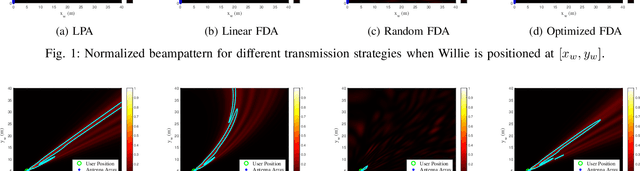
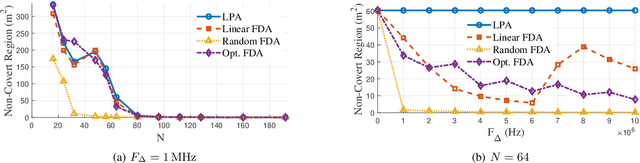
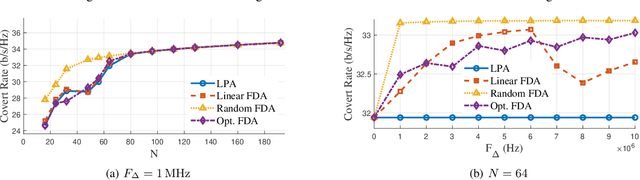
Covert communication in wireless networks ensures that transmissions remain undetectable to adversaries, making it a potential enabler for privacy and security in sensitive applications. However, to meet the high performance and connectivity demands of sixth-generation (6G) networks, future wireless systems will require larger antenna arrays, higher operating frequencies, and advanced antenna architectures. This shift changes the propagation model from far-field planar-wave to near-field spherical-wave which necessitates a redesign of existing covert communication systems. Unlike far-field beamforming, which relies only on direction, near-field beamforming depends on both distance and direction, providing additional degrees of freedom for system design. In this paper, we aim to utilize those freedoms by proposing near-field Frequency Diverse Array (FDA)-based transmission strategies that manipulate the beampattern in both distance and angle, thereby establishing a non-covert region around the legitimate user. Our approach takes advantage of near-field properties and FDA technology to significantly reduce the area vulnerable to detection by adversaries while maintaining covert communication with the legitimate receiver. Numerical simulations show that our methods outperform conventional phased arrays by shrinking the non-covert region and allowing the covert region to expand as the number of antennas increases.
Open RAN LSTM Traffic Prediction and Slice Management using Deep Reinforcement Learning
Jan 12, 2024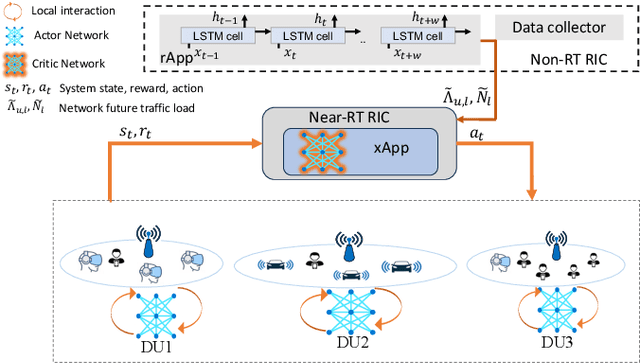
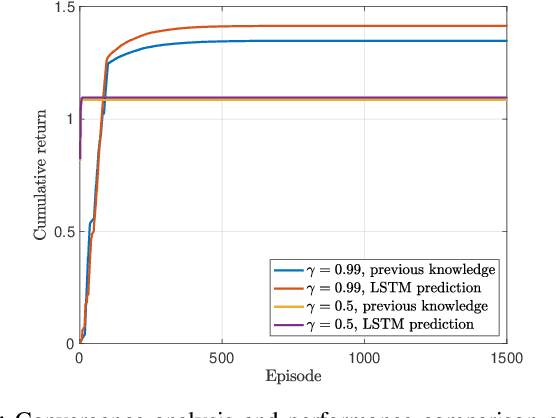
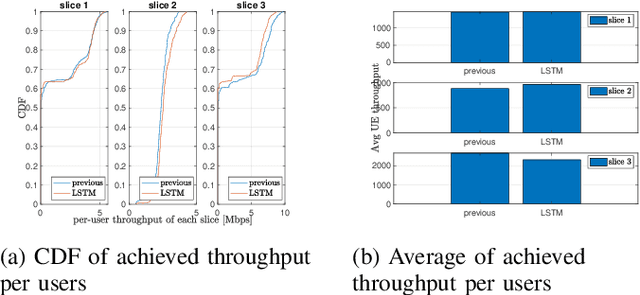
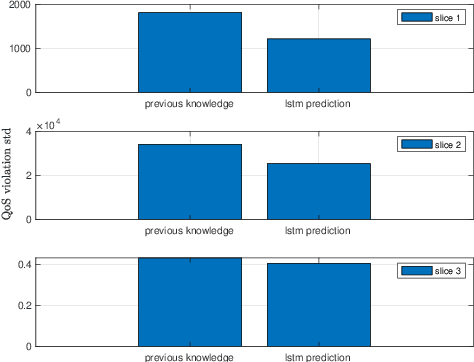
With emerging applications such as autonomous driving, smart cities, and smart factories, network slicing has become an essential component of 5G and beyond networks as a means of catering to a service-aware network. However, managing different network slices while maintaining quality of services (QoS) is a challenge in a dynamic environment. To address this issue, this paper leverages the heterogeneous experiences of distributed units (DUs) in ORAN systems and introduces a novel approach to ORAN slicing xApp using distributed deep reinforcement learning (DDRL). Additionally, to enhance the decision-making performance of the RL agent, a prediction rApp based on long short-term memory (LSTM) is incorporated to provide additional information from the dynamic environment to the xApp. Simulation results demonstrate significant improvements in network performance, particularly in reducing QoS violations. This emphasizes the importance of using the prediction rApp and distributed actors' information jointly as part of a dynamic xApp.
Attention-based Open RAN Slice Management using Deep Reinforcement Learning
Jun 15, 2023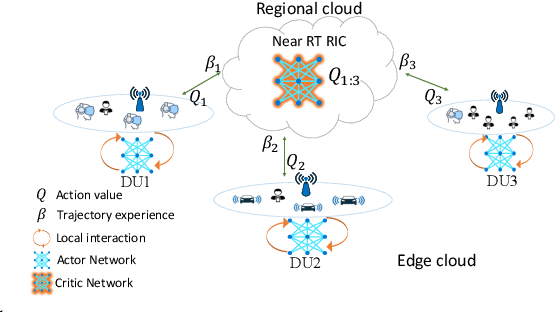
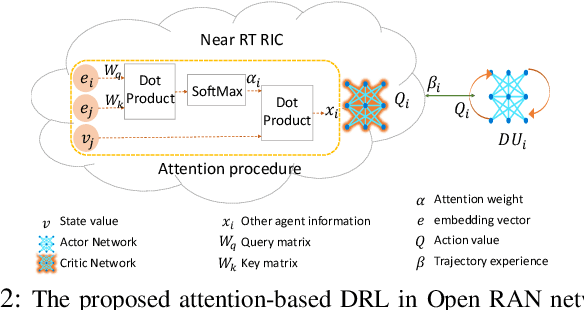
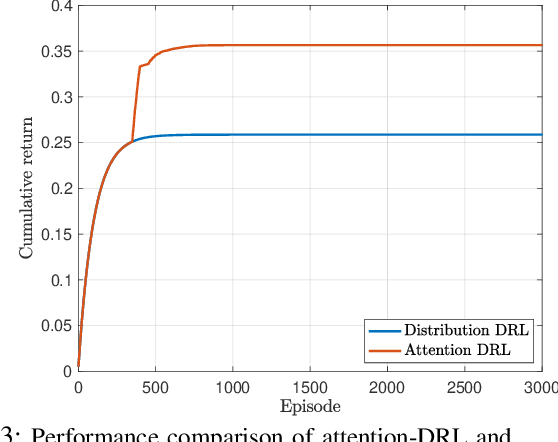
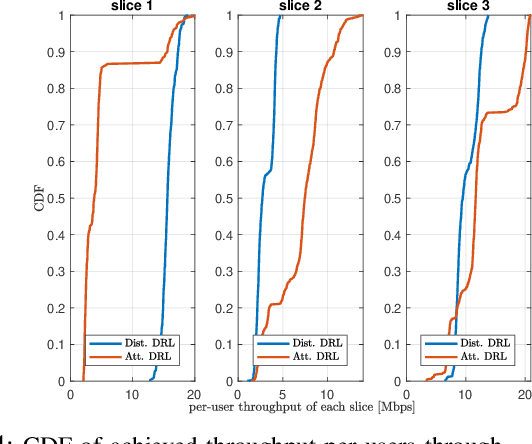
As emerging networks such as Open Radio Access Networks (O-RAN) and 5G continue to grow, the demand for various services with different requirements is increasing. Network slicing has emerged as a potential solution to address the different service requirements. However, managing network slices while maintaining quality of services (QoS) in dynamic environments is a challenging task. Utilizing machine learning (ML) approaches for optimal control of dynamic networks can enhance network performance by preventing Service Level Agreement (SLA) violations. This is critical for dependable decision-making and satisfying the needs of emerging networks. Although RL-based control methods are effective for real-time monitoring and controlling network QoS, generalization is necessary to improve decision-making reliability. This paper introduces an innovative attention-based deep RL (ADRL) technique that leverages the O-RAN disaggregated modules and distributed agent cooperation to achieve better performance through effective information extraction and implementing generalization. The proposed method introduces a value-attention network between distributed agents to enable reliable and optimal decision-making. Simulation results demonstrate significant improvements in network performance compared to other DRL baseline methods.
Joint Path planning and Power Allocation of a Cellular-Connected UAV using Apprenticeship Learning via Deep Inverse Reinforcement Learning
Jun 15, 2023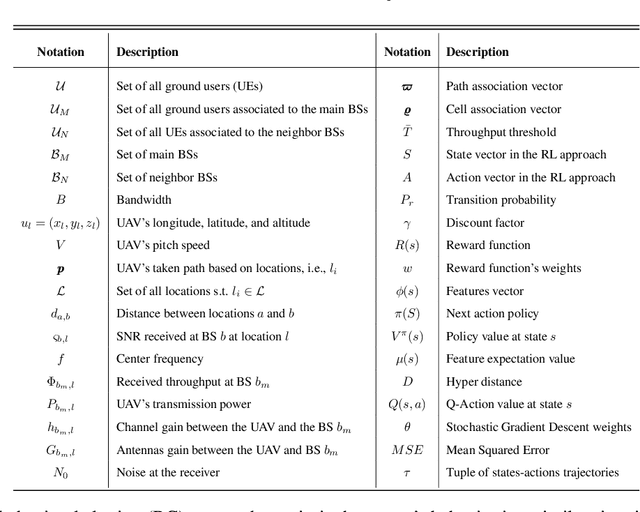
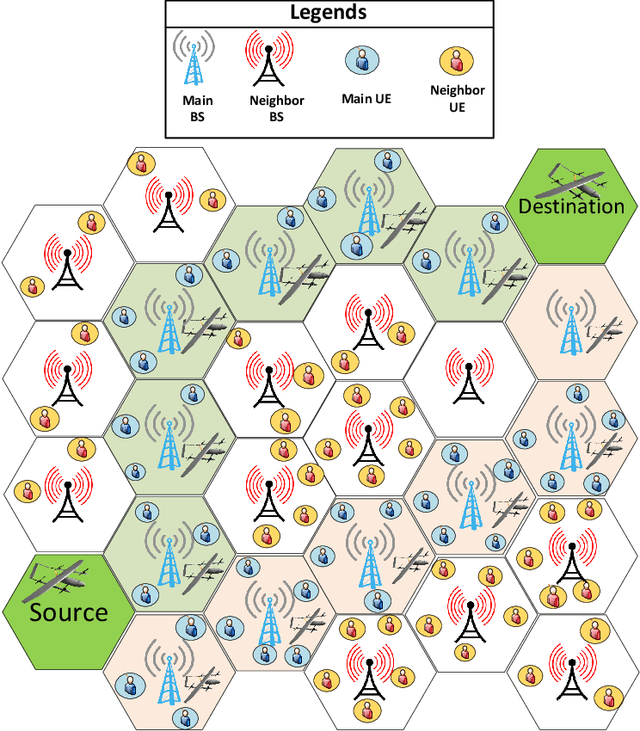
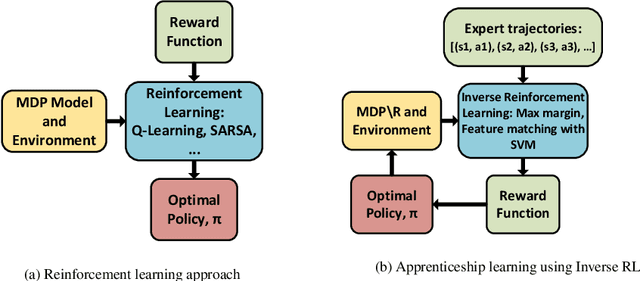
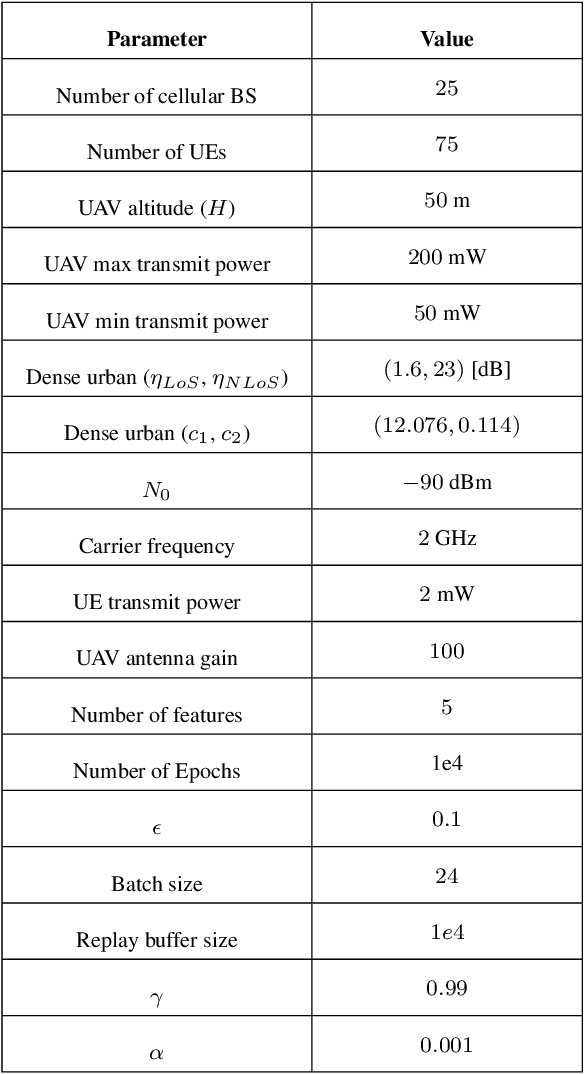
This paper investigates an interference-aware joint path planning and power allocation mechanism for a cellular-connected unmanned aerial vehicle (UAV) in a sparse suburban environment. The UAV's goal is to fly from an initial point and reach a destination point by moving along the cells to guarantee the required quality of service (QoS). In particular, the UAV aims to maximize its uplink throughput and minimize the level of interference to the ground user equipment (UEs) connected to the neighbor cellular BSs, considering the shortest path and flight resource limitation. Expert knowledge is used to experience the scenario and define the desired behavior for the sake of the agent (i.e., UAV) training. To solve the problem, an apprenticeship learning method is utilized via inverse reinforcement learning (IRL) based on both Q-learning and deep reinforcement learning (DRL). The performance of this method is compared to learning from a demonstration technique called behavioral cloning (BC) using a supervised learning approach. Simulation and numerical results show that the proposed approach can achieve expert-level performance. We also demonstrate that, unlike the BC technique, the performance of our proposed approach does not degrade in unseen situations.
Triplet Loss-less Center Loss Sampling Strategies in Facial Expression Recognition Scenarios
Feb 08, 2023
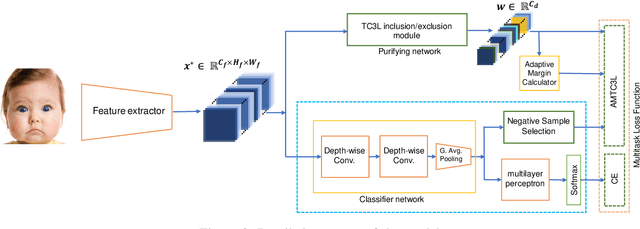
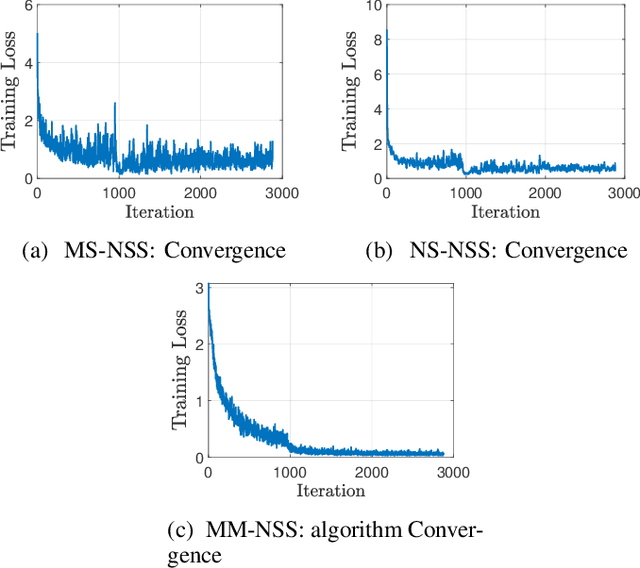
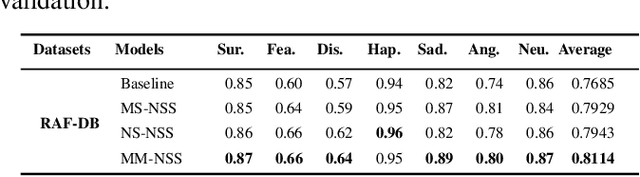
Facial expressions convey massive information and play a crucial role in emotional expression. Deep neural network (DNN) accompanied by deep metric learning (DML) techniques boost the discriminative ability of the model in facial expression recognition (FER) applications. DNN, equipped with only classification loss functions such as Cross-Entropy cannot compact intra-class feature variation or separate inter-class feature distance as well as when it gets fortified by a DML supporting loss item. The triplet center loss (TCL) function is applied on all dimensions of the sample's embedding in the embedding space. In our work, we developed three strategies: fully-synthesized, semi-synthesized, and prediction-based negative sample selection strategies. To achieve better results, we introduce a selective attention module that provides a combination of pixel-wise and element-wise attention coefficients using high-semantic deep features of input samples. We evaluated the proposed method on the RAF-DB, a highly imbalanced dataset. The experimental results reveal significant improvements in comparison to the baseline for all three negative sample selection strategies.
Evolutionary Deep Reinforcement Learning for Dynamic Slice Management in O-RAN
Aug 30, 2022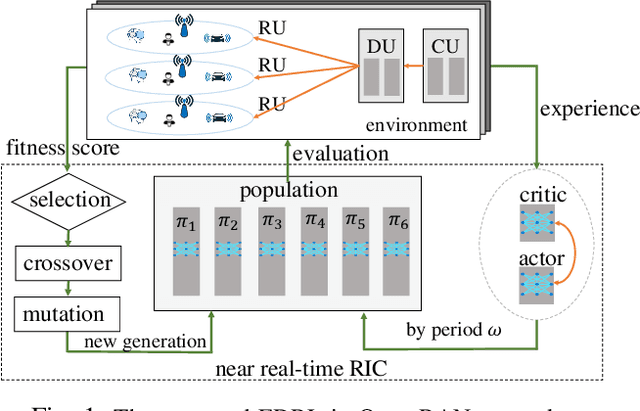
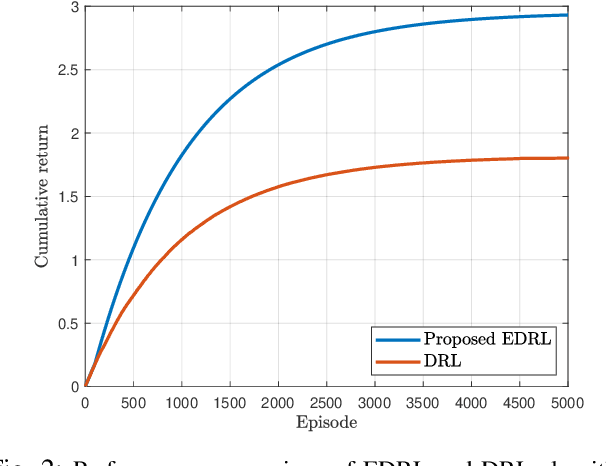
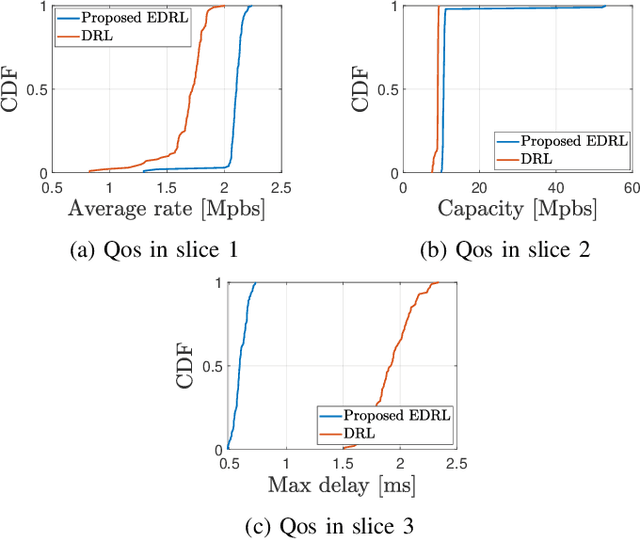
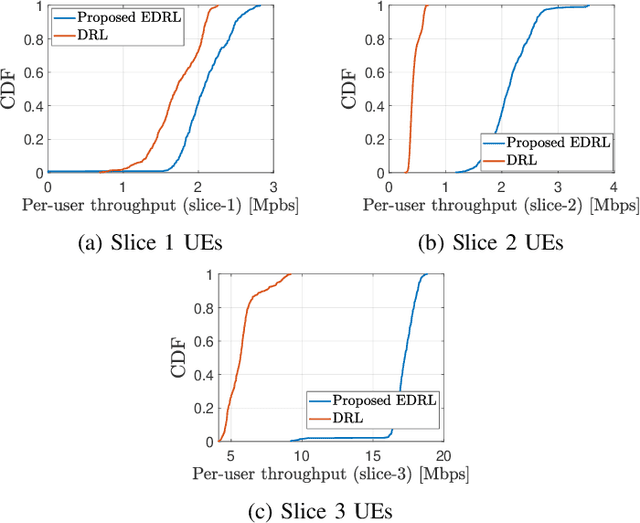
The next-generation wireless networks are required to satisfy a variety of services and criteria concurrently. To address upcoming strict criteria, a new open radio access network (O-RAN) with distinguishing features such as flexible design, disaggregated virtual and programmable components, and intelligent closed-loop control was developed. O-RAN slicing is being investigated as a critical strategy for ensuring network quality of service (QoS) in the face of changing circumstances. However, distinct network slices must be dynamically controlled to avoid service level agreement (SLA) variation caused by rapid changes in the environment. Therefore, this paper introduces a novel framework able to manage the network slices through provisioned resources intelligently. Due to diverse heterogeneous environments, intelligent machine learning approaches require sufficient exploration to handle the harshest situations in a wireless network and accelerate convergence. To solve this problem, a new solution is proposed based on evolutionary-based deep reinforcement learning (EDRL) to accelerate and optimize the slice management learning process in the radio access network's (RAN) intelligent controller (RIC) modules. To this end, the O-RAN slicing is represented as a Markov decision process (MDP) which is then solved optimally for resource allocation to meet service demand using the EDRL approach. In terms of reaching service demands, simulation results show that the proposed approach outperforms the DRL baseline by 62.2%.