 Add to Chrome
 Add to Firefox
 Add to Edge
Adaptive 5G Resource Allocation for Multistatic ISAC-Based UAV Detection and Tracking
Jun 19, 2026
Unmanned aerial vehicles (UAVs) enable numerous commercial and public-safety applications, yet they also create security risks near critical infrastructure, transportation hubs, and restricted airspace. While integrated sensing and communications (ISAC) can leverage existing wireless networks for UAV surveillance, practical deployment must address competition between sensing and communication demands, as well as the challenges associated with tracking highly maneuverable UAVs with low radar cross section (RCS). This paper investigates adaptive multistatic ISAC for load-aware UAV detection and tracking in 5G wireless networks. A shared-resource framework is developed to quantify how sensing waveform length, sensing transmission rate, and beam allocation affect communication throughput in a 5G new radio (NR) system. Detection performance is analyzed using Zadoff-Chu (ZC) sensing waveforms, while tracking continuity is evaluated through an M-of-N detection model. To improve robustness under congestion, software-defined sensor (SDS) nodes exploit external signals of opportunity (SoO) to provide supplemental passive sensing opportunities when network resources become limited. Results show that adaptive sensing policies outperform fixed sensing reservations by preserving throughput under dynamic load while maintaining useful sensing capability. Under heavy congestion, SDS assistance substantially reduces tracking outage in the simulated scenarios. Cramer-Rao lower bound (CRLB) analysis demonstrates that multistatic sensing geometries improve localization accuracy and provide more uniform spatial coverage than monostatic sensing alone. These results highlight coordinated adaptive sensing and distributed multistatic support as a practical path toward resilient UAV surveillance in future wireless networks.

Multi-Year Spectral Structure of 6G Candidate Bands at 2.7 GHz and 4.4 GHz
Mar 16, 2026Mid-band spectrum between 2 and 8 GHz is a critical resource for sixth-generation (6G) systems as it uniquely balances favorable propagation characteristics with scalable bandwidth. Recent U.S. policy highlights candidate bands near 2.7, 4.4, and 7.1 GHz, all of which host substantial federal and non-federal incumbency, including high-power radiolocation and aeronautical telemetry systems. Although these segments are being considered for potential relocation of federal incumbents to enable commercial use, their long-term viability depends on the structural integrity of the spectrum. In such environments, the practical value of spectrum depends on the reliability and contiguity of available spectrum opportunities. This paper presents a measurement-driven feasibility analysis of two representative segments, 2.69-2.9 GHz and 4.4-4.94 GHz, using Software-Defined Radio (SDR) measurements collected during Packapalooza campaigns from 2022 to 2025. Deployment-oriented metrics are introduced to quantify scan-window reliability (SWR), altitude-dependent usable spectrum availability ratio (USAR), largest contiguous clean bandwidth (LCCB), spectral fragmentation, and extreme interference excursions. The results reveal significant year-to-year structural variability. In the 2.69-2.9 GHz band, USAR remains near unity in 2022 and 2023, but drops to approximately 0.65 in 2024 and 0.8 in 2025, accompanied by fragmentation and limited contiguous bandwidth across altitudes. The 4.4-4.94 GHz band exhibits a similar temporal pattern, but with smaller reliability degradation and larger contiguous support, often exceeding several hundred megahertz even during incumbent-dominant periods. The results highlight that wideband feasibility in these candidate bands depends strongly on spectral contiguity and structural stability rather than nominal bandwidth alone.
3D Spectrum Awareness for Radio Dynamic Zones Using Kriging and Matrix Completion
Mar 11, 2026Radio Dynamic Zones (RDZs) are geographically defined areas specifically allocated for testing new wireless technologies. It is essential to safeguard the regular spectrum users outside the zones from the interference caused by the deployed equipment within this zone. Previous works have utilized sparse reference signal received power (RSRP) measurements collected by unmanned aerial vehicles (UAVs) to construct a dense 3D radio map through ordinary Kriging. In this work, we illustrate that matrix completion can outperform ordinary Kriging. We partitioned a 2D area of interest into small square grids where each grid corresponds to a single entry of a matrix. The matrix completion algorithm learns the global structure of the radio environment map by leveraging the low-rank property of propagation maps. Additionally, we illustrate that the simple Kriging and trans-Gaussian Kriging yield better results when the density of known measurements is lower. Earlier works of RSRP prediction involved a training dataset at a single altitude. In this work, we also show that performance can be improved by utilizing a combined dataset from multiple altitudes.
* Published in IEEE International Symposium on Dynamic Spectrum Access Networks (DySPAN), 2024
UAV-Based 3D Spectrum Sensing: Insights on Altitude, Bandwidth, Trajectory, and Effective Antenna Patterns on REM Reconstruction
Mar 11, 2026Spectrum sensing and the generation of 3D Radio Environment Maps (REMs) are essential for enabling spectrum sharing within cognitive radio networks. While Uncrewed Aerial Vehicles (UAVs) offer high-mobility 3D sensing, REM accuracy is challenged by dynamic flight behaviors, where fluctuations in UAV speed and direction introduce measurement inconsistencies. Furthermore, the structural influence of the airframe itself impacts the onboard antenna's radiation characteristics. In this paper, we present a comprehensive analysis of REM reconstruction at various altitudes, using real-world data from a fixed base station tower and a ground-vehicle source. We evaluate diverse reconstruction methodologies, including Kriging (simple, ordinary, and trans-Gaussian), matrix completion, and Gaussian process regression (GPR) for recovery from sparse samples. Our results indicate that simple Kriging and GPR remain more robust under extreme sample sparsity. We also propose a framework to enhance reconstruction accuracy in deep-shadowed regions by decomposing the REM into distinct smooth and deep-shadowed spatial components. We further investigate how REM reconstruction performance is influenced by physical and UAV-related external parameters. First, we demonstrate that the impact of UAV altitude on accuracy follows a tri-phasic trend: an initial performance gain up to $h_1$, a performance dip between $h_1$ and $h_2$, and a final stage of increasing accuracy. Additionally, we show that performance improves with increased spectrum bandwidth. Second, our analysis of UAV trajectories reveals that the variance of shadow fading exhibits a non-monotonic trend, peaking at both very low and mid-high elevation angles. Finally, we demonstrate that antenna pattern calibration from in-field measurements significantly enhances REM reconstruction accuracy by accounting for shadowing induced by the UAV airframe.
TransfoREM: Transformer aided 3D Radio Environment Mapping
Jan 23, 2026Providing reliable cellular connectivity to Unmanned Aerial Vehicles (UAV) is a key challenge, as existing terrestrial networks are deployed mainly for ground-level coverage. The cellular network coverage may be available for a limited range from the antenna side lobes, with poor connectivity further exacerbated by UAV flight dynamics. In this work, we propose TransfoREM, a 3D Radio Environment Map (REM) generation method that combines deterministic channel models and real-world data to map terrestrial network coverage at higher altitudes. At the core of our solution is a transformer model that translates radio propagation mapping into a sequence prediction task to construct REMs. Our results demonstrate that TransfoREM offers improved interpolation capability on real-world data compared against conventional Kriging and other machine learning (ML) techniques. Furthermore, TransfoREM is designed for holistic integration into cellular networks at the base station (BS) level, where it can build REMs, which can then be leveraged for enhanced resource allocation, interference management, and spatial spectrum utilization.
Fusion of Cellular ISAC and Passive RF Sensing for UAV Detection and Tracking
Dec 16, 2025The rapid growth of unmanned aerial vehicles (UAVs) in civilian and critical-infrastructure airspace has created a need for reliable detection and tracking systems that operate under diverse environmental and sensing conditions. This paper presents a UAV detection and tracking system that fuses measurements from a network of passive Keysight N6841A RF sensors and a Ku-band Fortem TrueView R20 radar operating in the FR3 spectrum (16.3 GHz) as an ISAC proxy. Real-world experiments at the NSF AERPAW testbed demonstrate that radar and RF sensing provide complementary strengths under varying geometric, range, and line-of-sight conditions. A Kalman filter using a constant-velocity motion model integrates the asynchronous 2D RF and 3D radar observations, suppressing large standalone errors, improving accuracy over individual modalities, and increasing tracking coverage without degrading performance. These results demonstrate the effectiveness of multi-modal, ISAC-oriented sensing for robust UAV tracking in outdoor environments.
Reliability of Wi-Fi, LTE, and 5G-Based UAV RC Links in ISM Bands: Uplink Interference Asymmetry Analysis and HARQ Design
Jul 27, 2025Command and control of uncrewed aerial vehicles (UAVs) is often realized through air-to-ground (A2G) remote control (RC) links that operate in ISM bands. While wireless fidelity (Wi-Fi) technology is commonly used for UAV RC links, ISM-based long-term evolution (LTE) and fifth-generation (5G) technologies have also been recently considered for the same purpose. A major problem for UAV RC links in the ISM bands is that other types of interference sources, such as legacy Wi-Fi and Bluetooth transmissions, may degrade the link quality. Such interference problems are a higher concern for the UAV in the air than the RC unit on the ground due to the UAV being in line-of-sight (LoS) with a larger number of interference sources. To obtain empirical evidence of the asymmetric interference conditions in downlink (DL) and uplink (UL), we first conducted a measurement campaign using a helikite platform in urban and rural areas at NC State University. The results from this measurement campaign show that the aggregate interference can be up to 16.66 dB at higher altitudes up to 170 m, compared with the interference observed at a ground receiver. As a result of this asymmetric UL interference, lost hybrid automatic repeat request (HARQ) indicators (ACK/NACK) in the UL may degrade the DL throughput. To investigate this, we study various HARQ mechanisms, including HARQ Type-I with no combining, HARQ Type-I with chase combining, HARQ Type-III with incremental redundancy, and burst transmission with chase combining. To evaluate the impact of asymmetric UL interference on throughput performance, we consider three steps of evaluation process: 1) standalone physical DL shared channel (PDSCH) throughput evaluation with perfect ACK/NACK assumption; 2) standalone physical UL control channel (PUCCH) decoding reliability evaluation; and 3) PDSCH DL throughput evaluation with asymmetric UL ACK/NACK transmission.
Collection: Datasets from AFAR Challenge
May 11, 2025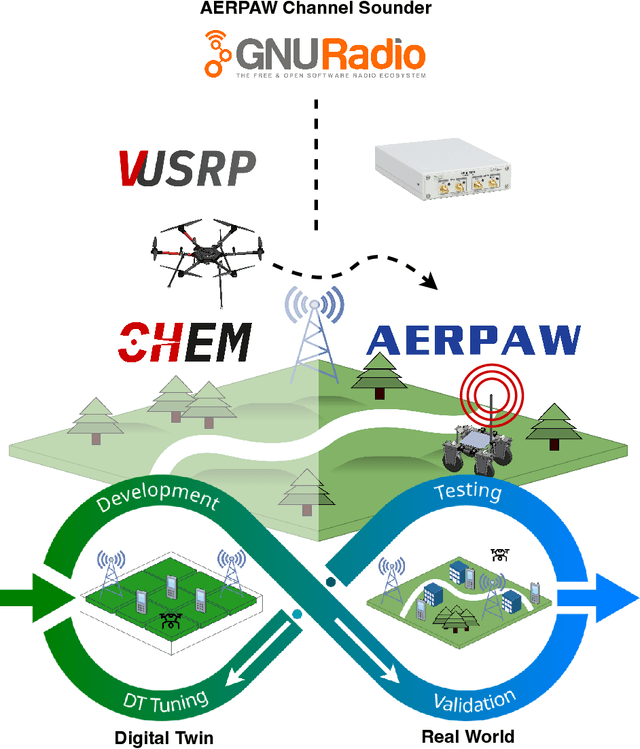
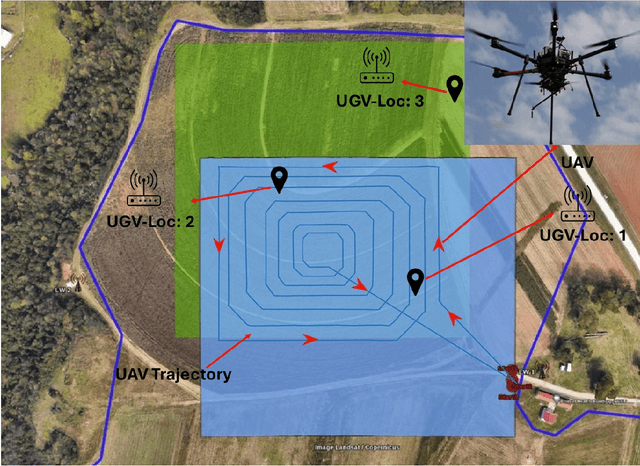
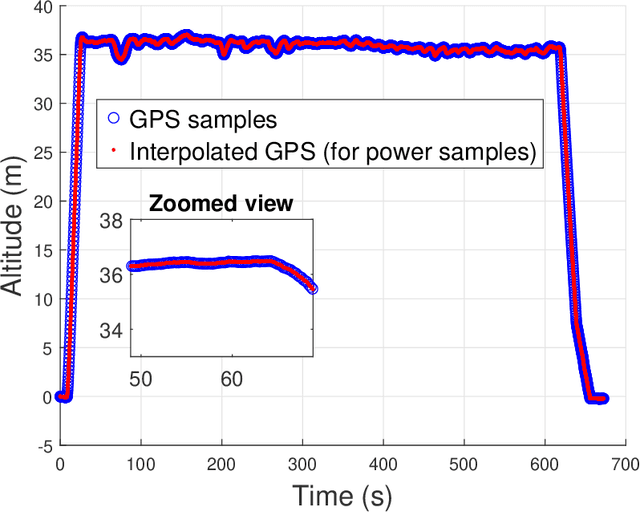
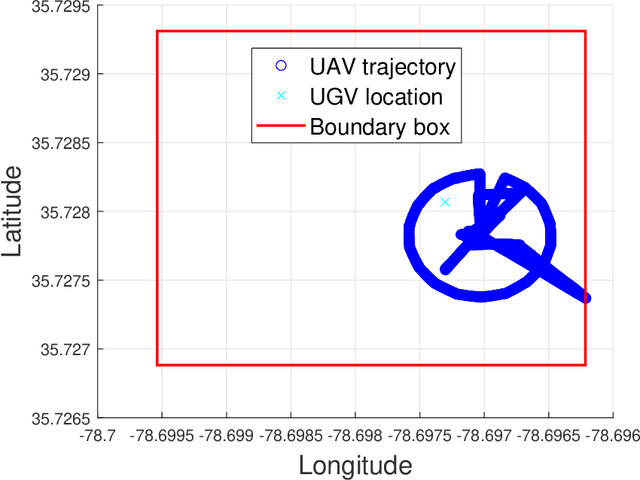
This paper presents a comprehensive real-world and Digital Twin (DT) dataset collected as part of the Find A Rover (AFAR) Challenge, organized by the NSF Aerial Experimentation and Research Platform for Advanced Wireless (AERPAW) testbed and hosted at the Lake Wheeler Field in Raleigh, North Carolina. The AFAR Challenge was a competition involving five finalist university teams, focused on promoting innovation in UAV-assisted radio frequency (RF) source localization. Participating teams were tasked with designing UAV flight trajectories and localization algorithms to detect the position of a hidden unmanned ground vehicle (UGV), also referred to as a rover, emitting wireless probe signals generated by GNU Radio. The competition was structured to evaluate solutions in a DT environment first, followed by deployment and testing in AERPAW's outdoor wireless testbed. For each team, the UGV was placed at three different positions, resulting in a total of 30 datasets, 15 collected in a DT simulation environment and 15 in a physical outdoor testbed. Each dataset contains time-synchronized measurements of received signal strength (RSS), received signal quality (RSQ), GPS coordinates, UAV velocity, and UAV orientation (roll, pitch, and yaw). Data is organized into structured folders by team, environment (DT and real-world), and UGV location. The dataset supports research in UAV-assisted RF source localization, air-to-ground (A2G) wireless propagation modeling, trajectory optimization, signal prediction, autonomous navigation, and DT validation. With approximately 300k time-synchronized samples collected from real-world experiments, the dataset provides a substantial foundation for training and evaluating deep learning (DL) models. Overall, the AFAR dataset serves as a valuable resource for advancing robust, real-world solutions in UAV-enabled wireless communications and sensing systems.
Predicting Lifespan of Ground-to-Air Multipath Components in mmWave UAV Channels
Mar 12, 2025In mobile ground-to-air (GA) propagation channels, the birth and death of multipath components (MPCs) are frequently observed, and the wide-sense stationary uncorrelated scattering (WSSUS) assumption does not always hold. Several methods exist for tracking the birth and death of MPCs, however, to the best of knowledge of authors, there is no existing literature that addresses the prediction of the lifespan of the MPCs in nonWSSUS GA propagation channels. In this work, we consider the GA channel as non-WSSUS and individual MPCs across receiver positions are represented as time series based on the Euclidean distance between channel parameters of the MPCs. These time series representations, referred to as path bins, are analyzed using a semi-Markov chain model. The channel parameter variations and dependencies between path bins are used to predict the lifespan of path bins using weighted sum method, machine learning classifiers, and deep neural networks. For comparison, the birth and death of path bins are also modeled using a Poisson distribution and a Markov chain. Simulation results demonstrate that deep neural networks offer highly accurate predictions for the lifespan (including death) of MPC path bins in the considered GA propagation scenario.
* Accepted for Proc. IEEE WCNC Conference 2025, Italy
UAV-Assisted Coverage Hole Detection Using Reinforcement Learning in Urban Cellular Networks
Mar 09, 2025Deployment of cellular networks in urban areas requires addressing various challenges. For example, high-rise buildings with varying geometrical shapes and heights contribute to signal attenuation, reflection, diffraction, and scattering effects. This creates a high possibility of coverage holes (CHs) within the proximity of the buildings. Detecting these CHs is critical for network operators to ensure quality of service, as customers in such areas experience weak or no signal reception. To address this challenge, we propose an approach using an autonomous vehicle, such as an unmanned aerial vehicle (UAV), to detect CHs, for minimizing drive test efforts and reducing human labor. The UAV leverages reinforcement learning (RL) to find CHs using stored local building maps, its current location, and measured signal strengths. As the UAV moves, it dynamically updates its knowledge of the signal environment and its direction to a nearby CH while avoiding collisions with buildings. We created a wide range of testing scenarios using building maps from OpenStreetMap and signal strength data generated by NVIDIA Sionna raytracing simulations. The results demonstrate that the RL-based approach performs better than non-machine learning, geometry-based methods in detecting CHs in urban areas. Additionally, even with a limited number of UAV measurements, the method achieves performance close to theoretical upper bounds that assume complete knowledge of all signal strengths.