 Add to Chrome
 Add to Firefox
 Add to Edge
An Ultra-Low Profile Metasurface for Enhanced Non-Diffractive OAM Beam Generation Based on Sparse Feed Array
Aug 07, 2026
This paper proposes a novel ultra-low profile transmitted metasurface to generate enhanced non-diffractive orbital angular momentum (OAM) beams, employing a sparse feed array (SFA) to create a quasi-plane wave excitation for the first time. Our simulation indicates that with uniform amplitude excitation, the non-diffraction performance of Bessel beam produced by metasurface, surpasses that of conventional single-feed excitation. Based on this principle, a 5 * 5 sparse feed array is introduced and positioned less than one wavelength from the metasurface, ensuring a quasi-uniform amplitude excitation across all units. Further, this metasurface leverages its flexible phase control capability and integrates the spatial phase, OAM phase, and axicon phase to generate an enhanced high-order Bessel beam. The simulated results confirm a successful non-diffractive Bessel beam generation carrying OAM with mode l = +2, exhibiting reduced beam divergence and higher gain. This design also offers benefits of ultra-low profile, high aperture efficiency, low structural complexity.
* 4 pages, 12 figures

Flexible Wideband Filtering Monopole Antenna With Stable High Omnidirectionality
Aug 02, 2026This article presents a wideband flexible filtering monopole antenna with symmetric structure for stable high omnidirectionality. It is based on a monopole antenna, which is printed on a single-layer flexible substrate. Two folded parasitic strips with different length are devised on both sides of the driven monopole, giving filtering responses in the higher and lower band without filtering circuits. Since the asymmetric filtering structure adversely affects in-band omnidirectionality, this baseline design is extended with symmetric filtering structure to improve omnidirectionality and bandwidth. In the proposed design, a pair of parasitic strips are devised on the both sides of monopole antenna symmetrically, achieving a radiation null in the higher band. Then, by loading a pair of folded parasitic strips on the both sides of feed line with slotted metal ground, a radiation null is realized in the lower band. Besides, the driven monopole is slotted symmetrically for wideband operation. By adopting a fully symmetric filtering structure, the proposed design effectively suppresses the impact of the parasitic elements on the in-band omnidirectional radiation pattern, thereby achieving high omnidirectionality. Furthermore, the proposed antenna exhibits stable performance under different bending radii. To verify our design concept, an antenna prototype is fabricated. Both the flat and bent antennas are measured. The results show that the proposed antenna has a -10 dB impedance bandwidth of 45.6%, an in-band gain about 2 dBi, and an out-of-band radiation suppression more than 11 dB. The measured omnidirectionality has variations less than 0.8 dB without bending and 1 dB with a bending radius of 30 mm. This design offers several advantages including stable high omnidirectionality across a wide bandwidth, flexible conformal capability, and filtering property.
A Wideband Multibeam Planar Quasi-Yagi Array Antenna Based on Parasitic Pixel Strips
Aug 02, 2026This letter presents a low-complexity parasitic pixel strip (PPS) structure for array antenna to generate six radiations with flexible beam control. To realize multibeam operation, three groups of symmetrical strip-shaped pixels are integrated with the feed antenna, the connection state of which can be controlled by PIN diode. Leveraging the reconfigurable parasitic configuration, the coupling path of the antenna can be strategically manipulated, achieving the desired multibeam property. Thus, by utilizing the PPS structure in conjunction with a planar quasi-Yagi antenna, this single antenna can operate at four states with beam direction towards 40°, -40°, 0°, along with a dual-beam at +/-45°, within the frequency range from 5.0 to 5.6 GHz. Moreover, a prototype of a 1 * 2 array with the PPS structure is also fabricated to achieve six beams with a scan range of 40°, 20°, 0°, -20°, -40° and a dual-beam at +/-30°. Notably, only four PIN diodes are utilized to implement six radiations, verifying that this approach effectively minimizes the excessive use of switches and extends the variety of beams, which provides a low complexity method for multibeam array antenna without complicated beamforming network. These antennas satisfy the benefits of wideband, planner structure, low structural complexity, low cost, and flexible beam control.
* 5 pages, 11 figures
Flexible Wearable Filtering Antenna With Stable Performance for IoT Devices
Jul 31, 2026In this article, a flexible and lightweight filtering wearable antenna without extra circuits is presented. The proposed antenna starts from a flexible directional antenna with lightweight structure, which includes a layer of ultra-thin flexible substrate, a metal ground layer, and a flexible foam layer sandwiched between them. Then, by introducing two pairs of vertical slots to the radiation patch printed on the flexible substrate, two radiation nulls are realized at both band edges without extra circuits. Moreover, to mitigate the deterioration of in-band radiation under different curvature, a pair of inverted Fshaped slots are loaded on the radiation patch. The coupling of Fshaped slots suppresses non-radiated lateral current components along the curvature direction, maintaining stable performance after bending. In addition, deformation analysis of the proposed antenna with a three-layer human tissue model under different bending radii is carefully carried out, showing stable bandwidth, effective out-of-band radiation suppression, and low specific absorption rate (SAR) value. To verify this method, a prototype is fabricated. Measurements are conducted both in free space and conformal on the curved body tissue. The results show that the proposed antenna achieves a bandwidth from 2.7 GHz to 3 GHz, an out-of-band radiation suppression more than 11 dB with maxmium suppression of 23 dB, and an average gain of 8.5 dBi. As a flexible wearable antenna with stable performance and integrated reliable filtering features, it has several advantages including flexible wearable structure, stable filtering properties, lightweight characteristic, and low SAR. This makes it an excellent candidate for wearable IoT applications.
A New Channel Model for OAM Wireless Communication at 5.8 and 28 GHz
Sep 06, 2024Orbital angular momentum (OAM) in electromagnetic (EM) waves can significantly enhance spectrum efficiency in wireless communications without requiring additional power, time, or frequency resources. Different OAM modes in EM waves create orthogonal channels, thereby improving spectrum efficiency. Additionally, OAM waves can more easily maintain orthogonality in line-of-sight (LOS) transmissions, offering an advantage over multiple-input and multiple-output (MIMO) technology in LOS scenarios. However, challenges such as divergence and crosstalk hinder OAM's efficiency. Additionally, channel modeling for OAM transmissions is still limited. A reliable channel model with balanced accuracy and complexity is essential for further system analysis. In this paper, we present a quasi-deterministic channel model for OAM channels in the 5.8 GHz and 28 GHz bands based on measurement data. Accurate measurement, especially at high frequencies like millimeter bands, requires synchronized RF channels to maintain phase coherence and purity, which is a major challenge for OAM channel measurement. To address this, we developed an 8-channel OAM generation device at 28 GHz to ensure beam integrity. By measuring and modeling OAM channels at 5.8 GHz and 28 GHz with a modified 3D geometric-based stochastic model (GBSM), this study provides insights into OAM channel characteristics, aiding simulation-based analysis and system optimization.
Aesthetic Quality Assessment for Group photograph
Feb 04, 2020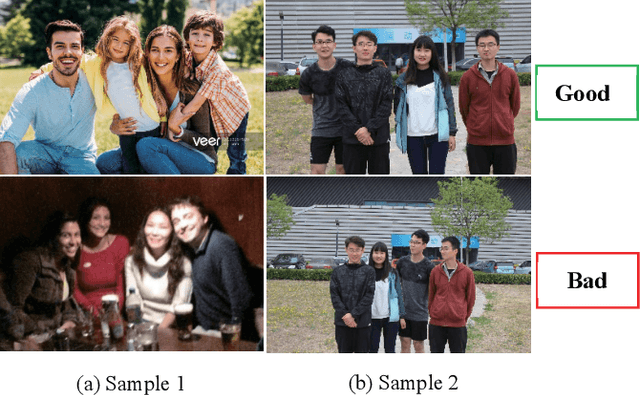
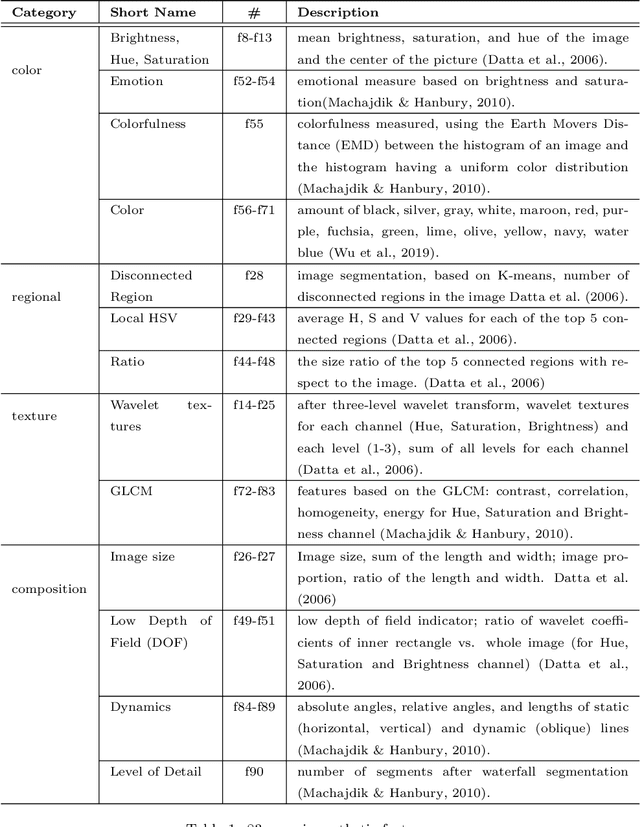
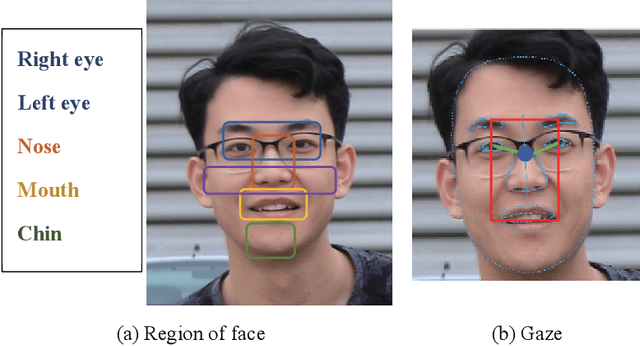
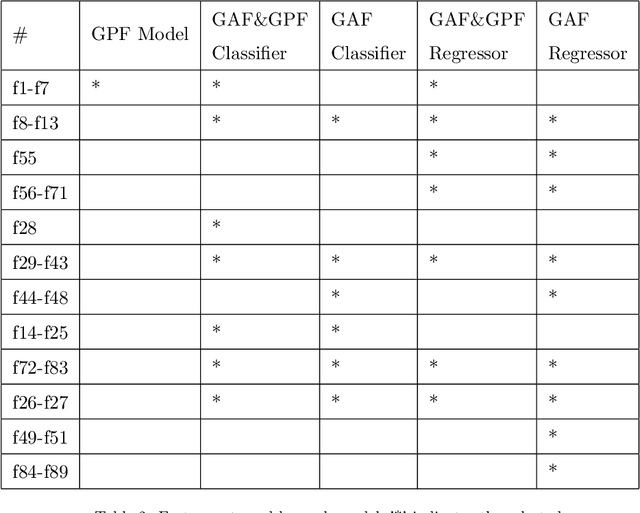
Image aesthetic quality assessment has got much attention in recent years, but not many works have been done on a specific genre of photos: Group photograph. In this work, we designed a set of high-level features based on the experience and principles of group photography: Opened-eye, Gaze, Smile, Occluded faces, Face Orientation, Facial blur, Character center. Then we combined them and 83 generic aesthetic features to build two aesthetic assessment models. We also constructed a large dataset of group photographs - GPD- annotated with the aesthetic score. The experimental result shows that our features perform well for categorizing professional photos and snapshots and predicting the distinction of multiple group photographs of diverse human states under the same scene.