 Add to Chrome
 Add to Firefox
 Add to Edge
Trace-Mediated Peak Bias: Bridging Temporal Credit Assignment and Cognitive Heuristics in Deep Reinforcement Learning
Jun 03, 2026
Temporal credit assignment is central to both biological and artificial intelligence, yet its interaction with non-linear function approximation is poorly understood. We identify a systematic failure mode in deep reinforcement learning (RL) termed Trace-Mediated Peak Bias (TMPB). At intermediate eligibility trace depths, agents irrationally prefer trajectories with high-magnitude reward ``peaks'' over alternatives with higher cumulative returns. This provides a mechanistic account of the Peak-End Rule: a human memory bias where experiences are judged by their most intense moments rather than integrated utility. We show that TMPB emerges because traces amplify distal Temporal Difference errors into ``gradient shocks'' that fixed-step-size Stochastic Gradient Descent cannot normalize, leading to global overestimation. Conversely, adaptive optimizers mitigate this pathology via second-moment normalization. Our results suggest that human-like saliency distortions may emerge naturally from the mathematical constraints of credit assignment in distributed systems, and that adaptive optimization is a theoretical necessity for rational value estimation.

$ε$-Optimally Solving Zero-Sum POSGs
May 29, 2024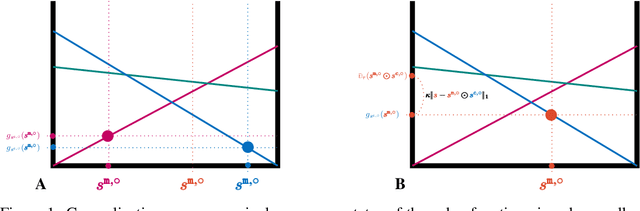

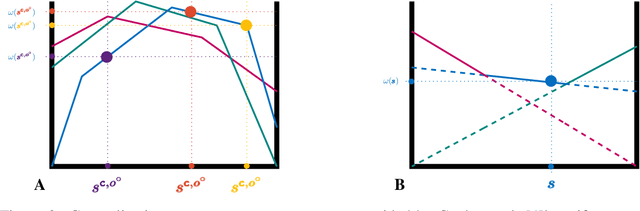

A recent method for solving zero-sum partially observable stochastic games (zs-POSGs) embeds the original game into a new one called the occupancy Markov game. This reformulation allows applying Bellman's principle of optimality to solve zs-POSGs. However, improving a current solution requires solving a linear program with exponentially many potential constraints, which significantly restricts the scalability of this approach. This paper exploits the optimal value function's novel uniform continuity properties to overcome this limitation. We first construct a new operator that is computationally more efficient than the state-of-the-art update rules without compromising optimality. In particular, improving a current solution now involves a linear program with an exponential drop in constraints. We then also show that point-based value iteration algorithms utilizing our findings improve the scalability of existing methods while maintaining guarantees in various domains.
Attention Graph for Multi-Robot Social Navigation with Deep Reinforcement Learning
Jan 31, 2024


Learning robot navigation strategies among pedestrian is crucial for domain based applications. Combining perception, planning and prediction allows us to model the interactions between robots and pedestrians, resulting in impressive outcomes especially with recent approaches based on deep reinforcement learning (RL). However, these works do not consider multi-robot scenarios. In this paper, we present MultiSoc, a new method for learning multi-agent socially aware navigation strategies using RL. Inspired by recent works on multi-agent deep RL, our method leverages graph-based representation of agent interactions, combining the positions and fields of view of entities (pedestrians and agents). Each agent uses a model based on two Graph Neural Network combined with attention mechanisms. First an edge-selector produces a sparse graph, then a crowd coordinator applies node attention to produce a graph representing the influence of each entity on the others. This is incorporated into a model-free RL framework to learn multi-agent policies. We evaluate our approach on simulation and provide a series of experiments in a set of various conditions (number of agents / pedestrians). Empirical results show that our method learns faster than social navigation deep RL mono-agent techniques, and enables efficient multi-agent implicit coordination in challenging crowd navigation with multiple heterogeneous humans. Furthermore, by incorporating customizable meta-parameters, we can adjust the neighborhood density to take into account in our navigation strategy.