 Add to Chrome
 Add to Firefox
 Add to Edge
LightTact: A Visual-Tactile Fingertip Sensor for Deformation-Independent Contact Sensing
Dec 23, 2025
Contact often occurs without macroscopic surface deformation, such as during interaction with liquids, semi-liquids, or ultra-soft materials. Most existing tactile sensors rely on deformation to infer contact, making such light-contact interactions difficult to perceive robustly. To address this, we present LightTact, a visual-tactile fingertip sensor that makes contact directly visible via a deformation-independent, optics-based principle. LightTact uses an ambient-blocking optical configuration that suppresses both external light and internal illumination at non-contact regions, while transmitting only the diffuse light generated at true contacts. As a result, LightTact produces high-contrast raw images in which non-contact pixels remain near-black (mean gray value < 3) and contact pixels preserve the natural appearance of the contacting surface. Built on this, LightTact achieves accurate pixel-level contact segmentation that is robust to material properties, contact force, surface appearance, and environmental lighting. We further integrate LightTact on a robotic arm and demonstrate manipulation behaviors driven by extremely light contact, including water spreading, facial-cream dipping, and thin-film interaction. Finally, we show that LightTact's spatially aligned visual-tactile images can be directly interpreted by existing vision-language models, enabling resistor value reasoning for robotic sorting.

Interference-Aware Edge Runtime Prediction with Conformal Matrix Completion
Mar 09, 2025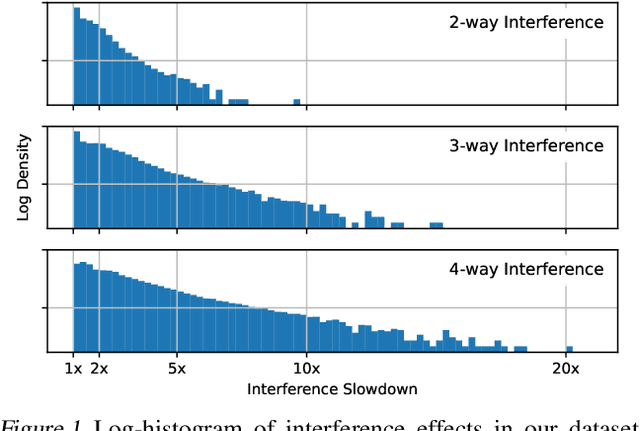
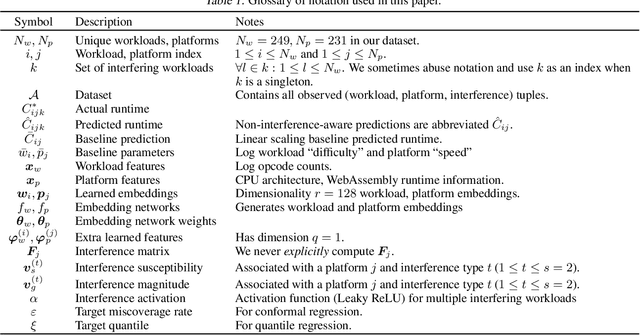
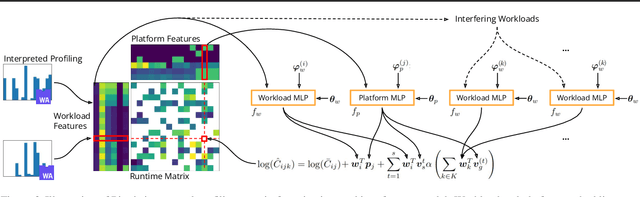
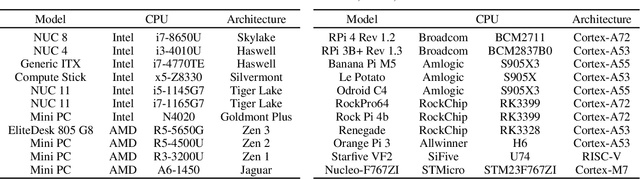
Accurately estimating workload runtime is a longstanding goal in computer systems, and plays a key role in efficient resource provisioning, latency minimization, and various other system management tasks. Runtime prediction is particularly important for managing increasingly complex distributed systems in which more sophisticated processing is pushed to the edge in search of better latency. Previous approaches for runtime prediction in edge systems suffer from poor data efficiency or require intensive instrumentation; these challenges are compounded in heterogeneous edge computing environments, where historical runtime data may be sparsely available and instrumentation is often challenging. Moreover, edge computing environments often feature multi-tenancy due to limited resources at the network edge, potentially leading to interference between workloads and further complicating the runtime prediction problem. Drawing from insights across machine learning and computer systems, we design a matrix factorization-inspired method that generates accurate interference-aware predictions with tight provably-guaranteed uncertainty bounds. We validate our method on a novel WebAssembly runtime dataset collected from 24 unique devices, achieving a prediction error of 5.2% -- 2x better than a naive application of existing methods.