 Add to Chrome
 Add to Firefox
 Add to Edge
GazeVaLM: A Multi-Observer Eye-Tracking Benchmark for Evaluating Clinical Realism in AI-Generated X-Rays
Apr 13, 2026
We introduce GazeVaLM, a public eye-tracking dataset for studying clinical perception during chest radiograph authenticity assessment. The dataset comprises 960 gaze recordings from 16 expert radiologists interpreting 30 real and 30 synthetic chest X-rays (generated by diffusion based generative AI) under two conditions: diagnostic assessment and real-fake classification (Visual Turing test). For each image-observer pair, we provide raw gaze samples, fixation maps, scanpaths, saliency density maps, structured diagnostic labels, and authenticity judgments. We extend the protocol to 6 state-of-the-art multimodal LLMs, releasing their predicted diagnoses, authenticity labels, and confidence scores under matched conditions - enabling direct human-AI comparison at both decision and uncertainty levels. We further provide analyses of gaze agreement, inter-observer consistency, and benchmarking of radiologists versus LLMs in diagnostic accuracy and authenticity detection. GazeVaLM supports research in gaze modeling, clinical decision-making, human-AI comparison, generative image realism assessment, and uncertainty quantification. By jointly releasing visual attention data, clinical labels, and model predictions, we aim to facilitate reproducible research on how experts and AI systems perceive, interpret, and evaluate medical images. The dataset is available at https://huggingface.co/datasets/davidcwong/GazeVaLM.

Eyes Tell the Truth: GazeVal Highlights Shortcomings of Generative AI in Medical Imaging
Mar 26, 2025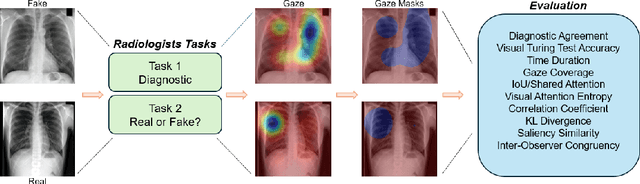
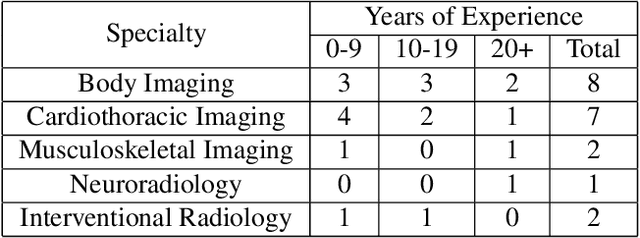
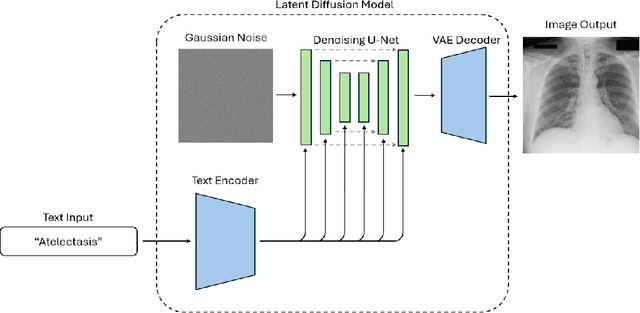

The demand for high-quality synthetic data for model training and augmentation has never been greater in medical imaging. However, current evaluations predominantly rely on computational metrics that fail to align with human expert recognition. This leads to synthetic images that may appear realistic numerically but lack clinical authenticity, posing significant challenges in ensuring the reliability and effectiveness of AI-driven medical tools. To address this gap, we introduce GazeVal, a practical framework that synergizes expert eye-tracking data with direct radiological evaluations to assess the quality of synthetic medical images. GazeVal leverages gaze patterns of radiologists as they provide a deeper understanding of how experts perceive and interact with synthetic data in different tasks (i.e., diagnostic or Turing tests). Experiments with sixteen radiologists revealed that 96.6% of the generated images (by the most recent state-of-the-art AI algorithm) were identified as fake, demonstrating the limitations of generative AI in producing clinically accurate images.
GazeGNN: A Gaze-Guided Graph Neural Network for Disease Classification
May 29, 2023The application of eye-tracking techniques in medical image analysis has become increasingly popular in recent years. It collects the visual search patterns of the domain experts, containing much important information about health and disease. Therefore, how to efficiently integrate radiologists' gaze patterns into the diagnostic analysis turns into a critical question. Existing works usually transform gaze information into visual attention maps (VAMs) to supervise the learning process. However, this time-consuming procedure makes it difficult to develop end-to-end algorithms. In this work, we propose a novel gaze-guided graph neural network (GNN), GazeGNN, to perform disease classification from medical scans. In GazeGNN, we create a unified representation graph that models both the image and gaze pattern information. Hence, the eye-gaze information is directly utilized without being converted into VAMs. With this benefit, we develop a real-time, real-world, end-to-end disease classification algorithm for the first time and avoid the noise and time consumption introduced during the VAM preparation. To our best knowledge, GazeGNN is the first work that adopts GNN to integrate image and eye-gaze data. Our experiments on the public chest X-ray dataset show that our proposed method exhibits the best classification performance compared to existing methods.