 Add to Chrome
 Add to Firefox
 Add to Edge
Protein Representation Learning with Secondary-Structure and Energy-Filtered Hydrogen-Bond Graphs
Jun 12, 2026
Graph-based representations are widely used in protein modeling, yet many existing approaches rely primarily on sequence adjacency or geometric proximity, which only partially reflect the principles governing protein folding. Proteins instead adopt complex three-dimensional conformations organized around secondary structure elements, such as $α$-helices and $β$-sheets, which encode recurring local motifs and stabilizing hydrogen-bond interactions. In this work, we introduce a secondary-structure-aware graph neural network for protein representation learning. Residue-level node representations are augmented with secondary structure assignments, and graph edges are constructed from hydrogen-bond interactions filtered by their energetic strength. This design enables the model to capture both local structural context and long-range couplings that are central to protein stability and function. We evaluate the proposed approach on commonly used protein benchmarks and observe consistent improvements over existing graph-based methods. In addition, the resulting graph representations offer enhanced biological interpretability, as the learned connectivity aligns with established structural motifs. These findings suggest that incorporating secondary structure and energy-filtered hydrogen-bond topology provides an effective inductive bias for protein representation learning. The code is released at https://github.com/mohamedmohamed2021/SSProNet

Beyond LoRA: Is Sparsity-Induced Adaptation Better?
Jun 11, 2026Low-rank adaptation (LoRA) and its variants provide a memory- and compute-efficient alternative to full fine-tuning of pre-trained models. However, questions remain about the comparative generalizability of these approaches and how the structural restrictions on low-rank updates preserve effective adaptation performance. We present a historical framing, covering the past (full fine-tuning and original LoRA), the present (different variants of LoRA), and propose simpler, cheaper, parameter-efficient extensions by inducing sparsity within existing LoRA variants: Cheap LoRA (cLA), training a single low-rank factor with the other fixed (deterministically or, in its randomized variant, stochastically), and the chained circulant variant, ${c}^3$LA. We frame cLA as a structured instance of asymmetric LoRA, serving as a controlled column-subspace restriction of full fine-tuning. We derive information-theoretic generalization error bounds for these variants, marking one of the first endeavors in this area. Empirically, we evaluate 11 fine-tuning methods across 10 pre-trained models and 14 datasets, analyzing the fine-tuned models' performance and generalization using tools such as loss landscapes and spectral analysis. Despite the sensitivity of fine-tuned models to the pre-trained model, datasets, and other factors, our study suggests that restricting LoRA-based PEFT methods' adaptation to a sparse, structured column space remains competitive across tasks with their parameter-matched baselines while reducing up to 10% training time and peak GPU memory up to 15%, even with a naïve, non-optimized, sparse implementation. Our theoretical and empirical generalization measures provide a more consistent and principled approach to their cost-effective adaptation than commonly used analytical tools. Overview and code are available at: https://elicaden.github.io/Beyond_LoRA/.
FairEnergy: Contribution-Based Fairness meets Energy Efficiency in Federated Learning
Nov 19, 2025Federated learning (FL) enables collaborative model training across distributed devices while preserving data privacy. However, balancing energy efficiency and fair participation while ensuring high model accuracy remains challenging in wireless edge systems due to heterogeneous resources, unequal client contributions, and limited communication capacity. To address these challenges, we propose FairEnergy, a fairness-aware energy minimization framework that integrates a contribution score capturing both the magnitude of updates and their compression ratio into the joint optimization of device selection, bandwidth allocation, and compression level. The resulting mixed-integer non-convex problem is solved by relaxing binary selection variables and applying Lagrangian decomposition to handle global bandwidth coupling, followed by per-device subproblem optimization. Experiments on non-IID data show that FairEnergy achieves higher accuracy while reducing energy consumption by up to 79\% compared to baseline strategies.
If You Want to Be Robust, Be Wary of Initialization
Oct 26, 2025Graph Neural Networks (GNNs) have demonstrated remarkable performance across a spectrum of graph-related tasks, however concerns persist regarding their vulnerability to adversarial perturbations. While prevailing defense strategies focus primarily on pre-processing techniques and adaptive message-passing schemes, this study delves into an under-explored dimension: the impact of weight initialization and associated hyper-parameters, such as training epochs, on a model's robustness. We introduce a theoretical framework bridging the connection between initialization strategies and a network's resilience to adversarial perturbations. Our analysis reveals a direct relationship between initial weights, number of training epochs and the model's vulnerability, offering new insights into adversarial robustness beyond conventional defense mechanisms. While our primary focus is on GNNs, we extend our theoretical framework, providing a general upper-bound applicable to Deep Neural Networks. Extensive experiments, spanning diverse models and real-world datasets subjected to various adversarial attacks, validate our findings. We illustrate that selecting appropriate initialization not only ensures performance on clean datasets but also enhances model robustness against adversarial perturbations, with observed gaps of up to 50\% compared to alternative initialization approaches.
Energy Efficient Aerial RIS: Phase Shift Optimization and Trajectory Design
Jul 25, 2024Reconfigurable Intelligent Surface (RIS) technology has gained significant attention due to its ability to enhance the performance of wireless communication systems. The main advantage of RIS is that it can be strategically placed in the environment to control wireless signals, enabling improvements in coverage, capacity, and energy efficiency. In this paper, we investigate a scenario in which a drone, equipped with a RIS, travels from an initial point to a target destination. In this scenario, the aerial RIS (ARIS) is deployed to establish a direct link between the base station and obstructed users. Our objective is to maximize the energy efficiency of the ARIS while taking into account its dynamic model including its velocity and acceleration along with the phase shift of the RIS. To this end, we formulate the energy efficiency problem under the constraints of the dynamic model of the drone. The studied problem is challenging to solve. To address this, we proceed as follows. First, we introduce an efficient solution that involves decoupling the phase shift optimization and the trajectory design. Specifically, the closed-form expression of the phase-shift is obtained using a convex approximation, which is subsequently integrated into the trajectory design problem. We then employ tools inspired by economic model predictive control (EMPC) to solve the resulting trajectory optimization. Our simulation results show a significant improvement in energy efficiency against the scenario where the dynamic model of the UAV is ignored.
Joint Probability Selection and Power Allocation for Federated Learning
Jan 15, 2024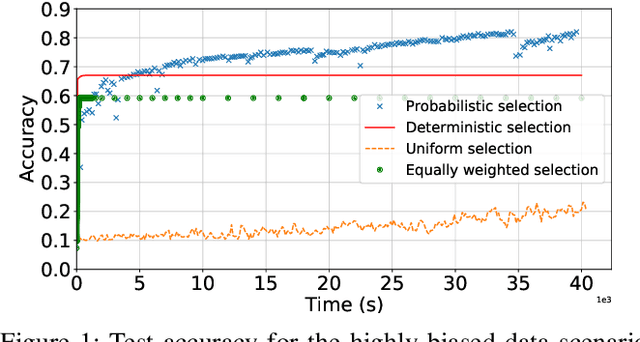
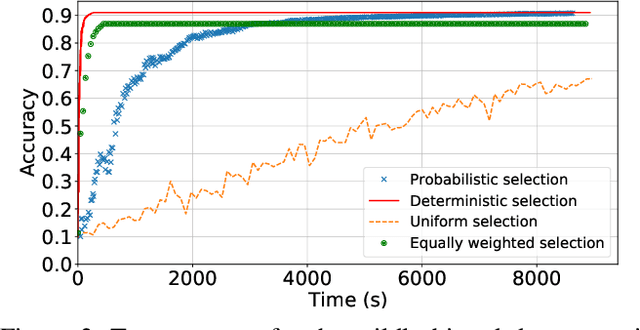
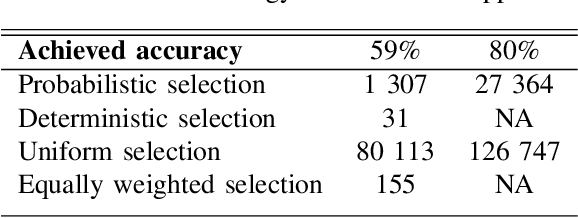
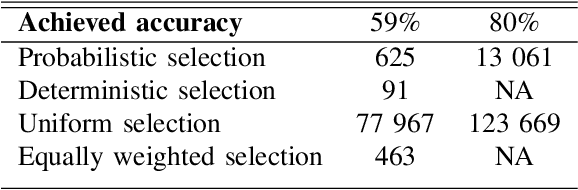
In this paper, we study the performance of federated learning over wireless networks, where devices with a limited energy budget train a machine learning model. The federated learning performance depends on the selection of the clients participating in the learning at each round. Most existing studies suggest deterministic approaches for the client selection, resulting in challenging optimization problems that are usually solved using heuristics, and therefore without guarantees on the quality of the final solution. We formulate a new probabilistic approach to jointly select clients and allocate power optimally so that the expected number of participating clients is maximized. To solve the problem, a new alternating algorithm is proposed, where at each step, the closed-form solutions for user selection probabilities and power allocations are obtained. Our numerical results show that the proposed approach achieves a significant performance in terms of energy consumption, completion time and accuracy as compared to the studied benchmarks.
Demystifying the Myths and Legends of Nonconvex Convergence of SGD
Oct 19, 2023
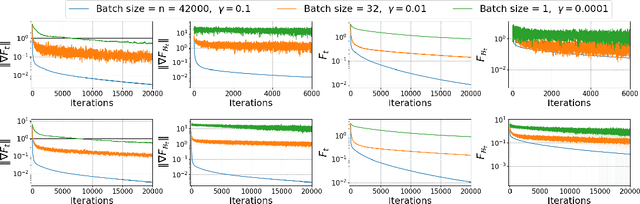
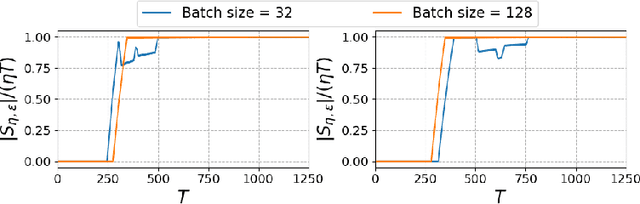

Stochastic gradient descent (SGD) and its variants are the main workhorses for solving large-scale optimization problems with nonconvex objective functions. Although the convergence of SGDs in the (strongly) convex case is well-understood, their convergence for nonconvex functions stands on weak mathematical foundations. Most existing studies on the nonconvex convergence of SGD show the complexity results based on either the minimum of the expected gradient norm or the functional sub-optimality gap (for functions with extra structural property) by searching the entire range of iterates. Hence the last iterations of SGDs do not necessarily maintain the same complexity guarantee. This paper shows that an $\epsilon$-stationary point exists in the final iterates of SGDs, given a large enough total iteration budget, $T$, not just anywhere in the entire range of iterates -- a much stronger result than the existing one. Additionally, our analyses allow us to measure the density of the $\epsilon$-stationary points in the final iterates of SGD, and we recover the classical $O(\frac{1}{\sqrt{T}})$ asymptotic rate under various existing assumptions on the objective function and the bounds on the stochastic gradient. As a result of our analyses, we addressed certain myths and legends related to the nonconvex convergence of SGD and posed some thought-provoking questions that could set new directions for research.
Ensemble DNN for Age-of-Information Minimization in UAV-assisted Networks
Sep 06, 2023This paper addresses the problem of Age-of-Information (AoI) in UAV-assisted networks. Our objective is to minimize the expected AoI across devices by optimizing UAVs' stopping locations and device selection probabilities. To tackle this problem, we first derive a closed-form expression of the expected AoI that involves the probabilities of selection of devices. Then, we formulate the problem as a non-convex minimization subject to quality of service constraints. Since the problem is challenging to solve, we propose an Ensemble Deep Neural Network (EDNN) based approach which takes advantage of the dual formulation of the studied problem. Specifically, the Deep Neural Networks (DNNs) in the ensemble are trained in an unsupervised manner using the Lagrangian function of the studied problem. Our experiments show that the proposed EDNN method outperforms traditional DNNs in reducing the expected AoI, achieving a remarkable reduction of $29.5\%$.
A Note on Randomized Kaczmarz Algorithm for Solving Doubly-Noisy Linear Systems
Aug 31, 2023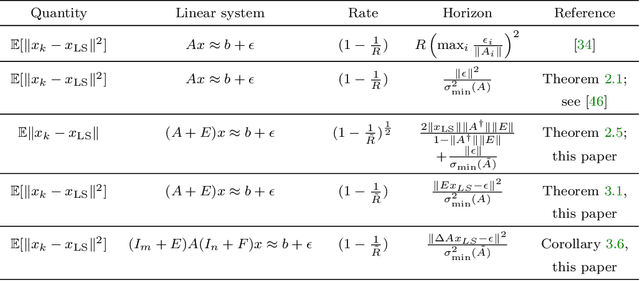
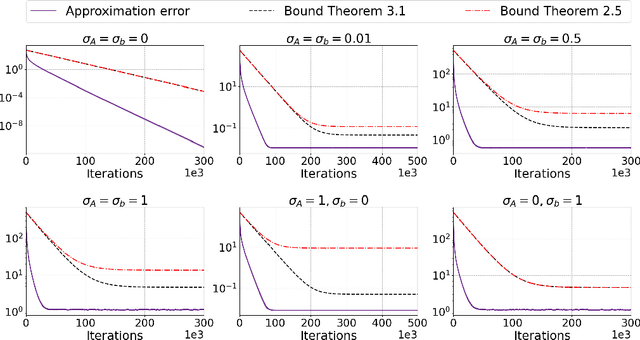
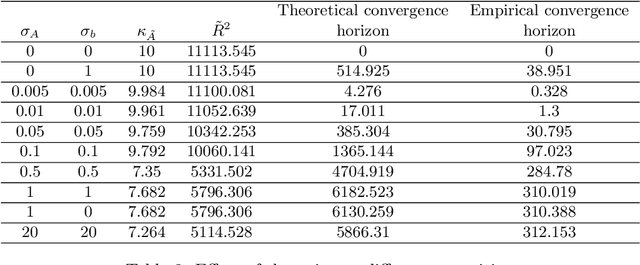
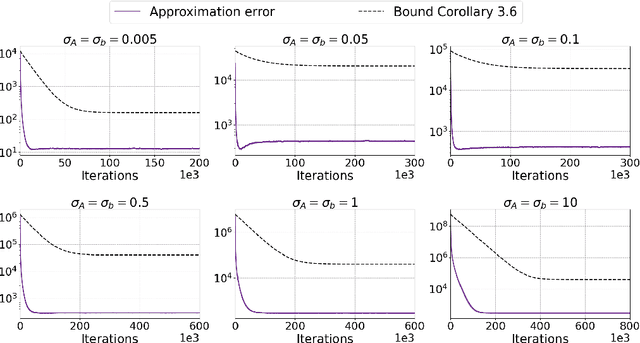
Large-scale linear systems, $Ax=b$, frequently arise in practice and demand effective iterative solvers. Often, these systems are noisy due to operational errors or faulty data-collection processes. In the past decade, the randomized Kaczmarz (RK) algorithm has been studied extensively as an efficient iterative solver for such systems. However, the convergence study of RK in the noisy regime is limited and considers measurement noise in the right-hand side vector, $b$. Unfortunately, in practice, that is not always the case; the coefficient matrix $A$ can also be noisy. In this paper, we analyze the convergence of RK for noisy linear systems when the coefficient matrix, $A$, is corrupted with both additive and multiplicative noise, along with the noisy vector, $b$. In our analyses, the quantity $\tilde R=\| \tilde A^{\dagger} \|_2^2 \|\tilde A \|_F^2$ influences the convergence of RK, where $\tilde A$ represents a noisy version of $A$. We claim that our analysis is robust and realistically applicable, as we do not require information about the noiseless coefficient matrix, $A$, and considering different conditions on noise, we can control the convergence of RK. We substantiate our theoretical findings by performing comprehensive numerical experiments.
Muti-Agent Proximal Policy Optimization For Data Freshness in UAV-assisted Networks
Mar 15, 2023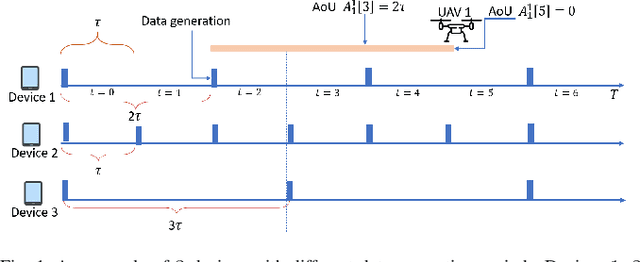
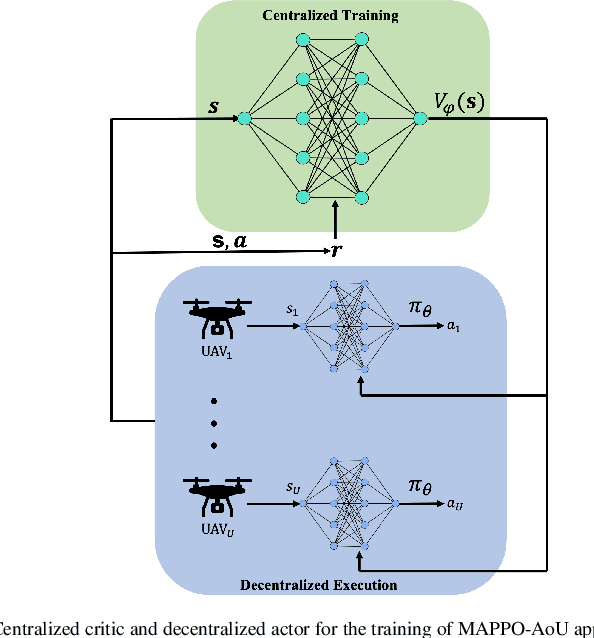
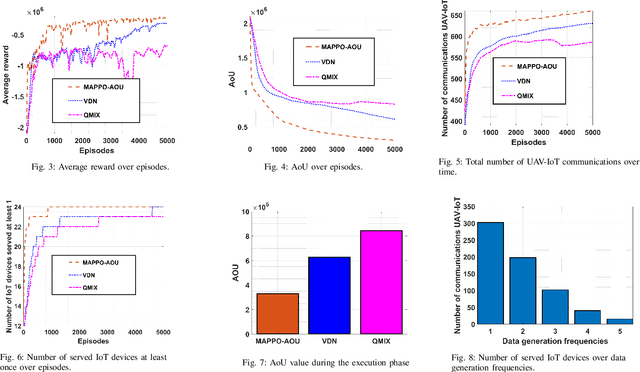
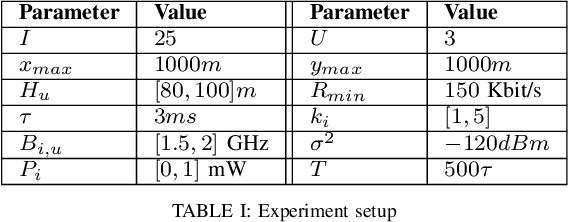
Unmanned aerial vehicles (UAVs) are seen as a promising technology to perform a wide range of tasks in wireless communication networks. In this work, we consider the deployment of a group of UAVs to collect the data generated by IoT devices. Specifically, we focus on the case where the collected data is time-sensitive, and it is critical to maintain its timeliness. Our objective is to optimally design the UAVs' trajectories and the subsets of visited IoT devices such as the global Age-of-Updates (AoU) is minimized. To this end, we formulate the studied problem as a mixed-integer nonlinear programming (MINLP) under time and quality of service constraints. To efficiently solve the resulting optimization problem, we investigate the cooperative Multi-Agent Reinforcement Learning (MARL) framework and propose an RL approach based on the popular on-policy Reinforcement Learning (RL) algorithm: Policy Proximal Optimization (PPO). Our approach leverages the centralized training decentralized execution (CTDE) framework where the UAVs learn their optimal policies while training a centralized value function. Our simulation results show that the proposed MAPPO approach reduces the global AoU by at least a factor of 1/2 compared to conventional off-policy reinforcement learning approaches.