 Add to Chrome
 Add to Firefox
 Add to Edge
A Taxonomy of Mental Health and Technology Needs for Alzheimer's and Dementia Caregivers
Jun 17, 2026
Family members caring for individuals with Alzheimer's disease and related dementias (AD/ADRD) provide the foundation of long-term care worldwide. In 2023, more than 11 million U.S. family and friends contributed 18 billion hours of unpaid care, often at the cost of their own physical and mental health. These informal caregivers -- also referred as the "invisible second patients" -- experience elevated rates of mental health problems. Yet research commonly reduces their complex psychosocial experiences to a single construct of caregiver burden, obscuring which specific needs are unmet or effectively supported. At the same time, digital and AI-enabled technologies are rapidly expanding, from smartphone apps and videoconferencing to sensor platforms and AI chatbots. However, the absence of shared frameworks across medicine, psychology, and technology research limits cumulative progress. This study introduces a Caregiver Mental Health and Technology Taxonomy that systematically links AD/ADRD caregiver needs with corresponding classes of technology-based interventions. Drawing from an interdisciplinary literature review and two qualitative studies with caregivers, the taxonomy identifies mismatches between caregiver priorities and existing technological support, highlights under-served domains such as relational strain and compassion fatigue, and proposes design directions for adaptive, responsive systems. The framework offers a shared vocabulary to guide clinicians, researchers, and technology designers in developing more person-centered and clinically grounded innovation in dementia care.

When AI Says "I have been in similar situations": Synthetic Lived Experience in Peer-Like Caregiver Support
Jun 16, 2026Caregivers often turn to online communities for informational and emotional support. In these spaces, peer supporters frequently draw on personal narratives to respond to emotionally complex caregiving situations. As LLMs are increasingly designed as peer-like sources of support, they introduce a critical tension: AI can provide immediate, private, and nonjudgmental support, but it cannot authentically possess the lived experiences that make human peer support meaningful. Yet, when prompted to sound peer-like, LLMs may generate language that implies lived experience. This creates a synthetic lived experience paradox: the same experiential language that may make AI support feel warm, relatable, and peer-like can also falsely position the system as someone with lived experience. We examine this paradox in the context of family caregivers of people living with Alzheimer's Disease and Related Dementias (ADRD). Drawing on caregiver support exchanges from online communities and prompted peer-like responses from three LLMs -- LLaMA, GPT-4o-mini, and MedGemma -- we analyze how human peers use personal narratives and how AI incorporates similar narrative forms. Psycholinguistic analysis shows that peer responses used significantly more first-person and past-focused language than peer-like AI responses. Qualitatively, we identify seven types of personal narratives in human peer support and show that AI often captures their emotional work, but can fabricate experiential grounding. These findings reveal a narrative authenticity gap: peer-like AI can generate synthetic lived experience without the real experience that makes peer support meaningful. We argue that caregiver-support AI systems need mechanisms to distinguish supportive peer-like framing from fabricated lived experience, ensuring that models can offer warmth and validation without falsely positioning themselves as experiential peers.
Inform, Coach, Relate, Listen: Auditing LLM Caregiving Support Roles
May 28, 2026Language models are increasingly being deployed for conversational support in informal caregiving contexts, where interactions often extend beyond information-seeking: caregivers seek emotional reassurance, guidance, and help, while navigating uncertain, relationally complex care decisions. Yet most safety evaluations assess model behavior under generic prompts, leaving a critical question unexamined: does a model's safety profile change with its support role? We study this by operationalizing four expert-reviewed support roles grounded in social support theory: Inform, Coach, Relate, and Listen, and comparing them against two baseline controls: a basic prompting condition and a retrieval-augmented generation (RAG) condition. We evaluate across three language models (GPT-4o-mini, Llama-3.1-8B-Instruct, and MedGemma-1.5-4b-it) on 5,000 real-world queries from online Alzheimer's Disease and Related Dementias (ADRD) communities. We find that the LLM's support role systematically shapes both the prevalence and composition of interactional risks. Furthermore, a human evaluation study reveals a perceived quality--safety tension: more directive, information-oriented roles are rated as more helpful and trustworthy despite exhibiting elevated interactional risk profiles. We release ~90,000 support role-conditioned model responses with risk annotations as an ecologically grounded resource for research on safer LLM-mediated conversational support.
RubRIX: Rubric-Driven Risk Mitigation in Caregiver-AI Interactions
Jan 19, 2026Caregivers seeking AI-mediated support express complex needs -- information-seeking, emotional validation, and distress cues -- that warrant careful evaluation of response safety and appropriateness. Existing AI evaluation frameworks, primarily focused on general risks (toxicity, hallucinations, policy violations, etc), may not adequately capture the nuanced risks of LLM-responses in caregiving-contexts. We introduce RubRIX (Rubric-based Risk Index), a theory-driven, clinician-validated framework for evaluating risks in LLM caregiving responses. Grounded in the Elements of an Ethic of Care, RubRIX operationalizes five empirically-derived risk dimensions: Inattention, Bias & Stigma, Information Inaccuracy, Uncritical Affirmation, and Epistemic Arrogance. We evaluate six state-of-the-art LLMs on over 20,000 caregiver queries from Reddit and ALZConnected. Rubric-guided refinement consistently reduced risk-components by 45-98% after one iteration across models. This work contributes a methodological approach for developing domain-sensitive, user-centered evaluation frameworks for high-burden contexts. Our findings highlight the importance of domain-sensitive, interactional risk evaluation for the responsible deployment of LLMs in caregiving support contexts. We release benchmark datasets to enable future research on contextual risk evaluation in AI-mediated support.
Time Warp: The Gap Between Developers' Ideal vs Actual Workweeks in an AI-Driven Era
Feb 21, 2025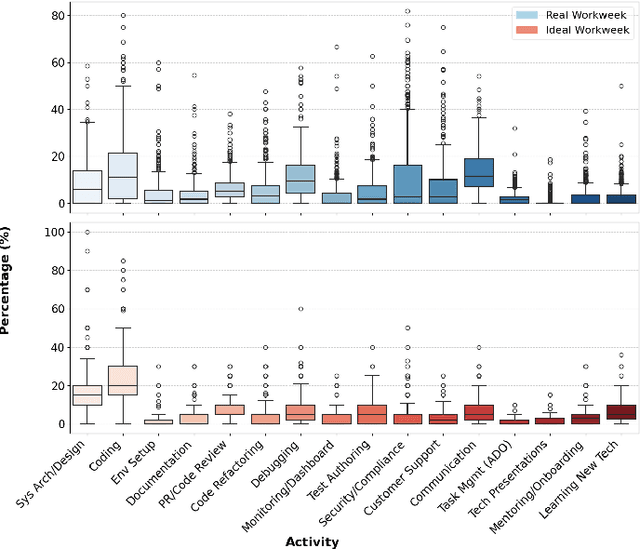
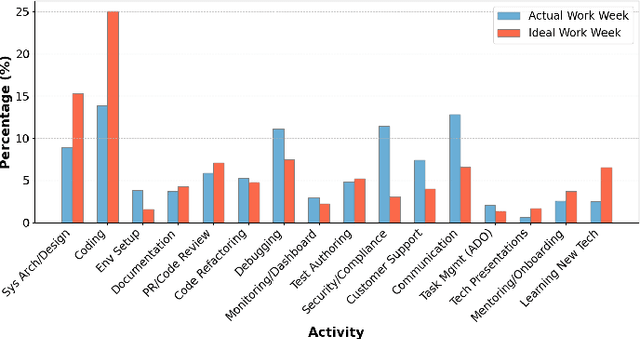
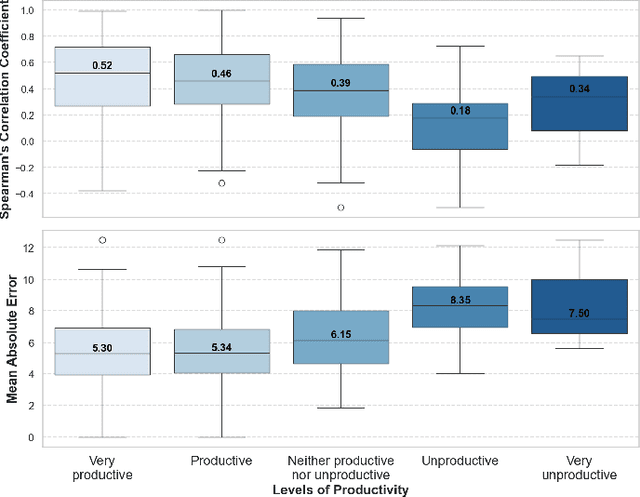
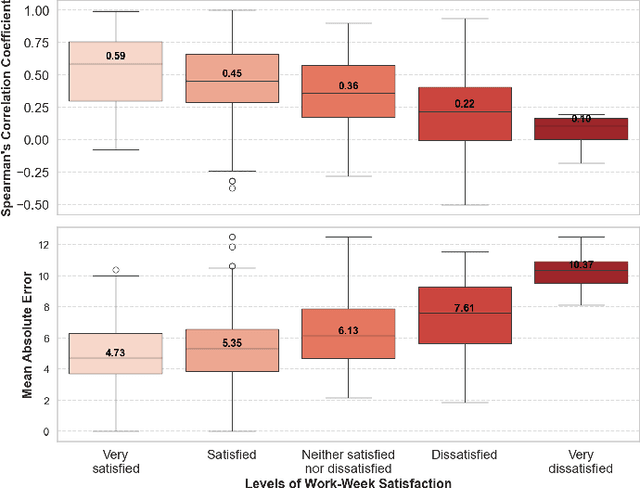
Software developers balance a variety of different tasks in a workweek, yet the allocation of time often differs from what they consider ideal. Identifying and addressing these deviations is crucial for organizations aiming to enhance the productivity and well-being of the developers. In this paper, we present the findings from a survey of 484 software developers at Microsoft, which aims to identify the key differences between how developers would like to allocate their time during an ideal workweek versus their actual workweek. Our analysis reveals significant deviations between a developer's ideal workweek and their actual workweek, with a clear correlation: as the gap between these two workweeks widens, we observe a decline in both productivity and satisfaction. By examining these deviations in specific activities, we assess their direct impact on the developers' satisfaction and productivity. Additionally, given the growing adoption of AI tools in software engineering, both in the industry and academia, we identify specific tasks and areas that could be strong candidates for automation. In this paper, we make three key contributions: 1) We quantify the impact of workweek deviations on developer productivity and satisfaction 2) We identify individual tasks that disproportionately affect satisfaction and productivity 3) We provide actual data-driven insights to guide future AI automation efforts in software engineering, aligning them with the developers' requirements and ideal workflows for maximizing their productivity and satisfaction.
Machine Learning Interventions for Weed Detection using Multispectral Imagery and Unmanned Aerial Vehicles -- A Systematic Review
Aug 13, 2024The growth of weeds poses a significant challenge to agricultural productivity, necessitating efficient and accurate weed detection and management strategies. The combination of multispectral imaging and drone technology has emerged as a promising approach to tackle this issue, enabling rapid and cost-effective monitoring of large agricultural fields. This systematic review surveys and evaluates the state-of-the-art in machine learning interventions for weed detection that utilize multispectral images captured by unmanned aerial vehicles. The study describes the various models used for training, features extracted from multi-spectral data, their efficiency and effect on the results, the performance analysis parameters, and also the current challenges faced by researchers in this domain. The review was conducted in accordance with the PRISMA guidelines. Three sources were used to obtain the relevant material, and the screening and data extraction were done on the COVIDENCE platform. The search string resulted in 600 papers from all sources. The review also provides insights into potential research directions and opportunities for further advancements in the field. These insights would serve as a valuable guide for researchers, agricultural scientists, and practitioners in developing precise and sustainable weed management strategies to enhance agricultural productivity and minimize ecological impact.
PRECISe : Prototype-Reservation for Explainable Classification under Imbalanced and Scarce-Data Settings
Aug 11, 2024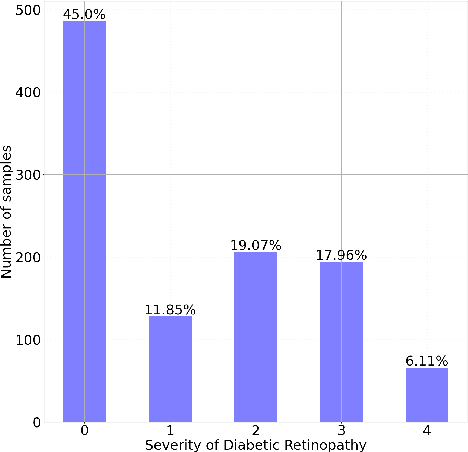

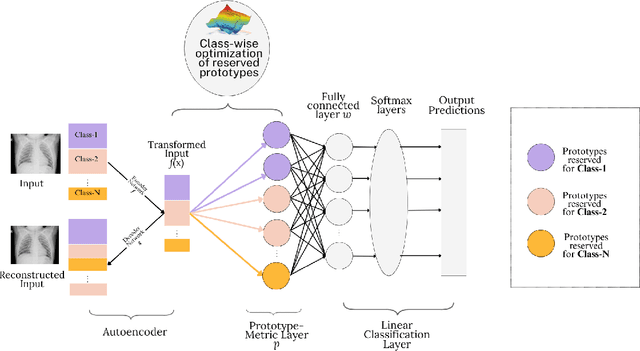

Deep learning models used for medical image classification tasks are often constrained by the limited amount of training data along with severe class imbalance. Despite these problems, models should be explainable to enable human trust in the models' decisions to ensure wider adoption in high-risk situations. In this paper, we propose PRECISe, an explainable-by-design model meticulously constructed to concurrently address all three challenges. Evaluation on 2 imbalanced medical image datasets reveals that PRECISe outperforms the current state-of-the-art methods on data efficient generalization to minority classes, achieving an accuracy of ~87% in detecting pneumonia in chest x-rays upon training on <60 images only. Additionally, a case study is presented to highlight the model's ability to produce easily interpretable predictions, reinforcing its practical utility and reliability for medical imaging tasks.