 Add to Chrome
 Add to Firefox
 Add to Edge
Evolutionary Two-Stage Hyperparameter Optimization Strategies for Physics-Informed Neural Networks
Jun 18, 2026
Physics-Informed Neural Networks (PINNs) solve Partial Differential Equations (PDEs) by embedding physical laws into neural network training. However, their performance suffers from unstable convergence, training plateaus, and strong sensitivity to architectural and optimization hyperparameters due to the highly non-convex and multi-term structure of the physics-informed loss. In this setting, the outer-loop hyperparameter search is a noisy and black-box optimization problem over heterogeneous parameters, where classical local or gradient-based strategies are easily trapped in suboptimal regions. Evolutionary algorithms, with their population-based exploration and ability to handle mixed, non-differentiable search spaces, provide a more robust mechanism for discovering promising configurations. We propose and investigate a two-stage approach based on evolutionary algorithms that combines exploration and exploitation parts of PINNs training to improve solution accuracy and robustness under fixed computational budgets. In the first stage, we perform low-fidelity training runs with truncated epochs to rapidly screen candidate configurations, treating hyperparameter selection as a black-box outer-loop problem. In the second stage, only the most promising candidates are fully trained with standard gradient-based optimizers to refine the solution. Evaluated on three popular problems, namely Advection, Klein-Gordon and Helmholtz equations, our method consistently outperforms standard training and achieves significantly lower mean error within constrained computational resources.

Physics-Constrained Neural Networks for Improved Short-Term Weather Forecasting: A Case Study over the South Pacific
Jun 16, 2026This study introduces enhancements to physics-constrained neural networks (PCNNs) that improve the accuracy and stability of hybrid short-term weather forecasting models. Building on the WeatherGFT architecture, three innovations are proposed. First, an upgraded numerical solver, combining a fifth-order weighted essentially non-oscillatory scheme (WENO-5), a beta-plane approximation, and subgrid-scale viscosity, permits a fourfold increase in the integration time step to 1200 s while reducing the daily mean squared error by up to 26%. Second, a unified autoregressive hybrid block replaces the original chain of 24 specialised modules, eliminating overfitting to specific lead times. Third, the physical core is integrated with two state-of-the-art neural backbones, resulting in PI-PredFormer and PI-IAM4VP. Evaluation on the WeatherBench South Pacific subset from 2000 to 2004 shows that these hybrids reduce root mean squared error at 1-12 h lead times by 8-22% compared to purely neural counterparts, while better preserving physical consistency. These results demonstrate that incremental refinement of hybrid components offers a practical route toward more accurate and efficient short-range weather forecasting.
Application of Physics-Informed Neural Networks for Solving the Inverse Advection-Diffusion Problem to Localize Pollution Sources
Mar 24, 2025This paper investigates the application of Physics-Informed Neural Networks (PINNs) for solving the inverse advection-diffusion problem to localize pollution sources. The study focuses on optimizing neural network architectures to accurately model pollutant dispersion dynamics under diverse conditions, including scenarios with weak and strong winds and multiple pollution sources. Various PINN configurations are evaluated, showing the strong dependence of solution accuracy on hyperparameter selection. Recommendations for efficient PINN configurations are provided based on these comparisons. The approach is tested across multiple scenarios and validated using real-world data that accounts for atmospheric variability. The results demonstrate that the proposed methodology achieves high accuracy in source localization, showcasing the stability and potential of PINNs for addressing environmental monitoring and pollution management challenges under complex weather conditions.
Scaling transformation of the multimode nonlinear Schrödinger equation for physics-informed neural networks
Sep 29, 2022
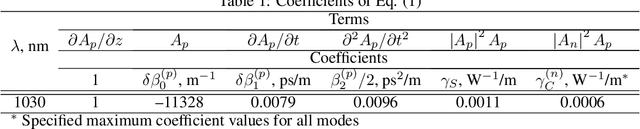
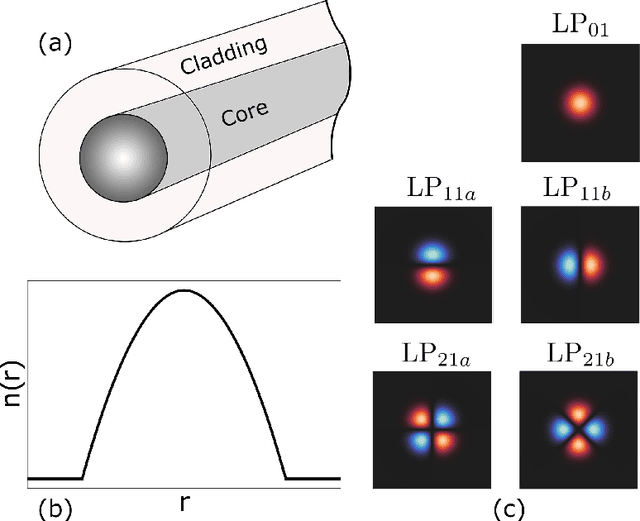
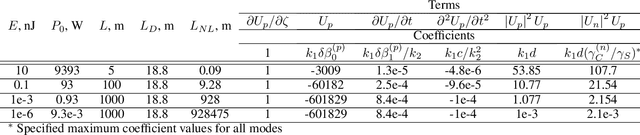
Single-mode optical fibers (SMFs) have become the backbone of modern communication systems. However, their throughput is expected to reach its theoretical limit in the nearest future. Utilization of multimode fibers (MMFs) is considered as one of the most promising solutions rectifying this capacity crunch. Nevertheless, differential equations describing light propagation in MMFs are a way more sophisticated than those for SMFs, which makes numerical modelling of MMF-based systems computationally demanding and impractical for the most part of realistic scenarios. Physics-informed neural networks (PINNs) are known to outperform conventional numerical approaches in various domains and have been successfully applied to the nonlinear Schr\"odinger equation (NLSE) describing light propagation in SMFs. A comprehensive study on application of PINN to the multimode NLSE (MMNLSE) is still lacking though. To the best of our knowledge, this paper is the first to deploy the paradigm of PINN for MMNLSE and to demonstrate that a straightforward implementation of PINNs by analogy with NLSE does not work out. We pinpoint all issues hindering PINN convergence and introduce a novel scaling transformation for the zero-order dispersion coefficient that makes PINN capture all relevant physical effects. Our simulations reveal good agreement with the split-step Fourier (SSF) method and extend numerically attainable propagation lengths up to several hundred meters. All major limitations are also highlighted.