 Add to Chrome
 Add to Firefox
 Add to Edge
Behaviour-Conditioned Neural Processes for Adaptive Residential Short-Term Load Forecasting
Jul 17, 2026
Residential short-term load forecasting (STLF) is challenging because household demand is heterogeneous, temporally variable, and shaped by diverse behavioural routines. This work investigates whether inferred behavioural structure can be embedded within the forecasting mechanism of a Neural Process-based probabilistic model, rather than used only as an external grouping signal, for context-conditioned residential STLF. We propose a behaviour-conditioned Attentive Neural Process framework that treats each load profile as a forecasting task. Behavioural structure is represented by a discrete latent variable inferred from the available context and used for behaviour-conditioned decoder conditioning, while a continuous latent variable captures shared functional uncertainty across heterogeneous profiles. To enable conditioning without ground-truth behavioural labels, clustering-derived information provides weak supervision during training, whereas test-time conditioning relies only on context-inferred class distributions. Experiments on the Smart Grid, Smart City (SGSC) dataset use user-disjoint train/validation/test splits, variable context lengths, and multi-step forecast horizons, with comparisons against a label-agnostic ANP baseline and fixed-window deterministic STLF baselines. The proposed variants improve MAE and CRPS over ANP across horizons and context settings, with the largest gains under limited context. The best-performing variant achieves average reductions of 7.9% in MAE and 6.9% in CRPS relative to ANP. Compared with fixed-window baselines, this variant achieves lower RMSE across all evaluated horizons while maintaining competitive MAE, suggesting fewer large prediction deviations under heterogeneous consumption patterns. These results support single-model, uncertainty-aware forecasting across heterogeneous households, contexts, and horizons.

Towards 6G-V2X: Hybrid RF-VLC for Vehicular Networks
Aug 12, 2022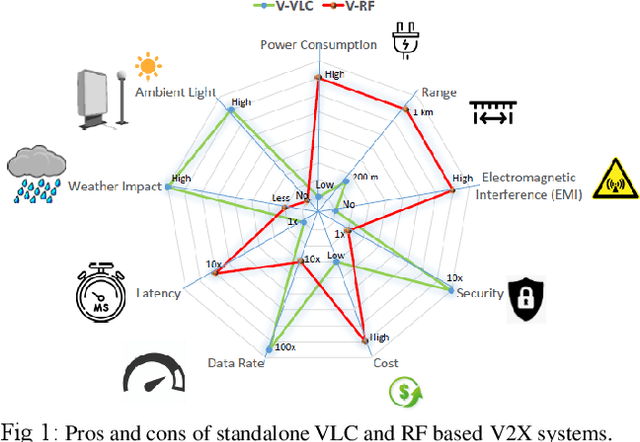
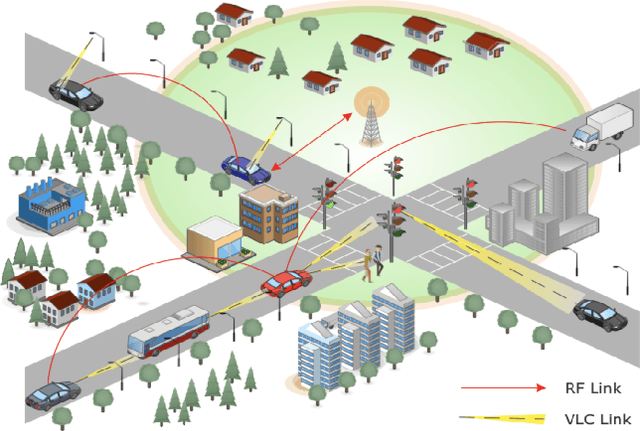
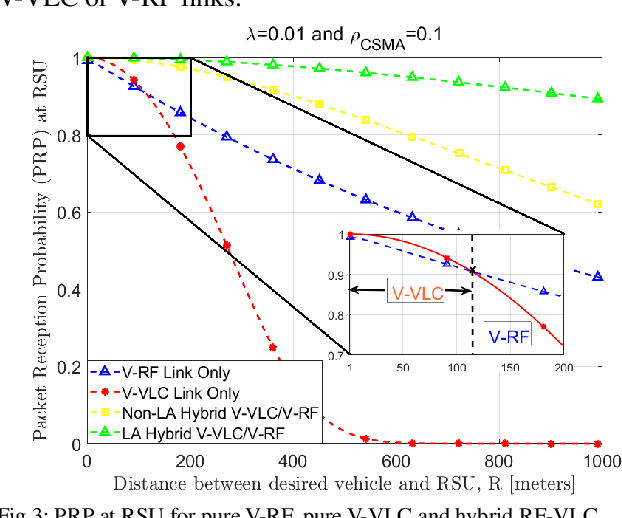
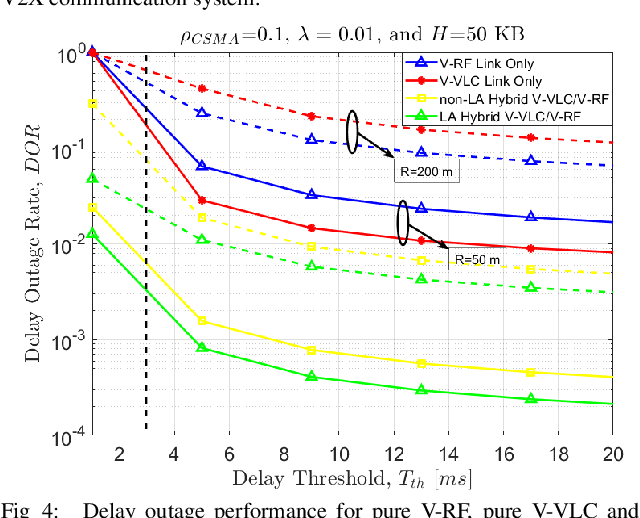
With the advent of connected autonomous vehicles, we are expecting to witness a new era of unprecedented user experiences, improved road safety, a wide range of compelling transportation applications, etc. A large number of disruptive communication technologies are emerging for the sixth generation (6G) wireless network aiming to support advanced use cases for intelligent transportation systems (ITS). An example of such a disruptive technology is constituted by hybrid Visible Light Communication (VLC) and Radio Frequency (RF) systems, which can play a major role in advanced ITS. Hence we outline the potential benefits of hybrid vehicular-VLC (V-VLC) and vehicular-RF (V-RF) communication systems over standalone V-VLC and standalone V-RF systems. In particular, we show that the link-aggregated hybrid V-VLC/V-RF system is capable of meeting stringent ultra high reliability (~99.999%) and ultra-low latency (<3 ms) specifications, making it a promising candidate for 6G ITS. To stimulate future research in the hybrid RF-VLC V2X area, we also highlight the potential challenges and research directions.
Towards Industry 5.0: Intelligent Reflecting Surface (IRS) in Smart Manufacturing
Jan 11, 2022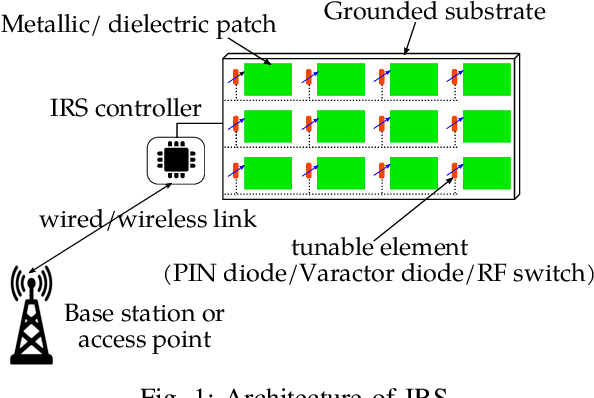
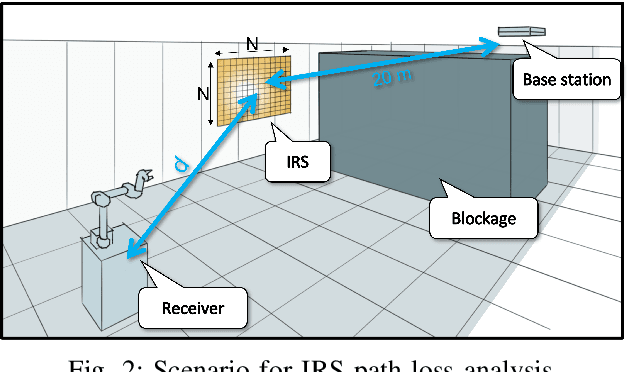
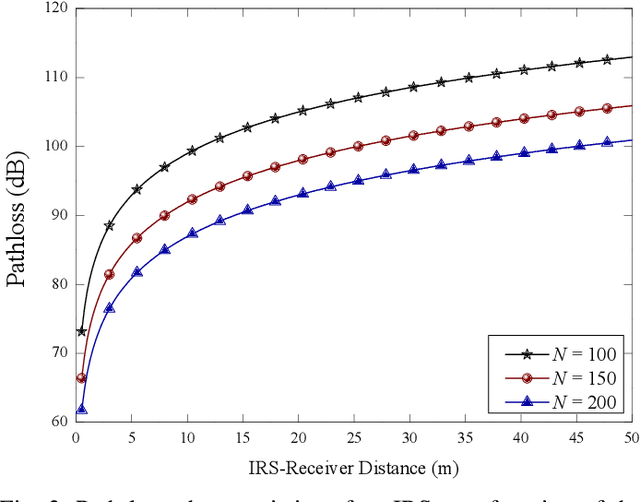
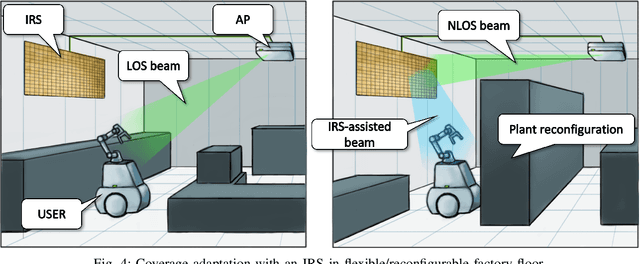
Industry 5.0 envisions close cooperation between humans and machines that requires ultra-reliable and low latency communications (URLLC). Intelligent Reflecting Surface (IRS) has the potential to play a crucial role in realizing wireless URLLC for Industry 5.0. IRS is forecasted to be a key enabler of 6G wireless communication networks as it can significantly improve the wireless network's performance by creating a controllable radio environment. In this paper, we first provide an overview of IRS technology and then conceptualize the potential for IRS implementation in a smart manufacturing environment to support the emergence of Industry 5.0 with a series of applications. Finally, to stimulate future research in this area, we discuss the strength, open challenges, maturity, and enhancing areas of the IRS technology in modern smart manufacturing.
Social Behavior and Mental Health: A Snapshot Survey under COVID-19 Pandemic
May 17, 2021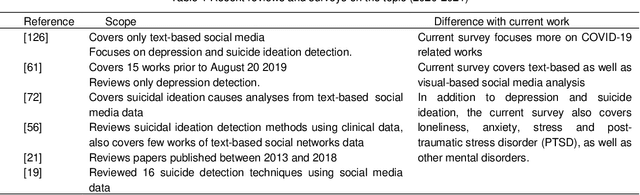
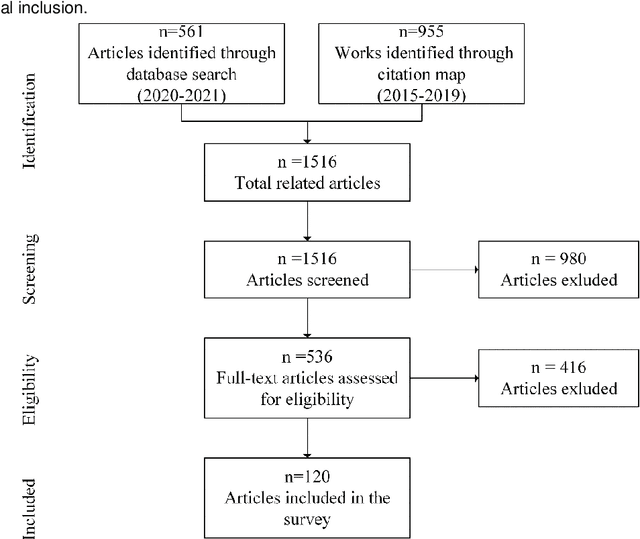


Online social media provides a channel for monitoring people's social behaviors and their mental distress. Due to the restrictions imposed by COVID-19 people are increasingly using online social networks to express their feelings. Consequently, there is a significant amount of diverse user-generated social media content. However, COVID-19 pandemic has changed the way we live, study, socialize and recreate and this has affected our well-being and mental health problems. There are growing researches that leverage online social media analysis to detect and assess user's mental status. In this paper, we survey the literature of social media analysis for mental disorders detection, with a special focus on the studies conducted in the context of COVID-19 during 2020-2021. Firstly, we classify the surveyed studies in terms of feature extraction types, varying from language usage patterns to aesthetic preferences and online behaviors. Secondly, we explore detection methods used for mental disorders detection including machine learning and deep learning detection methods. Finally, we discuss the challenges of mental disorder detection using social media data, including the privacy and ethical concerns, as well as the technical challenges of scaling and deploying such systems at large scales, and discuss the learnt lessons over the last few years.
Machine Learning in Event-Triggered Control: Recent Advances and Open Issues
Sep 27, 2020Network Control Systems (NCSs) have attracted much interest over the past decade as part of a move towards more decentralised control applications and the rise of cyberphysical system applications. Many practical NCSs face the challenges of limited communication bandwidth resources, reliability and lack of knowledge of network dynamics, particularly when wireless networks are involved. Machine learning (ML) combined with event-triggered control (ETC) has the potential to ease some of these challenges. For example, ML can be used to overcome the problem of a lack of network models by learning system behaviour or adapt to dynamically changing models by continually learning model dynamics. ETC can help to conserve bandwidth resources by communicating only when needed or when resources are available. Here, we present a review of the literature on work that combines ML and ETC. The literature on supervised, semi-supervised, unsupervised and reinforcement learning based approaches such as deep reinforcement learning and statistical learning in combination with ETC is explored. Furthermore, the difference between the application of these learning algorithms on model-based and model-free systems are discussed. Following the analysis of the literature, we highlight open research questions and challenges related to ML-based ETC and propose approaches to possible solutions to these challenges.