 Add to Chrome
 Add to Firefox
 Add to Edge
Domain-Aware Quantum Circuit for QML
Dec 19, 2025
Designing parameterized quantum circuits (PQCs) that are expressive, trainable, and robust to hardware noise is a central challenge for quantum machine learning (QML) on noisy intermediate-scale quantum (NISQ) devices. We present a Domain-Aware Quantum Circuit (DAQC) that leverages image priors to guide locality-preserving encoding and entanglement via non-overlapping DCT-style zigzag windows. The design employs interleaved encode-entangle-train cycles, where entanglement is applied among qubits hosting neighboring pixels, aligned to device connectivity. This staged, locality-preserving information flow expands the effective receptive field without deep global mixing, enabling efficient use of limited depth and qubits. The design concentrates representational capacity on short-range correlations, reduces long-range two-qubit operations, and encourages stable optimization, thereby mitigating depth-induced and globally entangled barren-plateau effects. We evaluate DAQC on MNIST, FashionMNIST, and PneumoniaMNIST datasets. On quantum hardware, DAQC achieves performance competitive with strong classical baselines (e.g., ResNet-18/50, DenseNet-121, EfficientNet-B0) and substantially outperforming Quantum Circuit Search (QCS) baselines. To the best of our knowledge, DAQC, which uses a quantum feature extractor with only a linear classical readout (no deep classical backbone), currently achieves the best reported performance on real quantum hardware for QML-based image classification tasks. Code and pretrained models are available at: https://github.com/gurinder-hub/DAQC.

QFGN: A Quantum Approach to High-Fidelity Implicit Neural Representations
Apr 26, 2025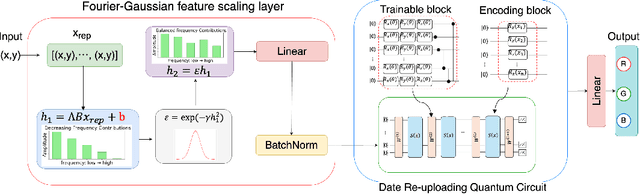
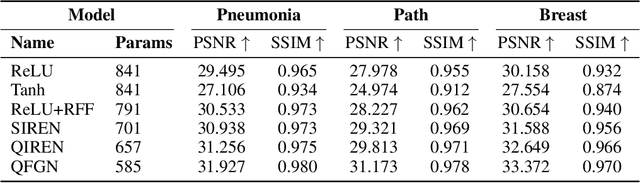
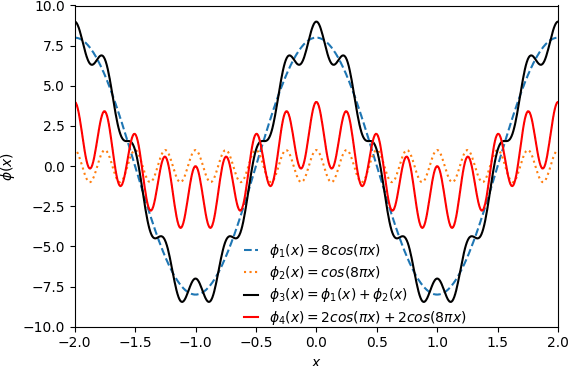
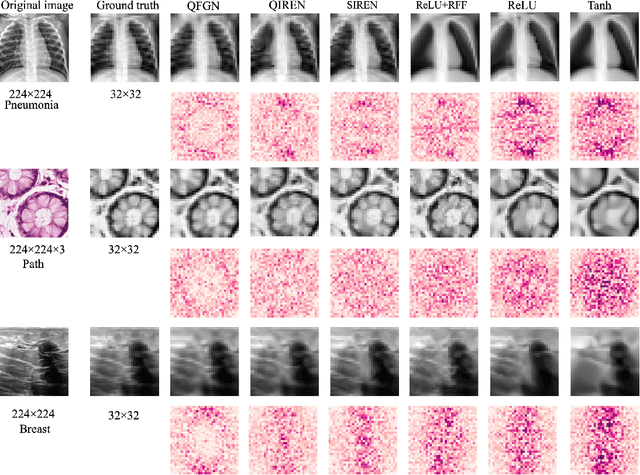
Implicit neural representations have shown potential in various applications. However, accurately reconstructing the image or providing clear details via image super-resolution remains challenging. This paper introduces Quantum Fourier Gaussian Network (QFGN), a quantum-based machine learning model for better signal representations. The frequency spectrum is well balanced by penalizing the low-frequency components, leading to the improved expressivity of quantum circuits. The results demonstrate that with minimal parameters, QFGN outperforms the current state-of-the-art (SOTA) models. Despite noise on hardware, the model achieves accuracy comparable to that of SIREN, highlighting the potential applications of quantum machine learning in this field.
Benchmarking MedMNIST dataset on real quantum hardware
Feb 18, 2025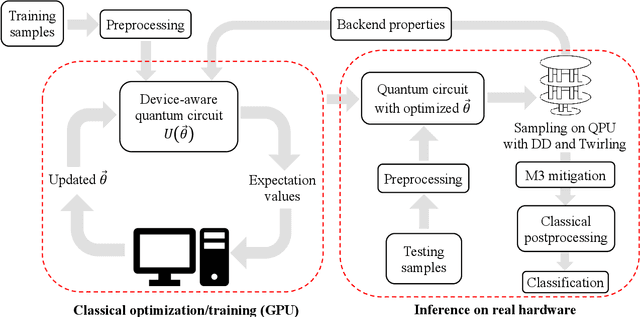
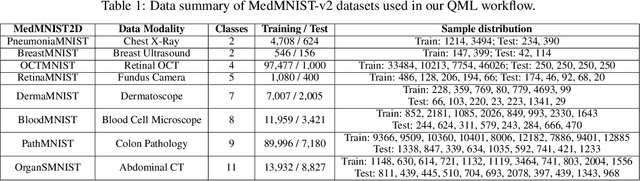
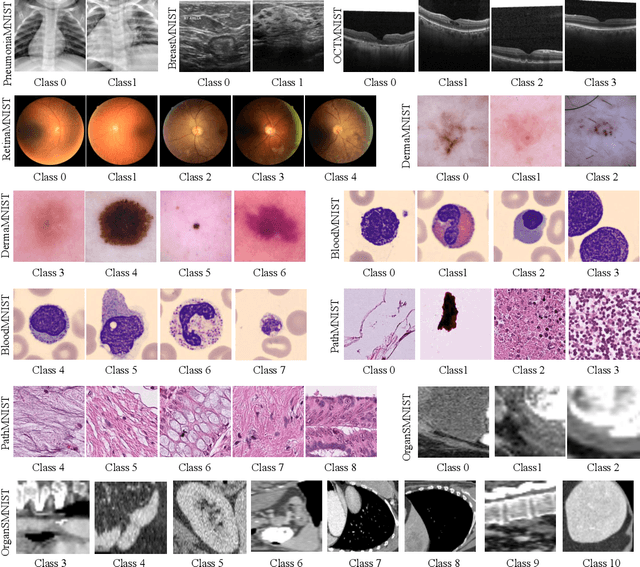
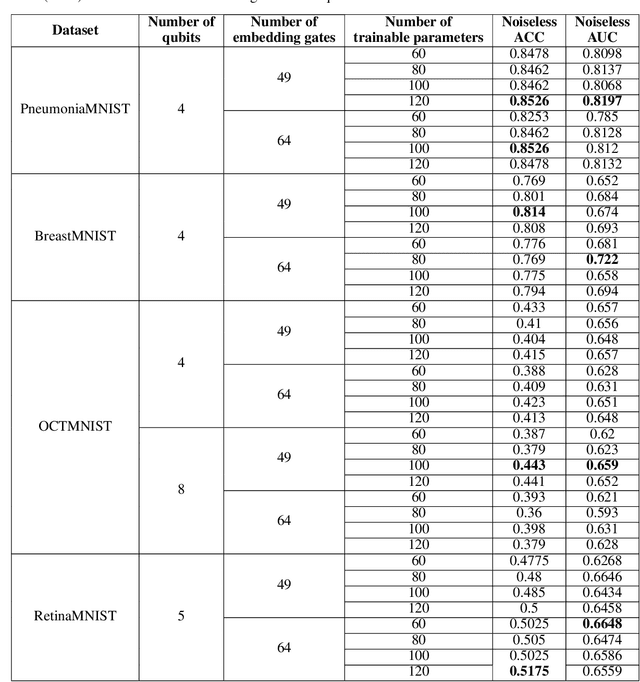
Quantum machine learning (QML) has emerged as a promising domain to leverage the computational capabilities of quantum systems to solve complex classification tasks. In this work, we present first comprehensive QML study by benchmarking the MedMNIST-a diverse collection of medical imaging datasets on a 127-qubit real IBM quantum hardware, to evaluate the feasibility and performance of quantum models (without any classical neural networks) in practical applications. This study explore recent advancements in quantum computing such as device-aware quantum circuits, error suppression and mitigation for medical image classification. Our methodology comprised of three stages: preprocessing, generation of noise-resilient and hardware-efficient quantum circuits, optimizing/training of quantum circuits on classical hardware, and inference on real IBM quantum hardware. Firstly, we process all input images in the preprocessing stage to reduce the spatial dimension due to the quantum hardware limitations. We generate hardware-efficient quantum circuits using backend properties expressible to learn complex patterns for medical image classification. After classical optimization of QML models, we perform the inference on real quantum hardware. We also incorporates advanced error suppression and mitigation techniques in our QML workflow including dynamical decoupling (DD), gate twirling, and matrix-free measurement mitigation (M3) to mitigate the effects of noise and improve classification performance. The experimental results showcase the potential of quantum computing for medical imaging and establishes a benchmark for future advancements in QML applied to healthcare.
Towards 6G-V2X: Hybrid RF-VLC for Vehicular Networks
Aug 12, 2022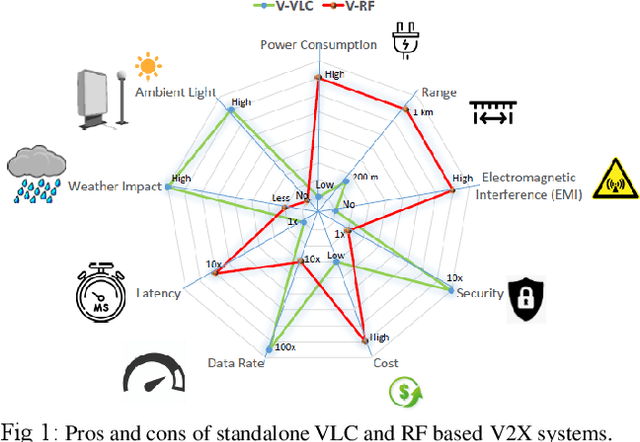
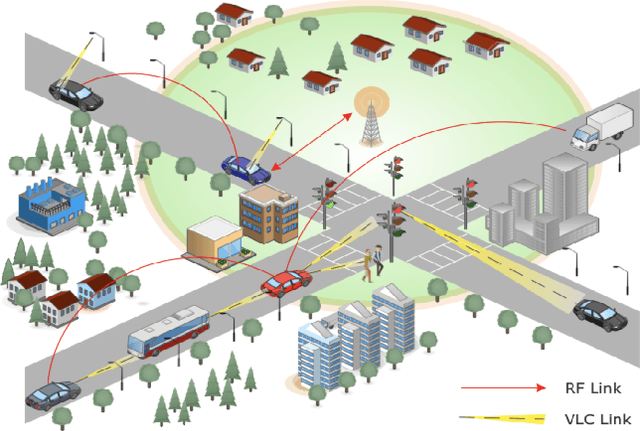
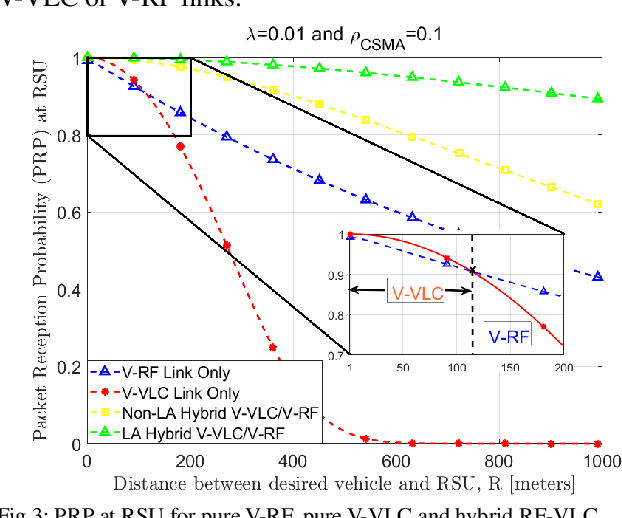
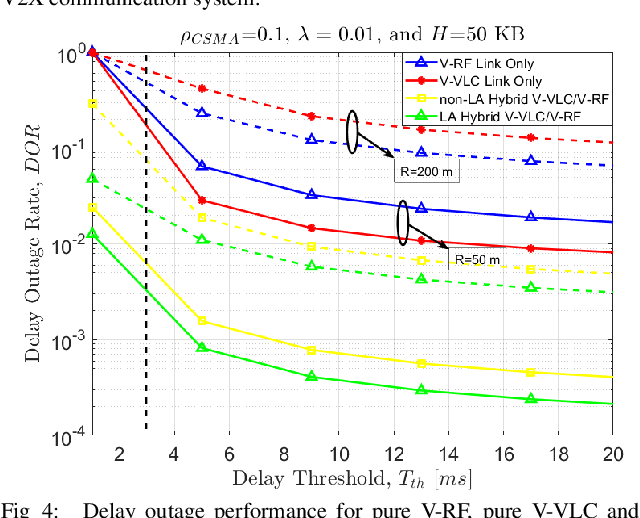
With the advent of connected autonomous vehicles, we are expecting to witness a new era of unprecedented user experiences, improved road safety, a wide range of compelling transportation applications, etc. A large number of disruptive communication technologies are emerging for the sixth generation (6G) wireless network aiming to support advanced use cases for intelligent transportation systems (ITS). An example of such a disruptive technology is constituted by hybrid Visible Light Communication (VLC) and Radio Frequency (RF) systems, which can play a major role in advanced ITS. Hence we outline the potential benefits of hybrid vehicular-VLC (V-VLC) and vehicular-RF (V-RF) communication systems over standalone V-VLC and standalone V-RF systems. In particular, we show that the link-aggregated hybrid V-VLC/V-RF system is capable of meeting stringent ultra high reliability (~99.999%) and ultra-low latency (<3 ms) specifications, making it a promising candidate for 6G ITS. To stimulate future research in the hybrid RF-VLC V2X area, we also highlight the potential challenges and research directions.