 Add to Chrome
 Add to Firefox
 Add to Edge
When Smaller Wins: Dual-Stage Distillation and Pareto-Guided Compression of Liquid Neural Networks for Edge Battery Prognostics
Jan 13, 2026
Battery management systems increasingly require accurate battery health prognostics under strict on-device constraints. This paper presents DLNet, a practical framework with dual-stage distillation of liquid neural networks that turns a high-capacity model into compact and edge-deployable models for battery health prediction. DLNet first applies Euler discretization to reformulate liquid dynamics for embedded compatibility. It then performs dual-stage knowledge distillation to transfer the teacher model's temporal behavior and recover it after further compression. Pareto-guided selection under joint error-cost objectives retains student models that balance accuracy and efficiency. We evaluate DLNet on a widely used dataset and validate real-device feasibility on an Arduino Nano 33 BLE Sense using int8 deployment. The final deployed student achieves a low error of 0.0066 when predicting battery health over the next 100 cycles, which is 15.4% lower than the teacher model. It reduces the model size from 616 kB to 94 kB with 84.7% reduction and takes 21 ms per inference on the device. These results support a practical smaller wins observation that a small model can match or exceed a large teacher for edge-based prognostics with proper supervision and selection. Beyond batteries, the DLNet framework can extend to other industrial analytics tasks with strict hardware constraints.

A Bidirectional Gated Recurrent Unit Model for PUE Prediction in Data Centers
Dec 23, 2025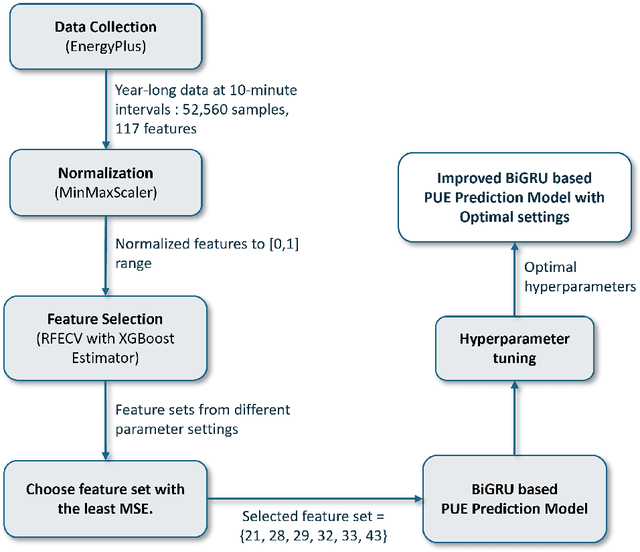
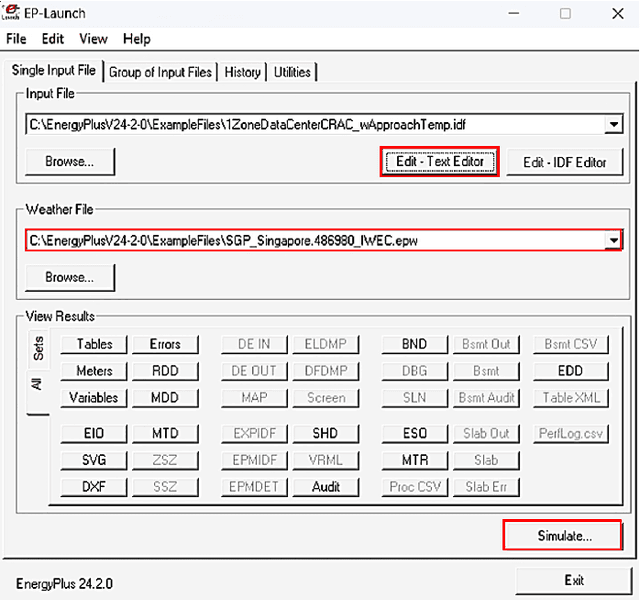
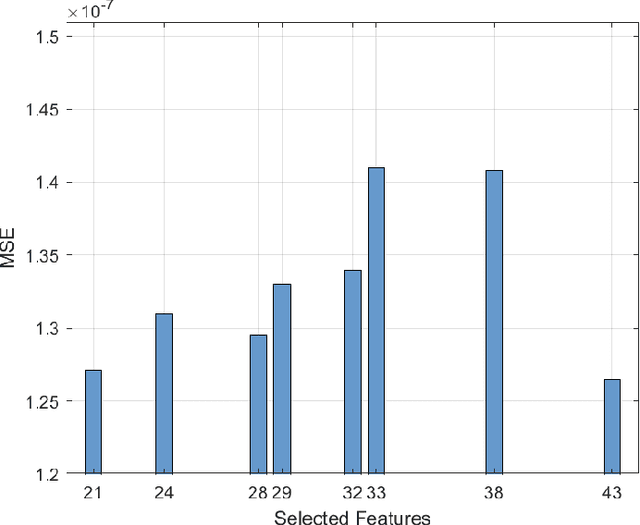
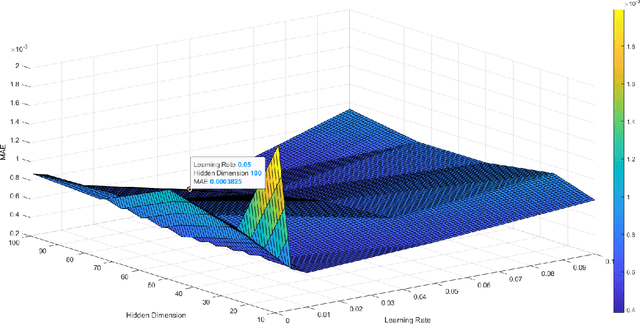
Data centers account for significant global energy consumption and a carbon footprint. The recent increasing demand for edge computing and AI advancements drives the growth of data center storage capacity. Energy efficiency is a cost-effective way to combat climate change, cut energy costs, improve business competitiveness, and promote IT and environmental sustainability. Thus, optimizing data center energy management is the most important factor in the sustainability of the world. Power Usage Effectiveness (PUE) is used to represent the operational efficiency of the data center. Predicting PUE using Neural Networks provides an understanding of the effect of each feature on energy consumption, thus enabling targeted modifications of those key features to improve energy efficiency. In this paper, we have developed Bidirectional Gated Recurrent Unit (BiGRU) based PUE prediction model and compared the model performance with GRU. The data set comprises 52,560 samples with 117 features using EnergyPlus, simulating a DC in Singapore. Sets of the most relevant features are selected using the Recursive Feature Elimination with Cross-Validation (RFECV) algorithm for different parameter settings. These feature sets are used to find the optimal hyperparameter configuration and train the BiGRU model. The performance of the optimized BiGRU-based PUE prediction model is then compared with that of GRU using mean squared error (MSE), mean absolute error (MAE), and R-squared metrics.
Pace: Physics-Aware Attentive Temporal Convolutional Network for Battery Health Estimation
Dec 16, 2025Batteries are critical components in modern energy systems such as electric vehicles and power grid energy storage. Effective battery health management is essential for battery system safety, cost-efficiency, and sustainability. In this paper, we propose Pace, a physics-aware attentive temporal convolutional network for battery health estimation. Pace integrates raw sensor measurements with battery physics features derived from the equivalent circuit model. We develop three battery-specific modules, including dilated temporal blocks for efficient temporal encoding, chunked attention blocks for context modeling, and a dual-head output block for fusing short- and long-term battery degradation patterns. Together, the modules enable Pace to predict battery health accurately and efficiently in various battery usage conditions. In a large public dataset, Pace performs much better than existing models, achieving an average performance improvement of 6.5 and 2.0x compared to two best-performing baseline models. We further demonstrate its practical viability with a real-time edge deployment on a Raspberry Pi. These results establish Pace as a practical and high-performance solution for battery health analytics.