 Add to Chrome
 Add to Firefox
 Add to Edge
DeBERTa-Sentinel: Toward Transparent and Trustworthy Detection of AI-Generated Text
Aug 02, 2026
The rapid spread of large language models (LLMs) across the web raises concerns about misinformation, academic integrity, automated content manipulation, and risks to vulnerable online communities. Existing transformer-based detectors, such as GPT-Sentinel, show promise but struggle to generalize to diverse model outputs and paraphrasing attacks, limiting their role in building trustworthy web ecosystems. This work introduces DeBERTa-Sentinel, a responsible AI-generated text detection framework leveraging DeBERTa-v3's disentangled attention to capture subtle structural irregularities in synthetic content. A central design principle is transparency: unlike black-box commercial detectors, DeBERTa-Sentinel exposes token-level explanations of its decisions, enabling affected stakeholders journalists, educators, and platform trust and safety teams to audit, challenge, and contextualize detection outcomes. Using the GLC-AIText dataset of 28,057 human and LLM-generated samples (GPT, LLaMA, and Claude) with a 60-20-20 split, DeBERTa-Sentinel achieves 98.21\% validation accuracy and surpasses the RoBERTa-Sentinel baseline from NeurIPS 2025, achieving 97.53\% test accuracy, 95.89\% precision, 99.33\% recall, and 99.53\% ROC-AUC, and maintaining a 0.665\% false negative rate. The model's interpretability reveals linguistic markers such as academic phrasing and formal transitions associated with synthetic text, directly supporting stakeholder needs for verifiable, auditable content-authenticity decisions. By advancing responsible detection methods that reduce bias and enhance explainability, DeBERTa-Sentinel promotes trustworthy, ethical, and human-centric AI systems. Code and data are available at https://github.com/Galileo-Galili/HUMAN-VS-AI-TEXT-DETECTION.

Evaluation of Preprocessing Techniques for U-Net Based Automated Liver Segmentation
Mar 26, 2021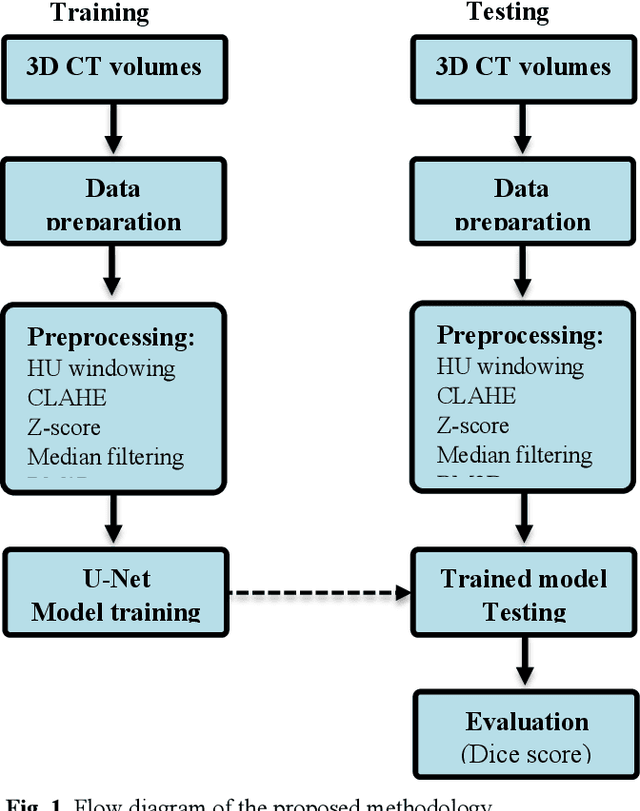
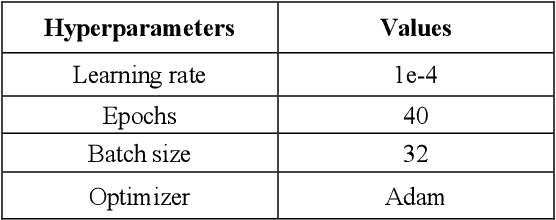
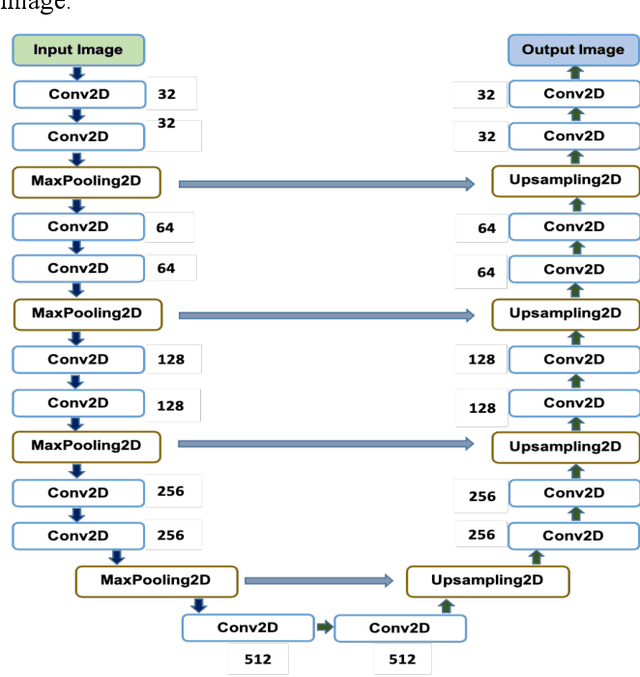
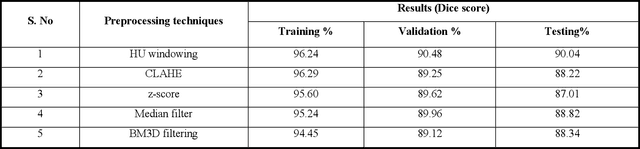
To extract liver from medical images is a challenging task due to similar intensity values of liver with adjacent organs, various contrast levels, various noise associated with medical images and irregular shape of liver. To address these issues, it is important to preprocess the medical images, i.e., computerized tomography (CT) and magnetic resonance imaging (MRI) data prior to liver analysis and quantification. This paper investigates the impact of permutation of various preprocessing techniques for CT images, on the automated liver segmentation using deep learning, i.e., U-Net architecture. The study focuses on Hounsfield Unit (HU) windowing, contrast limited adaptive histogram equalization (CLAHE), z-score normalization, median filtering and Block-Matching and 3D (BM3D) filtering. The segmented results show that combination of three techniques; HU-windowing, median filtering and z-score normalization achieve optimal performance with Dice coefficient of 96.93%, 90.77% and 90.84% for training, validation and testing respectively.
Fuzzy Integral = Contextual Linear Order Statistic
Jul 06, 2020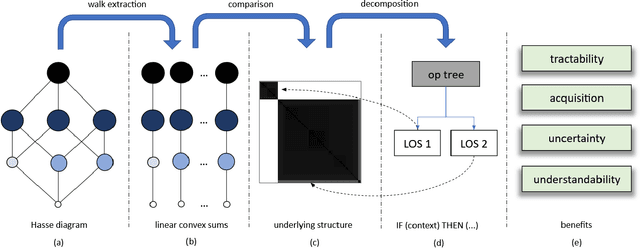
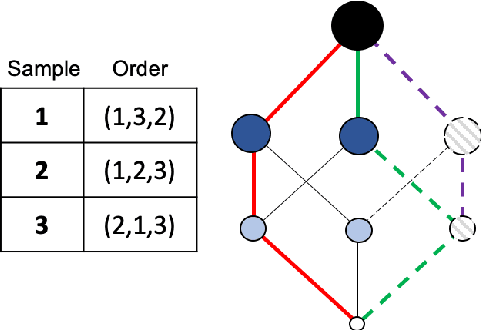
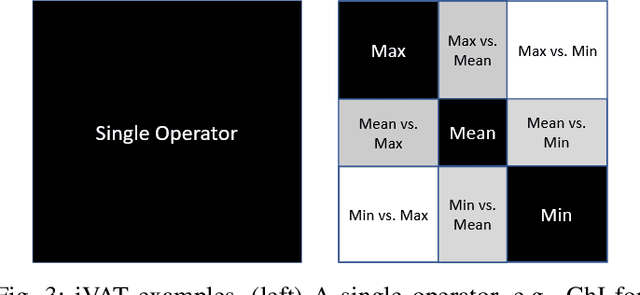
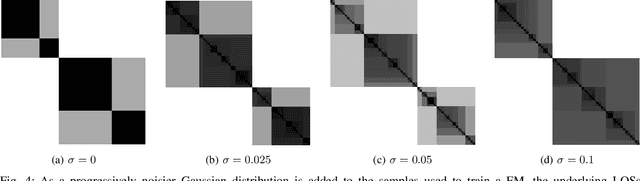
The fuzzy integral is a powerful parametric nonlin-ear function with utility in a wide range of applications, from information fusion to classification, regression, decision making,interpolation, metrics, morphology, and beyond. While the fuzzy integral is in general a nonlinear operator, herein we show that it can be represented by a set of contextual linear order statistics(LOS). These operators can be obtained via sampling the fuzzy measure and clustering is used to produce a partitioning of the underlying space of linear convex sums. Benefits of our approach include scalability, improved integral/measure acquisition, generalizability, and explainable/interpretable models. Our methods are both demonstrated on controlled synthetic experiments, and also analyzed and validated with real-world benchmark data sets.