 Add to Chrome
 Add to Firefox
 Add to Edge
The Trap of Trajectory: Towards Understanding and Mitigating Spurious Correlations in Agentic Memory
May 10, 2026
Agentic memory enables LLMs to persist information beyond a single context window and reuse it in later decisions, but it also introduces a new vulnerability: spurious correlations, where retrieved memory carries miscorrelated evidence and propagates erroneous reasoning into downstream decisions. Despite the widespread use of agentic memory, this risk remains largely underexplored. We address it from two aspects. First, we benchmark several canonical types of spurious patterns identified through causal structure and record them across trajectory-level memory. Diagnosing agentic memory systems on this benchmark reveals that memory improves reasoning on clean inputs but amplifies reliance on spurious patterns when they are present. Second, we propose CAMEL, a plug-and-play calibration method that operates across diverse memory architectures at both write and retrieval time. CAMEL consistently reduces reliance on spurious patterns across all three types while preserving or improving performance on clean inputs and staying robust under adaptive attacks targeting the calibration. Overall, CAMEL offers a principled and lightweight solution toward more reliable agentic memory deployment.

Small Agent Group is the Future of Digital Health
Feb 08, 2026The rapid adoption of large language models (LLMs) in digital health has been driven by a "scaling-first" philosophy, i.e., the assumption that clinical intelligence increases with model size and data. However, real-world clinical needs include not only effectiveness, but also reliability and reasonable deployment cost. Since clinical decision-making is inherently collaborative, we challenge the monolithic scaling paradigm and ask whether a Small Agent Group (SAG) can support better clinical reasoning. SAG shifts from single-model intelligence to collective expertise by distributing reasoning, evidence-based analysis, and critical audit through a collaborative deliberation process. To assess the clinical utility of SAG, we conduct extensive evaluations using diverse clinical metrics spanning effectiveness, reliability, and deployment cost. Our results show that SAG achieves superior performance compared to a single giant model, both with and without additional optimization or retrieval-augmented generation. These findings suggest that the synergistic reasoning represented by SAG can substitute for model parameter growth in clinical settings. Overall, SAG offers a scalable solution to digital health that better balances effectiveness, reliability, and deployment efficiency.
Empowering Clinical Trial Design through AI: A Randomized Evaluation of PowerGPT
Sep 15, 2025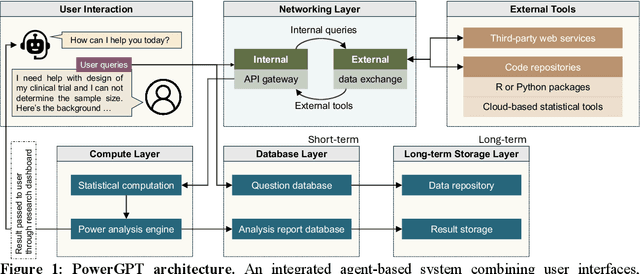
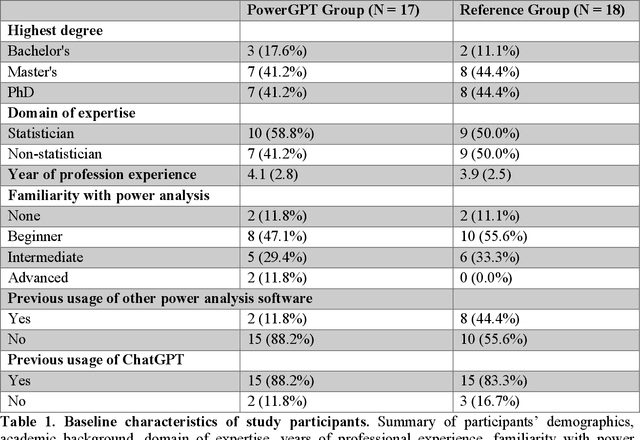
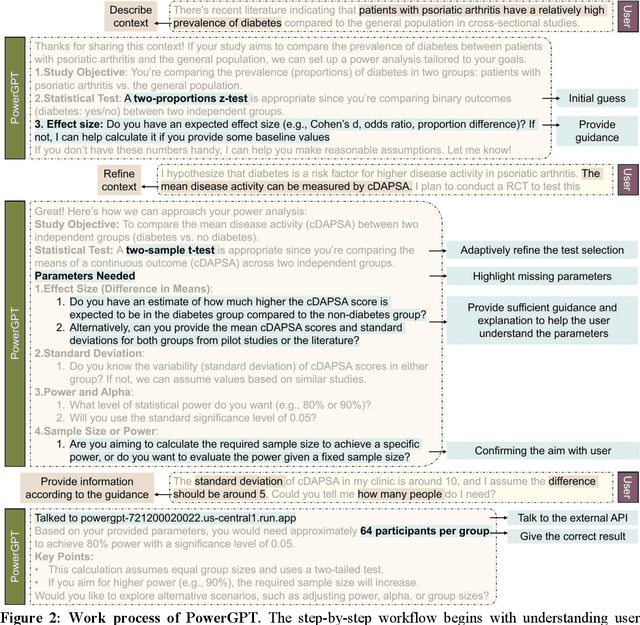
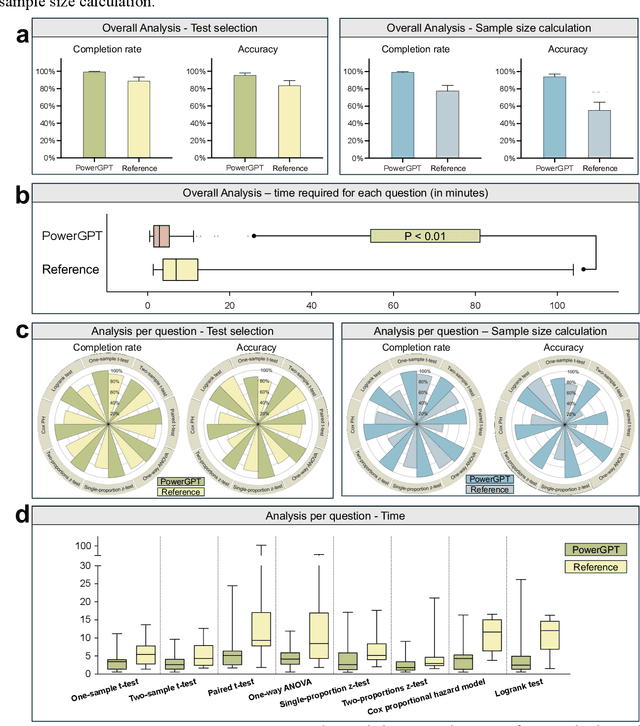
Sample size calculations for power analysis are critical for clinical research and trial design, yet their complexity and reliance on statistical expertise create barriers for many researchers. We introduce PowerGPT, an AI-powered system integrating large language models (LLMs) with statistical engines to automate test selection and sample size estimation in trial design. In a randomized trial to evaluate its effectiveness, PowerGPT significantly improved task completion rates (99.3% vs. 88.9% for test selection, 99.3% vs. 77.8% for sample size calculation) and accuracy (94.1% vs. 55.4% in sample size estimation, p < 0.001), while reducing average completion time (4.0 vs. 9.3 minutes, p < 0.001). These gains were consistent across various statistical tests and benefited both statisticians and non-statisticians as well as bridging expertise gaps. Already under deployment across multiple institutions, PowerGPT represents a scalable AI-driven approach that enhances accessibility, efficiency, and accuracy in statistical power analysis for clinical research.