 Add to Chrome
 Add to Firefox
 Add to Edge
The Trap of Trajectory: Towards Understanding and Mitigating Spurious Correlations in Agentic Memory
May 10, 2026
Agentic memory enables LLMs to persist information beyond a single context window and reuse it in later decisions, but it also introduces a new vulnerability: spurious correlations, where retrieved memory carries miscorrelated evidence and propagates erroneous reasoning into downstream decisions. Despite the widespread use of agentic memory, this risk remains largely underexplored. We address it from two aspects. First, we benchmark several canonical types of spurious patterns identified through causal structure and record them across trajectory-level memory. Diagnosing agentic memory systems on this benchmark reveals that memory improves reasoning on clean inputs but amplifies reliance on spurious patterns when they are present. Second, we propose CAMEL, a plug-and-play calibration method that operates across diverse memory architectures at both write and retrieval time. CAMEL consistently reduces reliance on spurious patterns across all three types while preserving or improving performance on clean inputs and staying robust under adaptive attacks targeting the calibration. Overall, CAMEL offers a principled and lightweight solution toward more reliable agentic memory deployment.

EquiMem: Calibrating Shared Memory in Multi-Agent Debate via Game-Theoretic Equilibrium
May 10, 2026Multi-agent debate (MAD) systems increasingly rely on shared memory to support long-horizon reasoning, but this convenience opens a critical vulnerability: a single corrupted entry can contaminate the downstream memory-augmented reasoning, and debate alone fails to filter such errors. Existing safeguards filter entries via heuristics or LLM-based validation, yet they rely on AI judgments that share the same failure modes and overlook the cross-agent dynamics of MAD. We address this gap by formulating memory updating in MAD as a zero-trust memory game, in which no agent is assumed honest and the game's equilibrium serves as an indicator of optimal memory trust. Guided by this equilibrium, we propose EquiMem, an inference-time calibration mechanism that quantifies each update algorithmically against the shared memory state, using agents' existing retrieval queries and traversal paths as evidence rather than soliciting any LLM judgment. EquiMem instantiates calibration for both embedding- and graph-based memory, and across diverse benchmarks, MAD frameworks, and memory architectures, it consistently outperforms existing safeguards, remains robust under adversarial agents, and incurs negligible inference overhead.
Small Agent Group is the Future of Digital Health
Feb 08, 2026The rapid adoption of large language models (LLMs) in digital health has been driven by a "scaling-first" philosophy, i.e., the assumption that clinical intelligence increases with model size and data. However, real-world clinical needs include not only effectiveness, but also reliability and reasonable deployment cost. Since clinical decision-making is inherently collaborative, we challenge the monolithic scaling paradigm and ask whether a Small Agent Group (SAG) can support better clinical reasoning. SAG shifts from single-model intelligence to collective expertise by distributing reasoning, evidence-based analysis, and critical audit through a collaborative deliberation process. To assess the clinical utility of SAG, we conduct extensive evaluations using diverse clinical metrics spanning effectiveness, reliability, and deployment cost. Our results show that SAG achieves superior performance compared to a single giant model, both with and without additional optimization or retrieval-augmented generation. These findings suggest that the synergistic reasoning represented by SAG can substitute for model parameter growth in clinical settings. Overall, SAG offers a scalable solution to digital health that better balances effectiveness, reliability, and deployment efficiency.
The Value of Variance: Mitigating Debate Collapse in Multi-Agent Systems via Uncertainty-Driven Policy Optimization
Feb 06, 2026Multi-agent debate (MAD) systems improve LLM reasoning through iterative deliberation, but remain vulnerable to debate collapse, a failure type where final agent decisions are compromised on erroneous reasoning. Existing methods lack principled mechanisms to detect or prevent such failures. To address this gap, we first propose a hierarchical metric that quantifies behavioral uncertainty at three levels: intra-agent (individual reasoning uncertainty), inter-agent (interactive uncertainty), and system-level (output uncertainty). Empirical analysis across several benchmarks reveals that our proposed uncertainty quantification reliably indicates system failures, which demonstrates the validity of using them as diagnostic metrics to indicate the system failure. Subsequently, we propose a mitigation strategy by formulating an uncertainty-driven policy optimization to penalize self-contradiction, peer conflict, and low-confidence outputs in a dynamic debating environment. Experiments demonstrate that our proposed uncertainty-driven mitigation reliably calibrates the multi-agent system by consistently improving decision accuracy while reducing system disagreement.
SafeGPT: Preventing Data Leakage and Unethical Outputs in Enterprise LLM Use
Jan 10, 2026Large Language Models (LLMs) are transforming enterprise workflows but introduce security and ethics challenges when employees inadvertently share confidential data or generate policy-violating content. This paper proposes SafeGPT, a two-sided guardrail system preventing sensitive data leakage and unethical outputs. SafeGPT integrates input-side detection/redaction, output-side moderation/reframing, and human-in-the-loop feedback. Experiments demonstrate SafeGPT effectively reduces data leakage risk and biased outputs while maintaining satisfaction.
Smart Privacy Policy Assistant: An LLM-Powered System for Transparent and Actionable Privacy Notices
Jan 09, 2026Most users agree to online privacy policies without reading or understanding them, even though these documents govern how personal data is collected, shared, and monetized. Privacy policies are typically long, legally complex, and difficult for non-experts to interpret. This paper presents the Smart Privacy Policy Assistant, an LLM-powered system that automatically ingests privacy policies, extracts and categorizes key clauses, assigns human-interpretable risk levels, and generates clear, concise explanations. The system is designed for real-time use through browser extensions or mobile interfaces, surfacing contextual warnings before users disclose sensitive information or grant risky permissions. We describe the end-to-end pipeline, including policy ingestion, clause categorization, risk scoring, and explanation generation, and propose an evaluation framework based on clause-level accuracy, policy-level risk agreement, and user comprehension.
Semantic NLP Pipelines for Interoperable Patient Digital Twins from Unstructured EHRs
Jan 09, 2026Digital twins -- virtual replicas of physical entities -- are gaining traction in healthcare for personalized monitoring, predictive modeling, and clinical decision support. However, generating interoperable patient digital twins from unstructured electronic health records (EHRs) remains challenging due to variability in clinical documentation and lack of standardized mappings. This paper presents a semantic NLP-driven pipeline that transforms free-text EHR notes into FHIR-compliant digital twin representations. The pipeline leverages named entity recognition (NER) to extract clinical concepts, concept normalization to map entities to SNOMED-CT or ICD-10, and relation extraction to capture structured associations between conditions, medications, and observations. Evaluation on MIMIC-IV Clinical Database Demo with validation against MIMIC-IV-on-FHIR reference mappings demonstrates high F1-scores for entity and relation extraction, with improved schema completeness and interoperability compared to baseline methods.
POLAR: Automating Cyber Threat Prioritization through LLM-Powered Assessment
Oct 02, 2025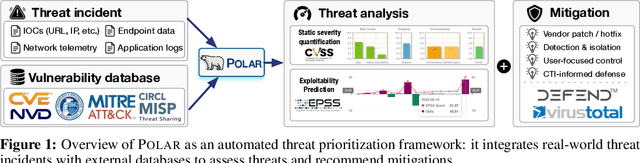
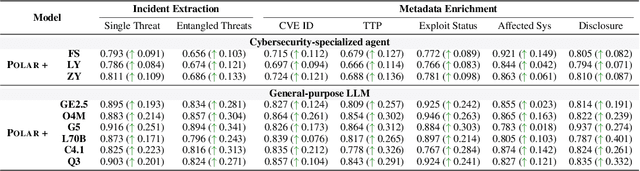
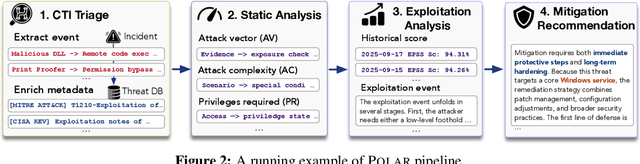
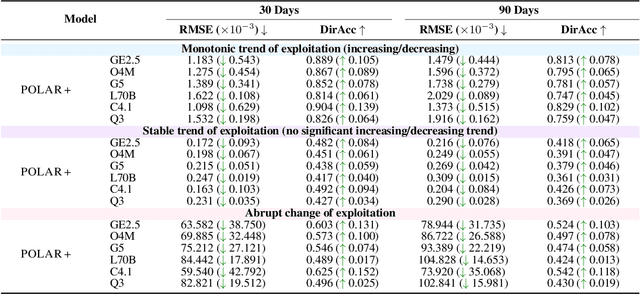
Large Language Models (LLMs) are intensively used to assist security analysts in counteracting the rapid exploitation of cyber threats, wherein LLMs offer cyber threat intelligence (CTI) to support vulnerability assessment and incident response. While recent work has shown that LLMs can support a wide range of CTI tasks such as threat analysis, vulnerability detection, and intrusion defense, significant performance gaps persist in practical deployments. In this paper, we investigate the intrinsic vulnerabilities of LLMs in CTI, focusing on challenges that arise from the nature of the threat landscape itself rather than the model architecture. Using large-scale evaluations across multiple CTI benchmarks and real-world threat reports, we introduce a novel categorization methodology that integrates stratification, autoregressive refinement, and human-in-the-loop supervision to reliably analyze failure instances. Through extensive experiments and human inspections, we reveal three fundamental vulnerabilities: spurious correlations, contradictory knowledge, and constrained generalization, that limit LLMs in effectively supporting CTI. Subsequently, we provide actionable insights for designing more robust LLM-powered CTI systems to facilitate future research.