 Add to Chrome
 Add to Firefox
 Add to Edge
Engineering Psychological Safety in Autonomous Vehicles: A Systems-Theoretic Framework for Psychological Safety in Autonomous Vehicles and its Validation in Real-World Scenarios
Aug 19, 2026
Despite rapid technological advances, the societal acceptability of autonomous vehicles (AVs) remains limited by psychological barriers that extend beyond traditional concerns of physical safety. While factors such as trust and perceived safety are known to influence user acceptance, there is a lack of formalized mechanisms and engineering methods to systematically identify, assess, and mitigate psychological risks arising from human-AV interactions. To address this gap, this work proposes and validates a systems-theoretic framework for the assessment of psychological safety in autonomous vehicles. First, a comprehensive psychological safety risk model is defined, extending the Systems-Theoretic Accident Model and Processes (STAMP) to incorporate key psychological constructs such as trust, perceived control, predictability, and perceived support. Based on this model, a hazard analysis method (AV-PsySafe) is developed to systematically identify psychological hazards, unsafe control actions, and loss scenarios, while introducing a Psychological Safety Integrity Level (PsySIL) to support risk prioritization. Second, the applicability and relevance of the framework are evaluated through its deployment in realistic autonomous vehicle scenarios. A structured validation approach is implemented, including a methodological guide, standardized analysis templates, and the collection of analyst feedback. The results demonstrate that the framework can be consistently applied by practitioners, producing meaningful insights into psychological risks. Overall, this work establishes both the theoretical foundations and practical feasibility of a unified approach to co-assessing psychological and physical safety in autonomous systems, contributing to more human-centred and trustworthy AV development.

SambaNova SN40L: Scaling the AI Memory Wall with Dataflow and Composition of Experts
May 13, 2024


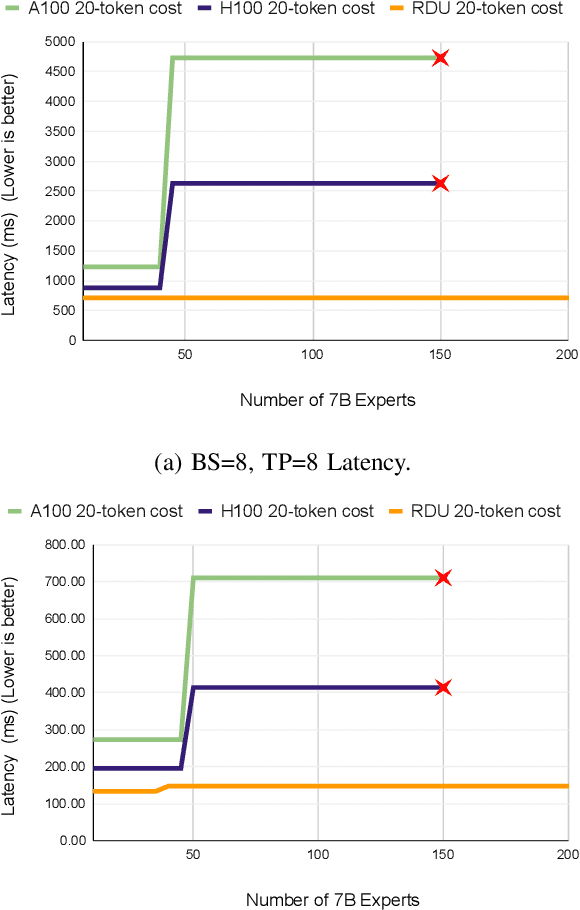
Monolithic large language models (LLMs) like GPT-4 have paved the way for modern generative AI applications. Training, serving, and maintaining monolithic LLMs at scale, however, remains prohibitively expensive and challenging. The disproportionate increase in compute-to-memory ratio of modern AI accelerators have created a memory wall, necessitating new methods to deploy AI. Composition of Experts (CoE) is an alternative modular approach that lowers the cost and complexity of training and serving. However, this approach presents two key challenges when using conventional hardware: (1) without fused operations, smaller models have lower operational intensity, which makes high utilization more challenging to achieve; and (2) hosting a large number of models can be either prohibitively expensive or slow when dynamically switching between them. In this paper, we describe how combining CoE, streaming dataflow, and a three-tier memory system scales the AI memory wall. We describe Samba-CoE, a CoE system with 150 experts and a trillion total parameters. We deploy Samba-CoE on the SambaNova SN40L Reconfigurable Dataflow Unit (RDU) - a commercial dataflow accelerator architecture that has been co-designed for enterprise inference and training applications. The chip introduces a new three-tier memory system with on-chip distributed SRAM, on-package HBM, and off-package DDR DRAM. A dedicated inter-RDU network enables scaling up and out over multiple sockets. We demonstrate speedups ranging from 2x to 13x on various benchmarks running on eight RDU sockets compared with an unfused baseline. We show that for CoE inference deployments, the 8-socket RDU Node reduces machine footprint by up to 19x, speeds up model switching time by 15x to 31x, and achieves an overall speedup of 3.7x over a DGX H100 and 6.6x over a DGX A100.