 Add to Chrome
 Add to Firefox
 Add to Edge
Engineering Psychological Safety in Autonomous Vehicles: A Systems-Theoretic Framework for Psychological Safety in Autonomous Vehicles and its Validation in Real-World Scenarios
Aug 19, 2026
Despite rapid technological advances, the societal acceptability of autonomous vehicles (AVs) remains limited by psychological barriers that extend beyond traditional concerns of physical safety. While factors such as trust and perceived safety are known to influence user acceptance, there is a lack of formalized mechanisms and engineering methods to systematically identify, assess, and mitigate psychological risks arising from human-AV interactions. To address this gap, this work proposes and validates a systems-theoretic framework for the assessment of psychological safety in autonomous vehicles. First, a comprehensive psychological safety risk model is defined, extending the Systems-Theoretic Accident Model and Processes (STAMP) to incorporate key psychological constructs such as trust, perceived control, predictability, and perceived support. Based on this model, a hazard analysis method (AV-PsySafe) is developed to systematically identify psychological hazards, unsafe control actions, and loss scenarios, while introducing a Psychological Safety Integrity Level (PsySIL) to support risk prioritization. Second, the applicability and relevance of the framework are evaluated through its deployment in realistic autonomous vehicle scenarios. A structured validation approach is implemented, including a methodological guide, standardized analysis templates, and the collection of analyst feedback. The results demonstrate that the framework can be consistently applied by practitioners, producing meaningful insights into psychological risks. Overall, this work establishes both the theoretical foundations and practical feasibility of a unified approach to co-assessing psychological and physical safety in autonomous systems, contributing to more human-centred and trustworthy AV development.

A Simulated real-world upper-body Exoskeleton Accident and Investigation
Nov 21, 2024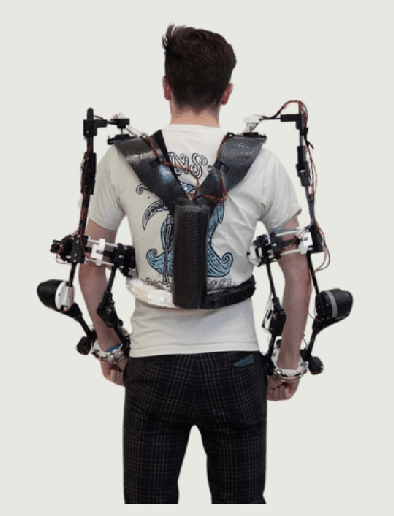
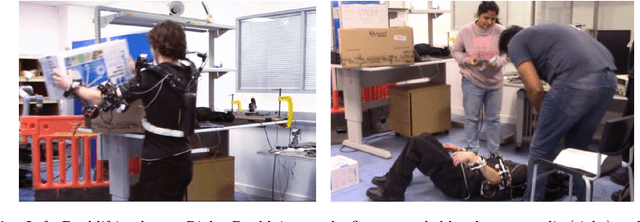

This paper describes the enactment of a simulated (mock) accident involving an upper-body exoskeleton and its investigation. The accident scenario is enacted by role-playing volunteers, one of whom is wearing the exoskeleton. Following the mock accident, investigators - also volunteers - interview both the subject of the accident and relevant witnesses. The investigators then consider the witness testimony alongside robot data logged by the ethical black box, in order to address the three key questions: what happened?, why did it happen?, and how can we make changes to prevent the accident happening again? This simulated accident scenario is one of a series we have run as part of the RoboTIPS project, with the overall aim of developing and testing both processes and technologies to support social robot accident investigation.
An Ethical Black Box for Social Robots: a draft Open Standard
May 13, 2022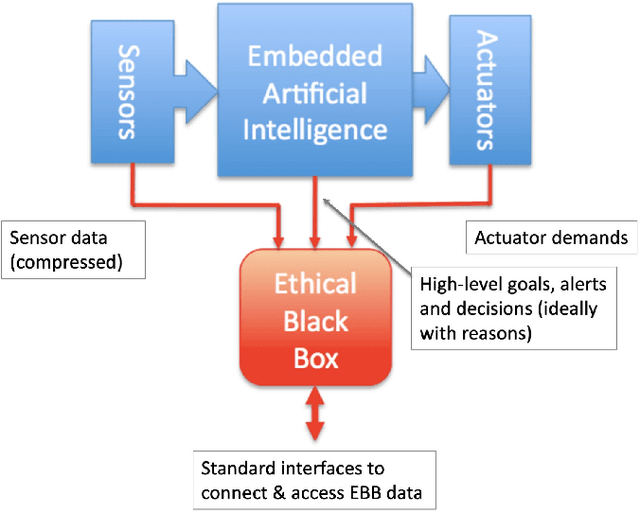
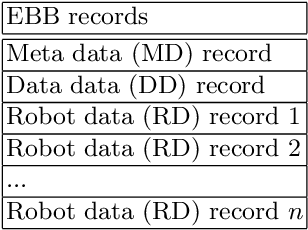
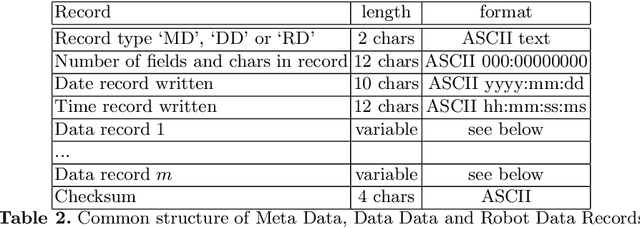
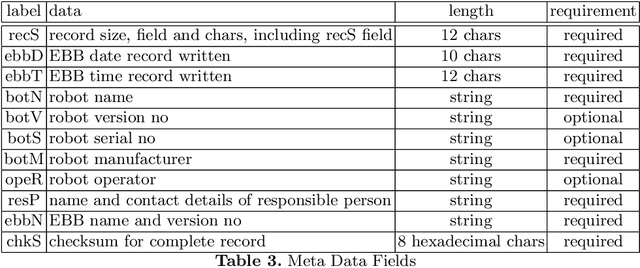
This paper introduces a draft open standard for the robot equivalent of an aircraft flight data recorder, which we call an ethical black box. This is a device, or software module, capable of securely recording operational data (sensor, actuator and control decisions) for a social robot, in order to support the investigation of accidents or near-miss incidents. The open standard, presented as an annex to this paper, is offered as a first draft for discussion within the robot ethics community. Our intention is to publish further drafts following feedback, in the hope that the standard will become a useful reference for social robot designers, operators and robot accident/incident investigators.