 Add to Chrome
 Add to Firefox
 Add to Edge
Decomposer: Learning to Decompile Symbolic Music to Programs
Jul 02, 2026
Musical performance involves executing a set of high-level musical instructions, yet recovering those instructions from the performance is a challenging inverse problem. We present Decomposer, a post-training framework for symbolic music decompilation: the task of recovering executable, editable music programs from symbolic music. We instantiate the task as MIDI-to-Strudel decompilation, where the model takes symbolic MIDI as input and produces a program in Strudel, a music programming language, that reconstructs the input when executed. The task poses two challenges: Strudel is a low-resource language with little naturally paired MIDI-code data, and optimizing faithful reconstruction of MIDI alone can collapse to unreadable note-by-note transliteration. We address these challenges in two stages. First, we construct Strudel-Synth, a synthetic corpus of paired Strudel programs and rendered MIDI, and use it for supervised fine-tuning. Second, we refine the model with reinforcement learning on unpaired MIDI, optimizing rewards for both MIDI reconstruction faithfulness and code readability. Our evaluation across synthetic and real-world MIDI benchmarks shows that Decomposer achieves substantially higher MIDI reconstruction faithfulness than closed-source LLMs while producing more readable and diverse code than the heuristic converter.

A Generative Adversarial Network for Climate Tipping Point Discovery (TIP-GAN)
Feb 16, 2023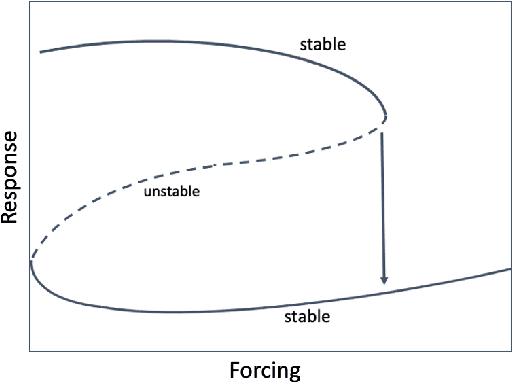
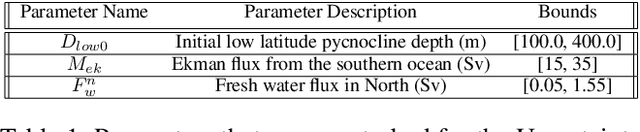
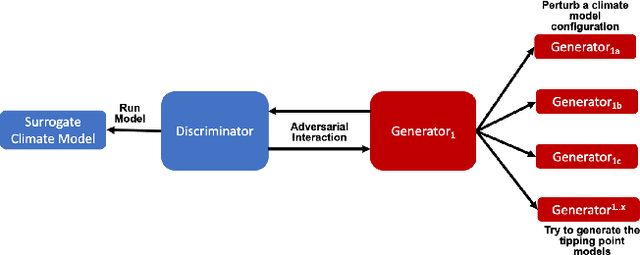
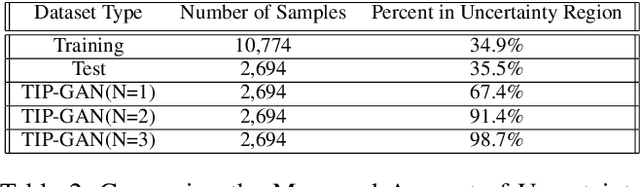
We propose a new Tipping Point Generative Adversarial Network (TIP-GAN) for better characterizing potential climate tipping points in Earth system models. We describe an adversarial game to explore the parameter space of these models, detect upcoming tipping points, and discover the drivers of tipping points. In this setup, a set of generators learn to construct model configurations that will invoke a climate tipping point. The discriminator learns to identify which generators are generating each model configuration and whether a given configuration will lead to a tipping point. The discriminator is trained using an oracle (a surrogate climate model) to test if a generated model configuration leads to a tipping point or not. We demonstrate the application of this GAN to invoke the collapse of the Atlantic Meridional Overturning Circulation (AMOC). We share experimental results of modifying the loss functions and the number of generators to exploit the area of uncertainty in model state space near a climate tipping point. In addition, we show that our trained discriminator can predict AMOC collapse with a high degree of accuracy without the use of the oracle. This approach could generalize to other tipping points, and could augment climate modeling research by directing users interested in studying tipping points to parameter sets likely to induce said tipping points in their computationally intensive climate models.
Using Artificial Intelligence to aid Scientific Discovery of Climate Tipping Points
Feb 14, 2023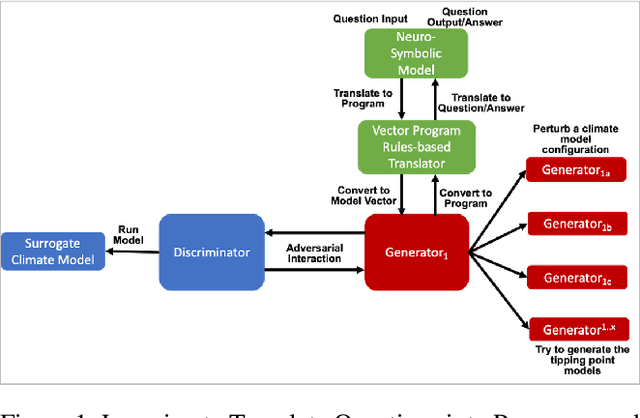
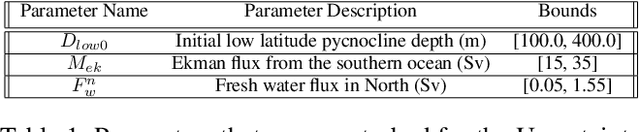
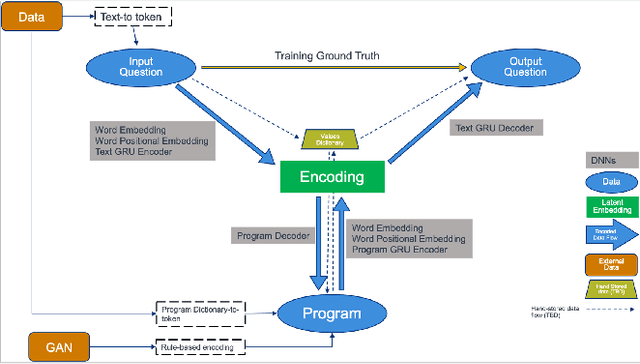
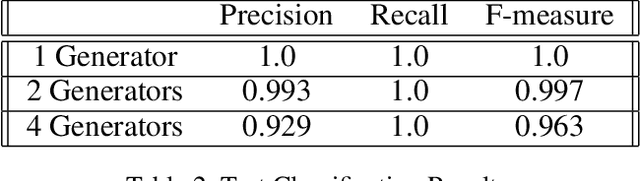
We propose a hybrid Artificial Intelligence (AI) climate modeling approach that enables climate modelers in scientific discovery using a climate-targeted simulation methodology based on a novel combination of deep neural networks and mathematical methods for modeling dynamical systems. The simulations are grounded by a neuro-symbolic language that both enables question answering of what is learned by the AI methods and provides a means of explainability. We describe how this methodology can be applied to the discovery of climate tipping points and, in particular, the collapse of the Atlantic Meridional Overturning Circulation (AMOC). We show how this methodology is able to predict AMOC collapse with a high degree of accuracy using a surrogate climate model for ocean interaction. We also show preliminary results of neuro-symbolic method performance when translating between natural language questions and symbolically learned representations. Our AI methodology shows promising early results, potentially enabling faster climate tipping point related research that would otherwise be computationally infeasible.