 Add to Chrome
 Add to Firefox
 Add to Edge
Experience Graphs: The Data Foundation for Self-Improving Agents
Jun 29, 2026
The database community has repeatedly advanced the state of the art by recognizing that new workloads demand new system architectures. We argue that long-horizon agentic tasks -- code generation, scientific discovery, hardware design -- are such a workload. These agents explore: they generate artifacts, execute tools, observe failures, branch, and repair over hundreds of steps. This search produces a structured object we call an experience graph: executable artifacts, tool outputs, rewards, sibling comparisons, and causal lineage. Yet existing agent frameworks treat this experience as disposable state -- JSON checkpoints and session logs that cannot be recovered after a crash, queried across users, or materialized into training data. We propose Trellis: a data foundation that treats the experience graph as first-class, governed, queryable database state. The core insight is that search over experience graphs is a database access pattern. Frontier selection is a query, cross-session reuse is vector-seeded graph retrieval, training-data extraction is a materialized view, and reconstructing what an agent knew at any past step is a time-travel query. When the database owns the experience graph, agents become stateless compute, and crash recovery, horizontal scaling, and a closed-loop training flywheel emerge as architectural byproducts. We ground the design in KernelEvolve, a production accelerator-kernel optimizer at Meta, where cross-session reuse reaches a target speedup roughly 10x faster at 52% lower token cost. More broadly, Trellis turns inference-time search from disposable computation into a durable institutional asset: logs made databases reliable; experience graphs may make agents cumulative.

Bullion: A Column Store for Machine Learning
Apr 13, 2024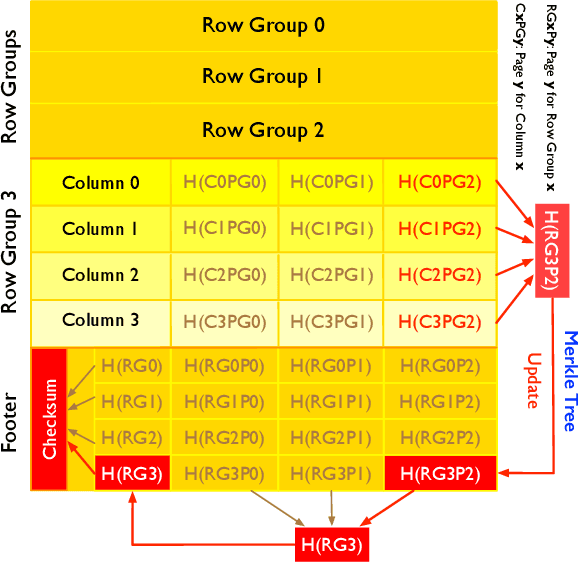
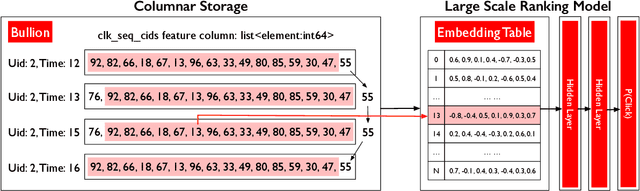
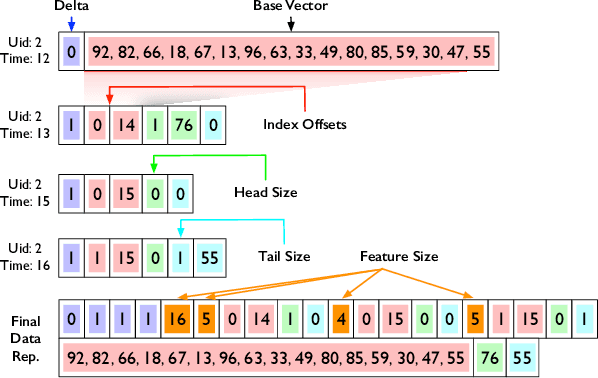
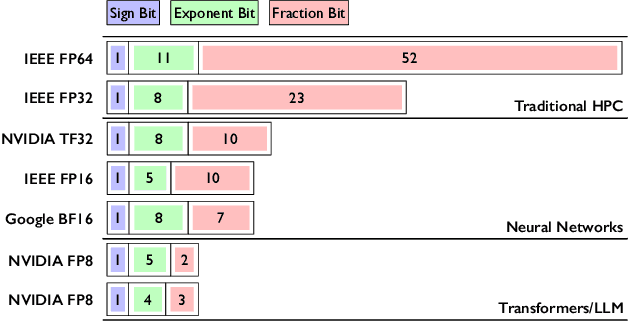
The past two decades have witnessed columnar storage revolutionizing data warehousing and analytics. However, the rapid growth of machine learning poses new challenges to this domain. This paper presents Bullion, a columnar storage system tailored for machine learning workloads. Bullion addresses the complexities of data compliance, optimizes the encoding of long sequence sparse features, efficiently manages wide-table projections, and introduces feature quantization in storage. By aligning with the evolving requirements of ML applications, Bullion extends columnar storage to various scenarios, from advertising and recommendation systems to the expanding realm of Generative AI. Preliminary experimental results and theoretical analysis demonstrate Bullion's superior performance in handling the unique demands of machine learning workloads compared to existing columnar storage solutions. Bullion significantly reduces I/O costs for deletion compliance, achieves substantial storage savings with its optimized encoding scheme for sparse features, and drastically improves metadata parsing speed for wide-table projections. These advancements position Bullion as a critical component in the future of machine learning infrastructure, enabling organizations to efficiently manage and process the massive volumes of data required for training and inference in modern AI applications.