 Add to Chrome
 Add to Firefox
 Add to Edge
New Properties and Invariants of Harmonic Polygons
Dec 30, 2021
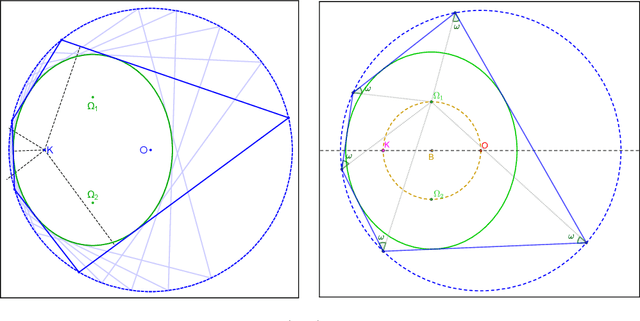
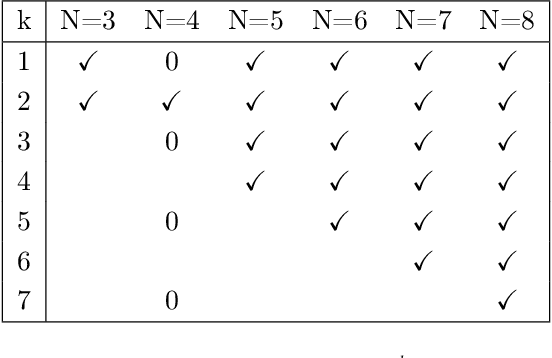
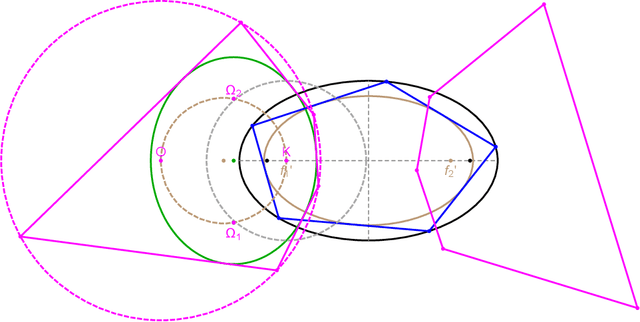
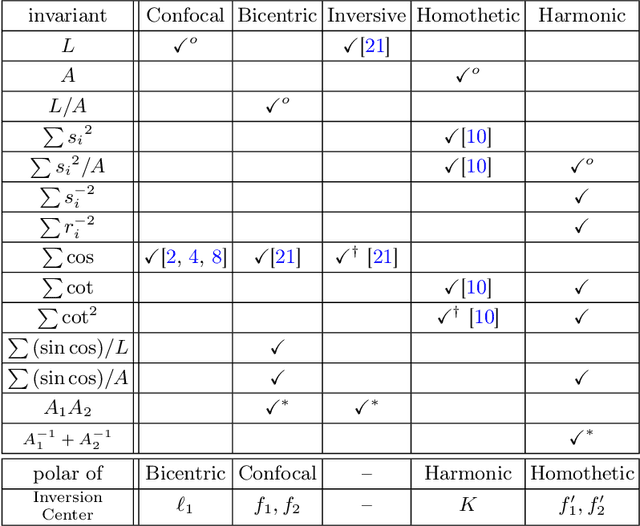
Via simulation, we discover and prove curious new Euclidean properties and invariants of the Poncelet family of harmonic polygons.

A Web of Confocal Parabolas in a Grid of Hexagons
Dec 10, 2021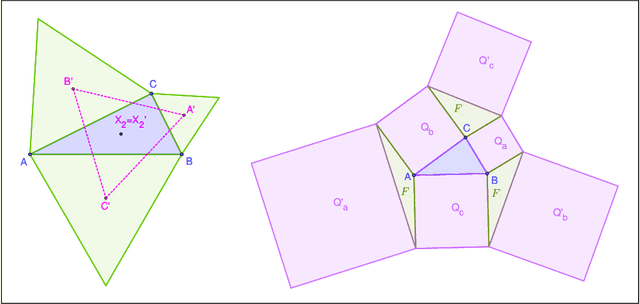
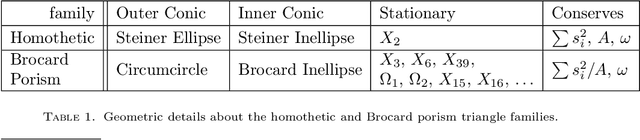
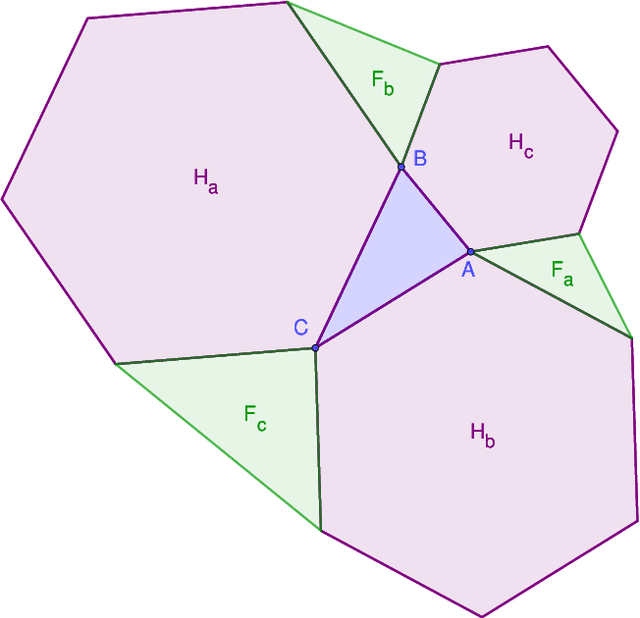

If one erects regular hexagons upon the sides of a triangle $T$, several surprising properties emerge, including: (i) the triangles which flank said hexagons have an isodynamic point common with $T$, (ii) the construction can be extended iteratively, forming an infinite grid of regular hexagons and flank triangles, (iii) a web of confocal parabolas with only three distinct foci interweaves the vertices of hexagons in the grid. Finally, (iv) said foci are the vertices of an equilateral triangle.
Properties of Parabola-Inscribed Poncelet Polygons
Nov 05, 2021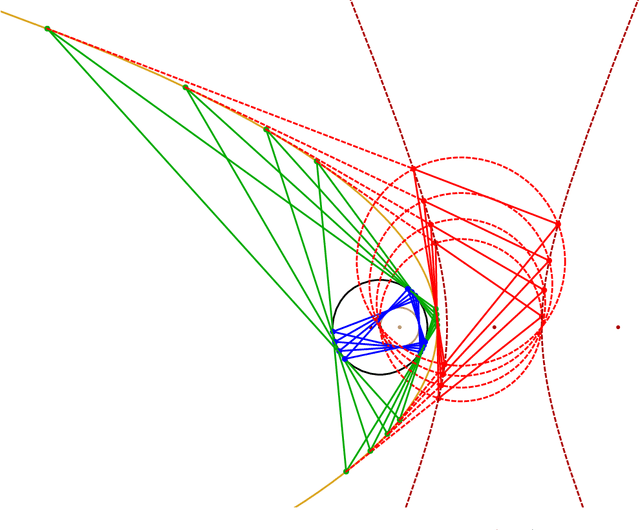
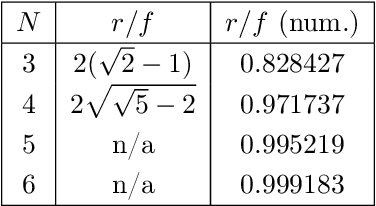
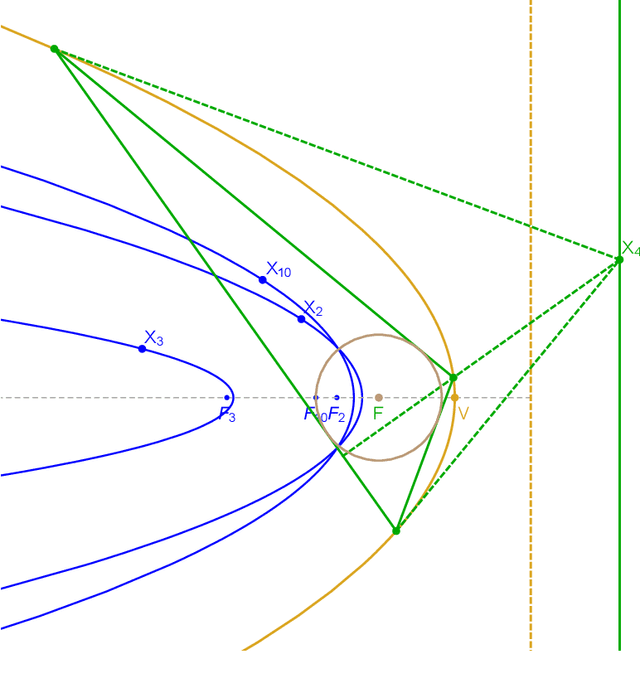
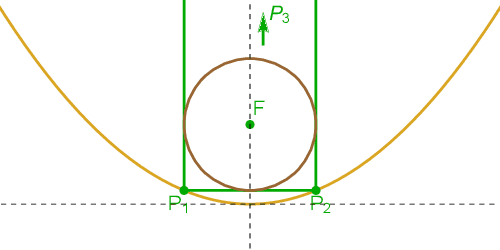
We investigate properties of Poncelet $N$-gon families inscribed in a parabola and circumscribing a focus-centered circle. These can be regarded as the polar images of a bicentric family with respect to the circumcircle, such that the bicentric incircle contains the circumcenter. We derive closure conditions for several $N$ and describe curious Euclidean properties such as straight line, circular, and point, loci, as well as a (perhaps new) conserved quantity.
Loci of Poncelet Triangles with Multiple Caustics
Aug 11, 2021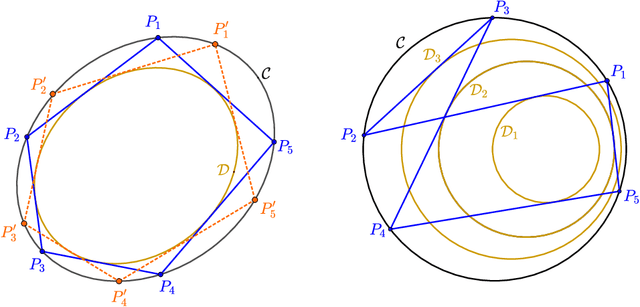
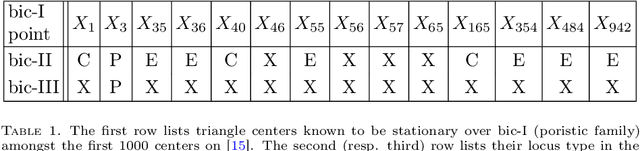
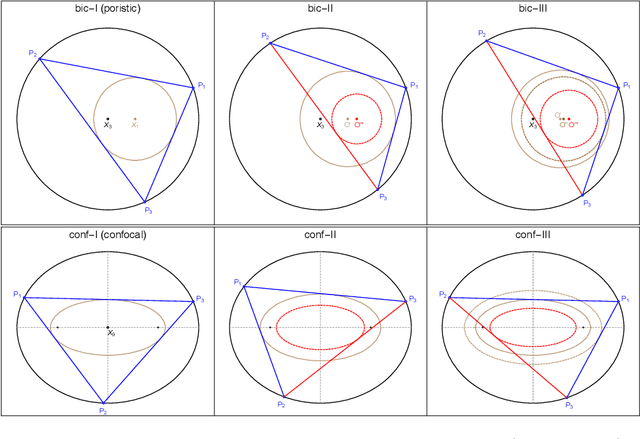
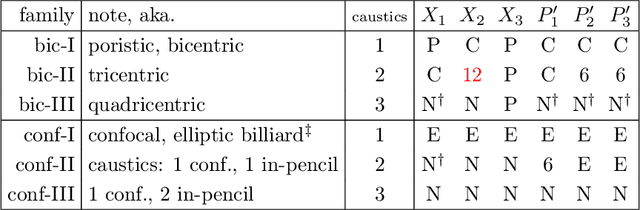
We analyze loci of triangles centers over variants of two-well known triangle porisms: the bicentric family and the confocal family. Specifically, we evoke a more general version of Poncelet's closure theorem whereby individual sides can be made tangent to separate caustics. We show that despite a more complicated dynamic geometry, the locus of certain triangle centers and associated points remain conics and/or circles.
A Theory for Locus Ellipticity of Poncelet 3-Periodic Centers
Jun 08, 2021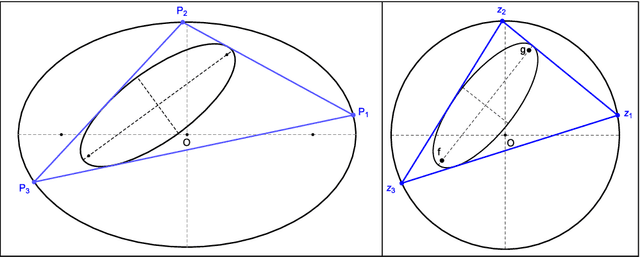
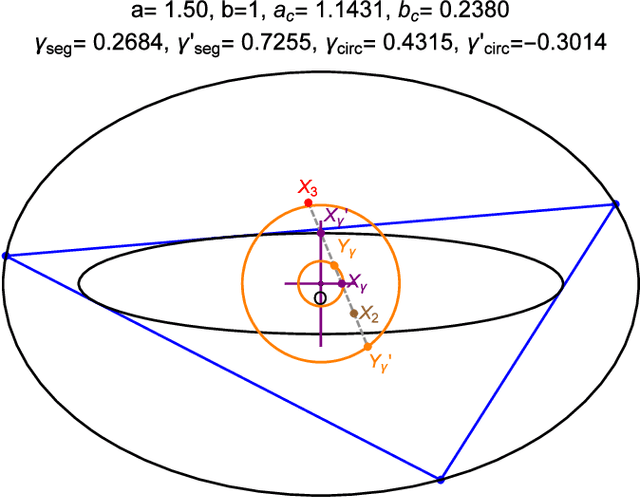
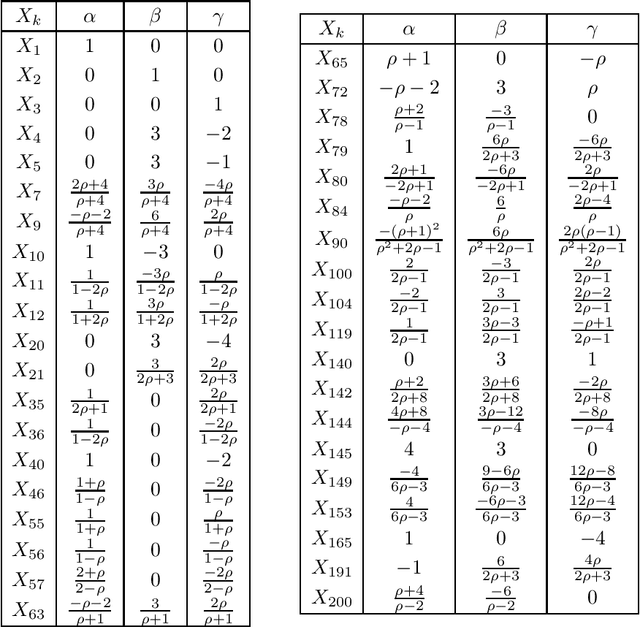
We propose a theory which predicts the ellipticity of a triangle center's locus over a Poncelet 3-periodic family. We show that if the triangle center can be expressed as a fixed affine combination of barycenter, circumcenter, and a third, stationary point over some family, then its locus will be an ellipse. Taking billiard 3-periodics as an example, the third point is the mittenpunkt. We derive conditions under which a locus degenerates to a segment or is a circle. We show a locus turning number is either plus or minus 3 and predict its movement monotonicity with respect to vertices of the 3-periodic family. Finally, we derive a (long) expression for the loci of the incenter and excenters over a generic Poncelet 3-periodic family, showing they are roots of a quartic. We conjecture (i) those loci are convex, and (ii) that they can only be ellipses if the pair is confocal, i.e., within a 1d subspace of the 5d space of ellipse pairs which admit 3-periodics.
Poncelet Plectra: Harmonious Properties of Cosine Space
Apr 28, 2021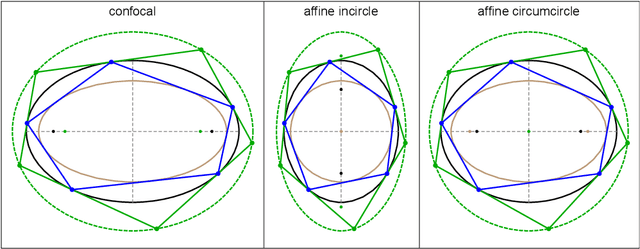
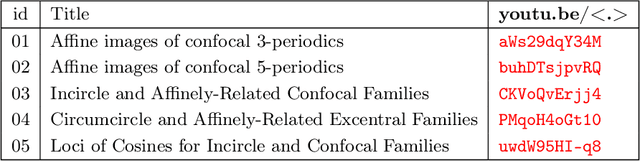

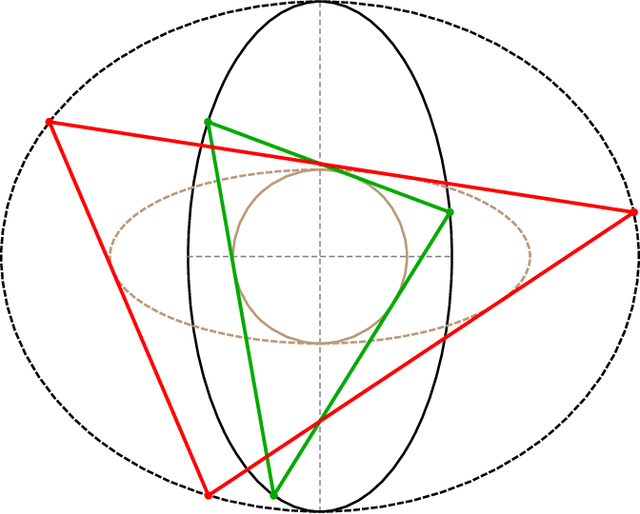
Poncelet N-periodics in a confocal pair (elliptic billiard) conserve the same sum of cosines as their affine image with fixed incircle. For N=3, the vector of cosines in either family sweep the same planar curve: an equilateral cubic resembling a plectrum (guitar pick). We also show that the family of excentral triangles to the confocal family conserves the same product of cosines as its affine image with fixed circumcircle. In cosine space cosine triples in either family sweep the same spherical curve. The associated planar curve in log cosine space is also plectrum-shaped, though rounder than the one swept by its parent confocal family.
Invariant Center Power and Elliptic Loci of Poncelet Triangles
Feb 21, 2021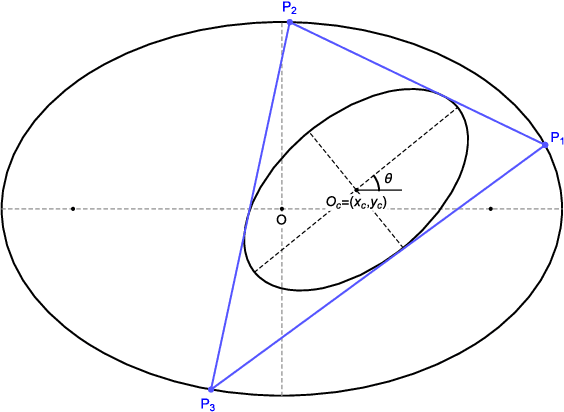
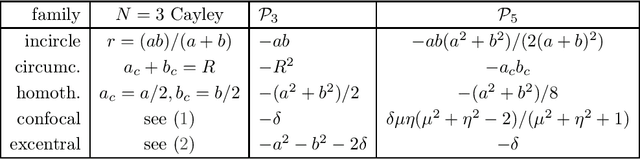
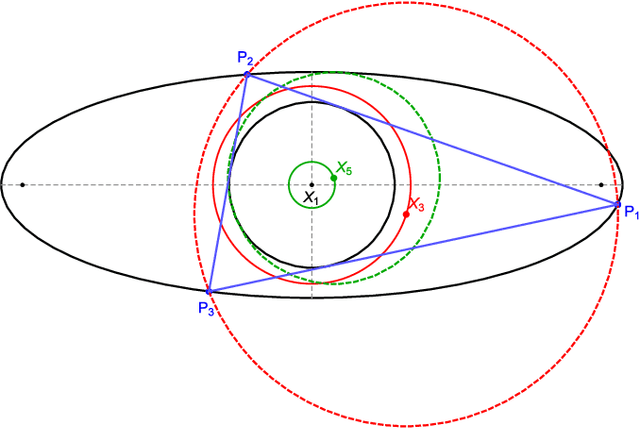
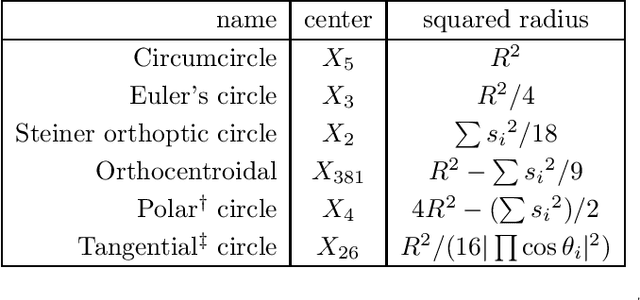
We study center power with respect to circles derived from Poncelet 3-periodics (triangles) in a generic pair of ellipses as well as loci of their triangle centers. We show that (i) for any concentric pair, the power of the center with respect to either circumcircle or Euler's circle is invariant, and (ii) if a triangle center of a 3-periodic in a generic nested pair is a fixed linear combination of barycenter and circumcenter, its locus over the family is an ellipse.
Poncelet Propellers: Invariant Total Blade Area
Jan 25, 2021


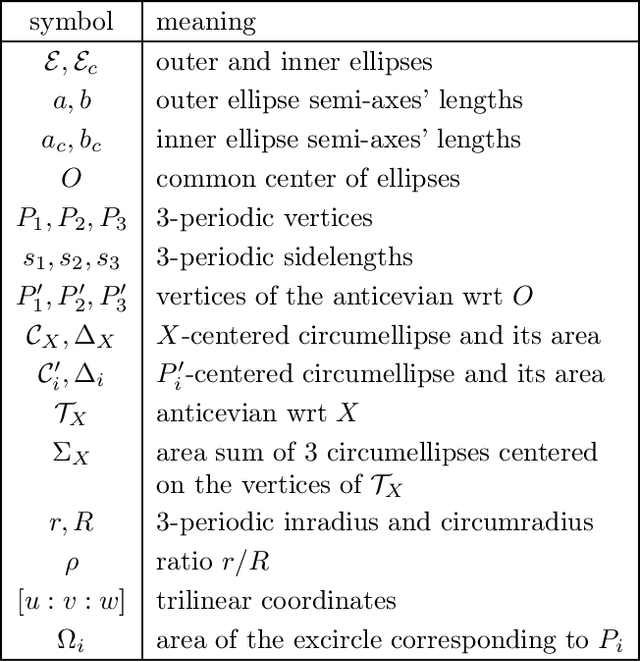
Given a triangle, a trio of circumellipses can be defined, each centered on an excenter. Over the family of Poncelet 3-periodics (triangles) in a concentric ellipse pair (axis-aligned or not), the trio resembles a rotating propeller, where each "blade" has variable area. Amazingly, their total area is invariant, even when the ellipse pair is not axis-aligned. We also prove a closely-related invariant involving the sum of blade-to-excircle area ratios.
Family Ties: Relating Poncelet 3-Periodics by their Properties
Dec 21, 2020


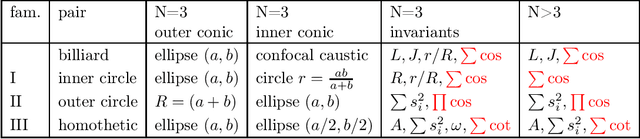
We study the dynamic geometry, loci, and invariants of three Poncelet families associated with three distinct concentric Ellipse pairs: with-incircle, with-circumcircle, and homothetic. Most of their properties run parallel to those of 3 well-studied families: elliptic billiard (confocal pair), Chapple's poristic triangles, and the Brocard porism, allowing us to organize them in three "similar" groups.
Invariants of Self-Intersected N-Periodics in the Elliptic Billiard
Dec 12, 2020

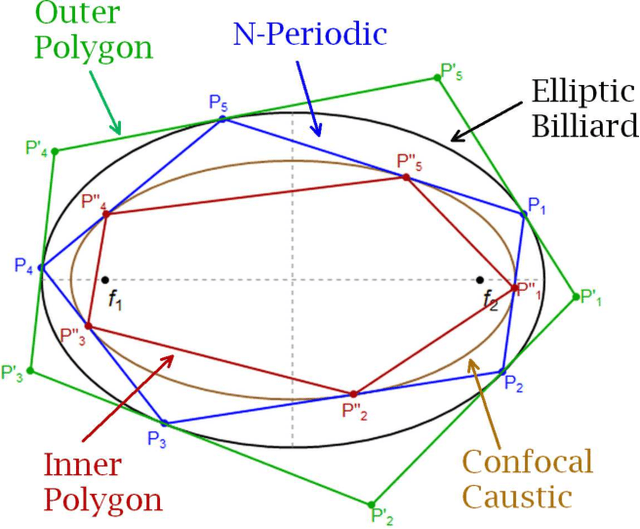

We study self-intersected N-periodics in the elliptic billiard, describing new facts about their geometry (e.g., self-intersected 4-periodics have vertices concyclic with the foci). We also check if some invariants listed in "Eighty New Invariants of N-Periodics in the Elliptic Billiard" (2020), arXiv:2004.12497, remain invariant in the self-intersected case. Toward that end, we derive explicit expressions for many low-N simple and self-intersected cases. We identify two special cases (one simple, one self-intersected) where a quantity prescribed to be invariant is actually variable.