 Add to Chrome
 Add to Firefox
 Add to Edge
Beyond Binary: Continuous State Optimization with Graph-Structured Objectives
Aug 10, 2026
Large-scale learning systems often face the challenge of balancing multiple, potentially competing objectives, such as fairness, accuracy, and latency. While recent work has formalized this as an optimization problem over binary states, many real-world control parameters, such as fairness thresholds, diversity mixing rates, or resource budgets, are continuous. In this work, we extend the framework to \emph{continuous state spaces}. We model the problem as minimizing a sum of linear objectives subject to \emph{movement costs} that penalize system instability. We capture the local structure of the objectives using a \emph{dependency graph} (or factor graph), where each objective is determined by a subset of the state attributes. To address the tension between exploration and stability, we propose \emph{Lazy Graph-LinUCB}, an algorithm that performs lazy updates to minimize switching costs while maintaining near-optimal regret. Beyond stability, we introduce three advanced mechanisms to exploit the underlying graph structure: (1) an \emph{asynchronous} update schedule that eliminates synchronization overhead in sparse graphs; (2) an \emph{adaptive} algorithm that learns the graph structure from data; and (3) a \emph{joint estimator} that leverages data sharing among correlated objectives to significantly tighten regret bounds. Empirically, we demonstrate that these structural exploitations reduce movement costs by more than a factor of three in heterogeneous systems while maintaining similar cumulative losses.

Towards Automating Scientific Review with Google's Paper Assistant Tool
Jun 26, 2026Artificial intelligence is driving a revolution in scientific discovery, accelerating everything from hypothesis generation to mathematical theorem proving. However, this rapid acceleration is creating a systemic challenge: traditional human peer review cannot scale to match the influx of AI-assisted science. Ultimately, to resolve this tension, we must also deploy AI to accelerate the verification and review process itself. To frame the discussion around this transition, we propose a taxonomy consisting of four progressive levels of AI-human collaboration in scientific evaluation, and discuss various trade-offs involved with each. As a step toward this future, we introduce the Paper Assistant Tool (PAT), an agentic AI framework built for deep scientific review and verification. PAT ingests full scientific manuscripts and produces a comprehensive evaluation, checking theoretical results, validating experiments, suggesting improvements, and identifying potential flaws. By utilizing inference scaling techniques, PAT is able to identify deeper issues than a single model call alone, achieving a 34% improvement over zero-shot recall on mathematical errors in the SPOT benchmark. Pilot deployments of PAT as a pre-submission tool for authors at two major Computer Science conferences -- STOC and ICML -- demonstrate its ability to identify critical errors and suggest substantive improvements to research papers. By catching errors early, PAT eases the cognitive burden placed on referees, while preserving their control over the outcomes of the review process.
A Theoretical Framework for Modular Learning of Robust Generative Models
Feb 19, 2026Training large-scale generative models is resource-intensive and relies heavily on heuristic dataset weighting. We address two fundamental questions: Can we train Large Language Models (LLMs) modularly-combining small, domain-specific experts to match monolithic performance-and can we do so robustly for any data mixture, eliminating heuristic tuning? We present a theoretical framework for modular generative modeling where a set of pre-trained experts are combined via a gating mechanism. We define the space of normalized gating functions, $G_{1}$, and formulate the problem as a minimax game to find a single robust gate that minimizes divergence to the worst-case data mixture. We prove the existence of such a robust gate using Kakutani's fixed-point theorem and show that modularity acts as a strong regularizer, with generalization bounds scaling with the lightweight gate's complexity. Furthermore, we prove that this modular approach can theoretically outperform models retrained on aggregate data, with the gap characterized by the Jensen-Shannon Divergence. Finally, we introduce a scalable Stochastic Primal-Dual algorithm and a Structural Distillation method for efficient inference. Empirical results on synthetic and real-world datasets confirm that our modular architecture effectively mitigates gradient conflict and can robustly outperform monolithic baselines.
Improved Balanced Classification with Theoretically Grounded Loss Functions
Dec 30, 2025The balanced loss is a widely adopted objective for multi-class classification under class imbalance. By assigning equal importance to all classes, regardless of their frequency, it promotes fairness and ensures that minority classes are not overlooked. However, directly minimizing the balanced classification loss is typically intractable, which makes the design of effective surrogate losses a central question. This paper introduces and studies two advanced surrogate loss families: Generalized Logit-Adjusted (GLA) loss functions and Generalized Class-Aware weighted (GCA) losses. GLA losses generalize Logit-Adjusted losses, which shift logits based on class priors, to the broader general cross-entropy loss family. GCA loss functions extend the standard class-weighted losses, which scale losses inversely by class frequency, by incorporating class-dependent confidence margins and extending them to the general cross-entropy family. We present a comprehensive theoretical analysis of consistency for both loss families. We show that GLA losses are Bayes-consistent, but only $H$-consistent for complete (i.e., unbounded) hypothesis sets. Moreover, their $H$-consistency bounds depend inversely on the minimum class probability, scaling at least as $1/\mathsf p_{\min}$. In contrast, GCA losses are $H$-consistent for any hypothesis set that is bounded or complete, with $H$-consistency bounds that scale more favorably as $1/\sqrt{\mathsf p_{\min}}$, offering significantly stronger theoretical guarantees in imbalanced settings. We report the results of experiments demonstrating that, empirically, both the GCA losses with calibrated class-dependent confidence margins and GLA losses can greatly outperform straightforward class-weighted losses as well as the LA losses. GLA generally performs slightly better in common benchmarks, whereas GCA exhibits a slight edge in highly imbalanced settings.
Cardinality-Aware Set Prediction and Top-$k$ Classification
Jul 09, 2024We present a detailed study of cardinality-aware top-$k$ classification, a novel approach that aims to learn an accurate top-$k$ set predictor while maintaining a low cardinality. We introduce a new target loss function tailored to this setting that accounts for both the classification error and the cardinality of the set predicted. To optimize this loss function, we propose two families of surrogate losses: cost-sensitive comp-sum losses and cost-sensitive constrained losses. Minimizing these loss functions leads to new cardinality-aware algorithms that we describe in detail in the case of both top-$k$ and threshold-based classifiers. We establish $H$-consistency bounds for our cardinality-aware surrogate loss functions, thereby providing a strong theoretical foundation for our algorithms. We report the results of extensive experiments on CIFAR-10, CIFAR-100, ImageNet, and SVHN datasets demonstrating the effectiveness and benefits of our cardinality-aware algorithms.
Differentially Private Domain Adaptation with Theoretical Guarantees
Jun 15, 2023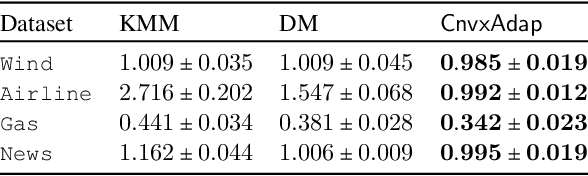
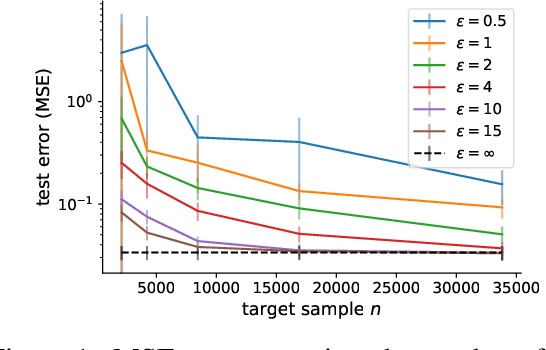
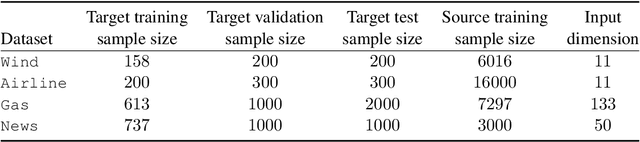

In many applications, the labeled data at the learner's disposal is subject to privacy constraints and is relatively limited. To derive a more accurate predictor for the target domain, it is often beneficial to leverage publicly available labeled data from an alternative domain, somewhat close to the target domain. This is the modern problem of supervised domain adaptation from a public source to a private target domain. We present two $(\epsilon, \delta)$-differentially private adaptation algorithms for supervised adaptation, for which we make use of a general optimization problem, recently shown to benefit from favorable theoretical learning guarantees. Our first algorithm is designed for regression with linear predictors and shown to solve a convex optimization problem. Our second algorithm is a more general solution for loss functions that may be non-convex but Lipschitz and smooth. While our main objective is a theoretical analysis, we also report the results of several experiments first demonstrating that the non-private versions of our algorithms outperform adaptation baselines and next showing that, for larger values of the target sample size or $\epsilon$, the performance of our private algorithms remains close to that of the non-private formulation.
Best-Effort Adaptation
May 10, 2023We study a problem of best-effort adaptation motivated by several applications and considerations, which consists of determining an accurate predictor for a target domain, for which a moderate amount of labeled samples are available, while leveraging information from another domain for which substantially more labeled samples are at one's disposal. We present a new and general discrepancy-based theoretical analysis of sample reweighting methods, including bounds holding uniformly over the weights. We show how these bounds can guide the design of learning algorithms that we discuss in detail. We further show that our learning guarantees and algorithms provide improved solutions for standard domain adaptation problems, for which few labeled data or none are available from the target domain. We finally report the results of a series of experiments demonstrating the effectiveness of our best-effort adaptation and domain adaptation algorithms, as well as comparisons with several baselines. We also discuss how our analysis can benefit the design of principled solutions for fine-tuning.
Inconsistency in Conference Peer Review: Revisiting the 2014 NeurIPS Experiment
Sep 20, 2021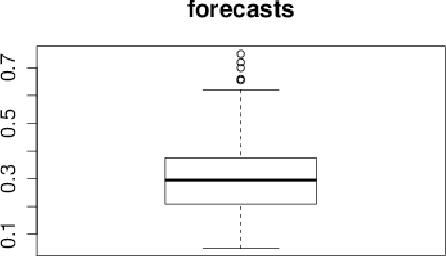
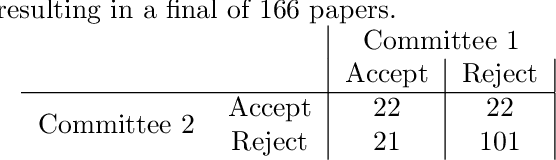
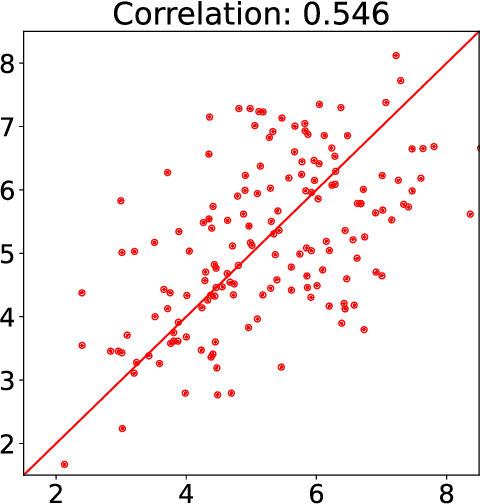
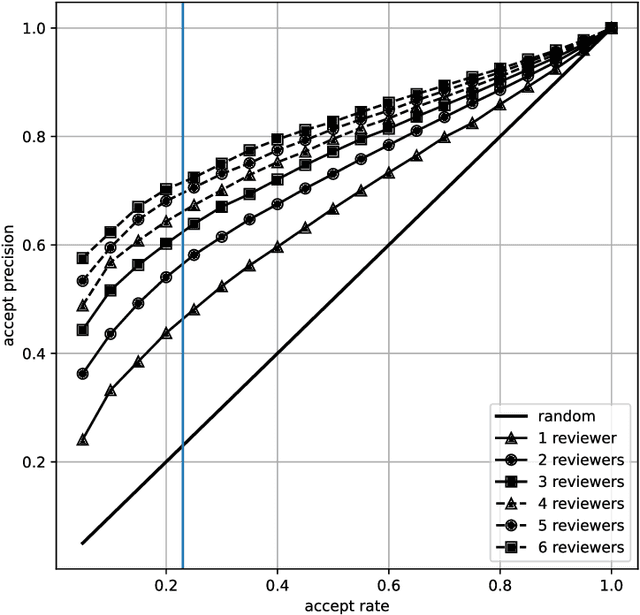
In this paper we revisit the 2014 NeurIPS experiment that examined inconsistency in conference peer review. We determine that 50\% of the variation in reviewer quality scores was subjective in origin. Further, with seven years passing since the experiment we find that for \emph{accepted} papers, there is no correlation between quality scores and impact of the paper as measured as a function of citation count. We trace the fate of rejected papers, recovering where these papers were eventually published. For these papers we find a correlation between quality scores and impact. We conclude that the reviewing process for the 2014 conference was good for identifying poor papers, but poor for identifying good papers. We give some suggestions for improving the reviewing process but also warn against removing the subjective element. Finally, we suggest that the real conclusion of the experiment is that the community should place less onus on the notion of `top-tier conference publications' when assessing the quality of individual researchers. For NeurIPS 2021, the PCs are repeating the experiment, as well as conducting new ones.
Multiple-Source Adaptation with Domain Classifiers
Aug 25, 2020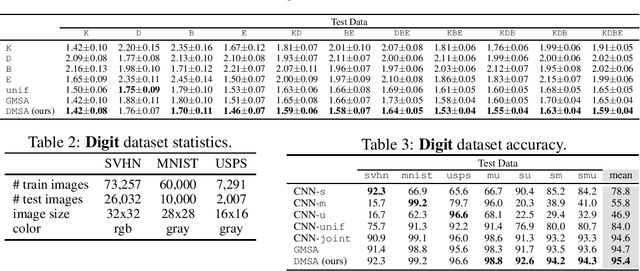
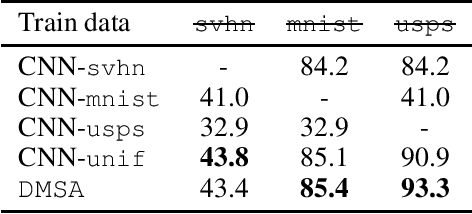
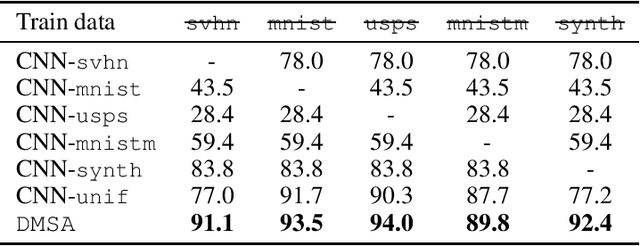
We consider the multiple-source adaptation (MSA) problem and improve a previously proposed MSA solution, where accurate density estimation per domain is required to obtain favorable learning guarantees. In this work, we replace the difficult task of density estimation per domain with a much easier task of domain classification, and show that the two solutions are equivalent given the true densities and domain classifier, yet the newer approach benefits from more favorable guarantees when densities and domain classifier are estimated from finite samples. Our experiments with real-world applications demonstrate that the new discriminative MSA solution outperforms the previous solution with density estimation, as well as other domain adaptation baselines.
Beyond Individual and Group Fairness
Aug 21, 2020

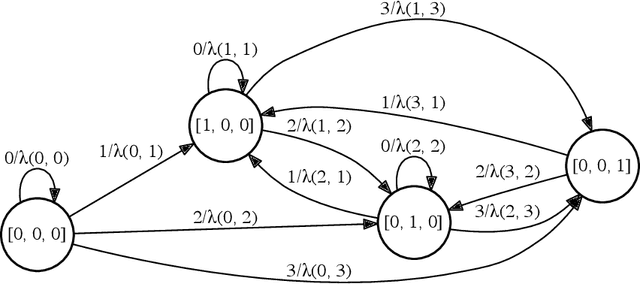
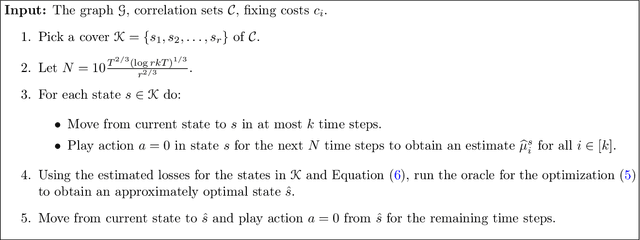
We present a new data-driven model of fairness that, unlike existing static definitions of individual or group fairness is guided by the unfairness complaints received by the system. Our model supports multiple fairness criteria and takes into account their potential incompatibilities. We consider both a stochastic and an adversarial setting of our model. In the stochastic setting, we show that our framework can be naturally cast as a Markov Decision Process with stochastic losses, for which we give efficient vanishing regret algorithmic solutions. In the adversarial setting, we design efficient algorithms with competitive ratio guarantees. We also report the results of experiments with our algorithms and the stochastic framework on artificial datasets, to demonstrate their effectiveness empirically.