 Add to Chrome
 Add to Firefox
 Add to Edge
Workflow-GYM: Towards Long-Horizon Evaluation of Computer-use Agentic tasks in Real-World Professional Fields
Jun 09, 2026
Recent years have witnessed the rapid evolution of AI agents toward handling increasingly complex, real-world tasks. However, existing benchmarks rarely evaluate whether agents can operate graphical user interfaces to complete long-horizon, high-value professional workflows across diverse domains. Current GUI benchmarks still predominantly focus on general-purpose software, relatively simple applications, and short-horizon tasks, leaving it largely unknown whether modern agents can follow user instructions to autonomously operate domain-specific professional software and accomplish economically valuable work in an end-to-end manner. To bridge this gap, we introduce Workflow-GYM, a benchmark for long-horizon GUI tasks centered on professional domains and specialized software environments. Through extensive experiments on state-of-the-art models, we find that even the strongest models achieve only slightly above 30% success rates, highlighting that professional long-horizon GUI workflows remain highly challenging for current GUI agents. Further analysis reveals that current agents struggle to maintain long-horizon workflow consistency, frequently exhibiting workflow stage omission, error propagation, objective drift, and insufficient understanding of professional software environments. Our findings provide important insights into the limitations of current agent systems and suggest key directions for the next generation of GUI-agent research.

Learning to Localize: A 3D CNN Approach to User Positioning in Massive MIMO-OFDM Systems
Nov 14, 2019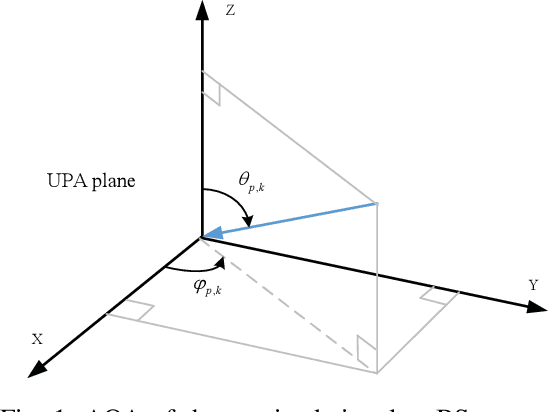
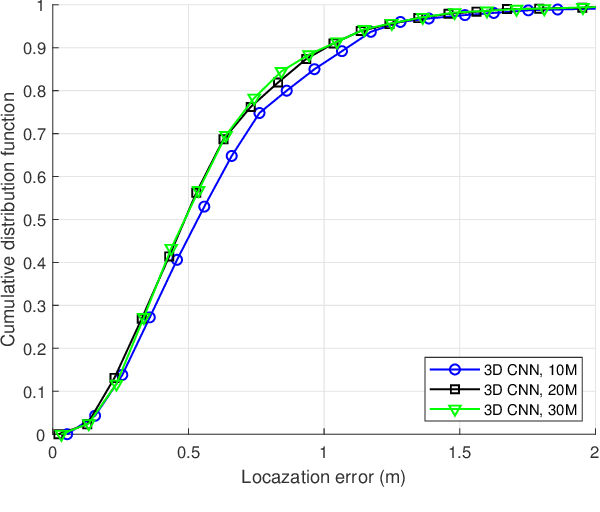
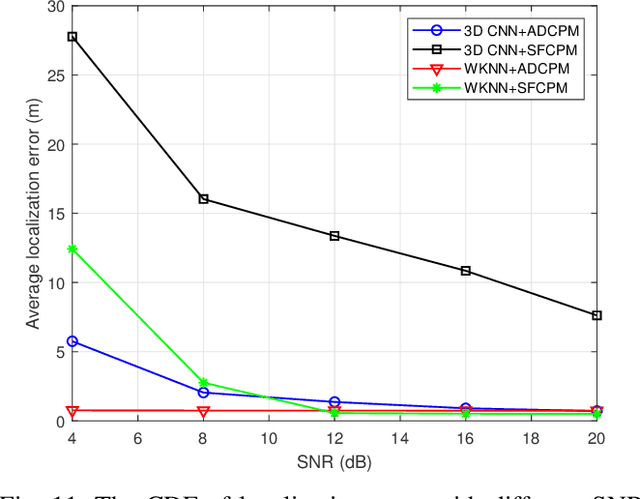
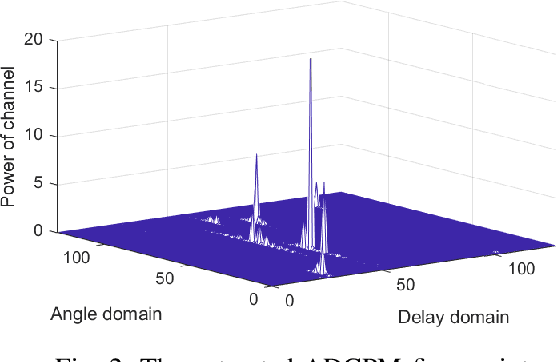
In this paper, we consider the user positioning problem in the massive multiple-input multiple-output (MIMO) orthogonal frequency-division multiplexing (OFDM) system with a uniform planner antenna (UPA) array. Taking advantage of the UPA array geometry and wide bandwidth, we advocate the use of the angle-delay channel power matrix (ADCPM) as a new type of fingerprint to replace the traditional ones. The ADCPM embeds the stable and stationary multipath characteristics, e.g. delay, power, and angle in the vertical and horizontal directions, which are beneficial to positioning. Taking ADCPM fingerprints as the inputs, we propose a novel three-dimensional (3D) convolution neural network (CNN) enabled learning method to localize users' 3D positions. In particular, such a 3D CNN model consists of a convolution refinement module to refine the elementary feature maps from the ADCPM fingerprints, three extended Inception modules to extract the advanced feature maps, and a regression module to estimate the 3D positions. By intensive simulations, the proposed 3D CNN-enabled positioning method is demonstrated to achieve higher positioning accuracy than the traditional searching-based ones, with reduced computational complexity and storage overhead, and the ADCPM fingerprints are more robust to noise contamination.