 Add to Chrome
 Add to Firefox
 Add to Edge
Harnessing Magnitude-Only and Complex Measurements for Improved Dynamic MRI Reconstruction with Learned Priors
Aug 18, 2026
MRI reconstruction methods for undersampled k-space data naturally utilize complex-valued measurements. Parallel developments in sparse phase retrieval have shown that magnitude-only measurements may provide complementary information for signal recovery. However, their use in MRI reconstruction remains largely unexplored, due to lack of practical settings where informative magnitude measurements can be obtained without additional scan time. In this work, we investigate the use of auxiliary k-space magnitude information for accelerated steady-state dynamic MRI reconstruction, and demonstrate strong consistency of k-space magnitudes across time-frames. Building on this observation, we propose $\mathbb{C}+\text{Mag}$, a magnitude-informed physics-driven deep learning reconstruction method. The proposed method employs an ADMM-based unrolling framework with a novel magnitude-aware data-fidelity formulation, where quadratically smoothed optimization and momentum-based updates are introduced to address the non-differentiability and non-convexity of the magnitude constraints. Experiments on retrospectively undersampled cine MRI and phase-contrast flow MRI datasets, as well as prospectively undersampled real-time cine MRI acquisitions, demonstrate improved artifact suppression, sharper anatomical recovery, and better preservation of phase information compared to conventional PD-DL methods, which is further supported through blinded expert reader evaluations.

Predicting Cancer Treatments Induced Cardiotoxicity of Breast Cancer Patients
Jan 31, 2022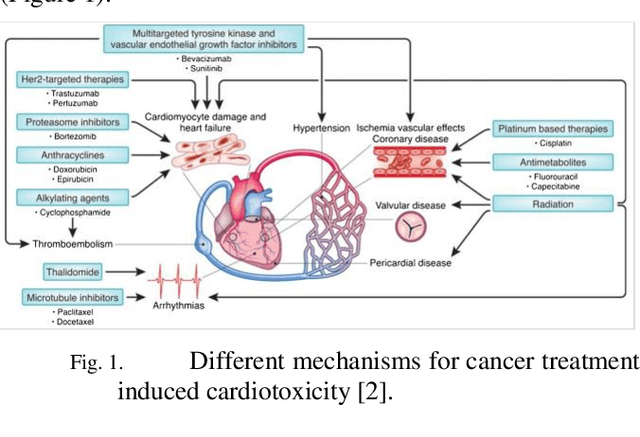
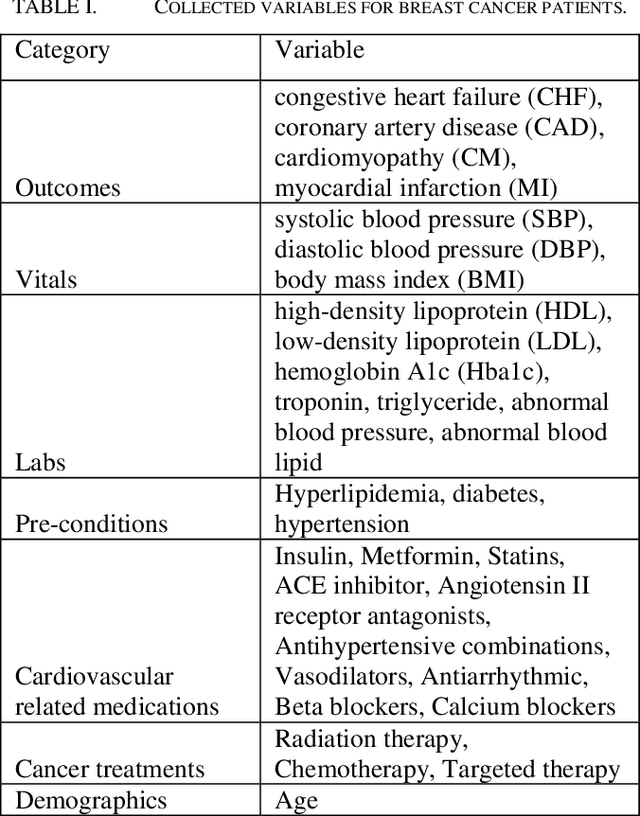
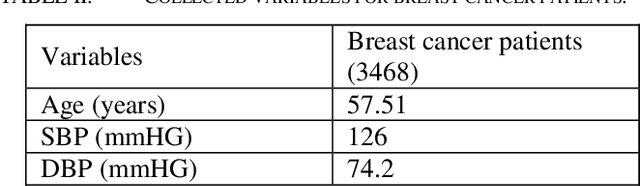
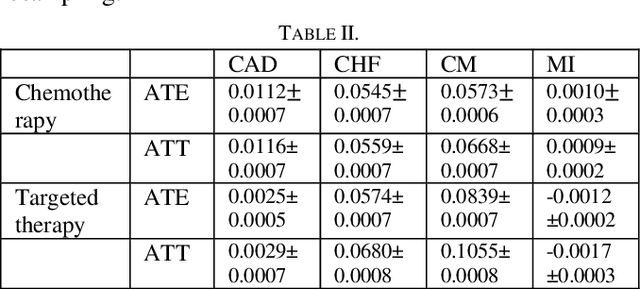
Cardiotoxicity induced by the breast cancer treatments (i.e., chemotherapy, targeted therapy and radiation therapy) is a significant problem for breast cancer patients. The cardiotoxicity risk for breast cancer patients receiving different treatments remains unclear. We developed and evaluated risk predictive models for cardiotoxicity in breast cancer patients using EHR data. The AUC scores to predict the CHF, CAD, CM and MI are 0.846, 0.857, 0.858 and 0.804 respectively. After adjusting for baseline differences in cardiovascular health, patients who received chemotherapy or targeted therapy appeared to have higher risk of cardiotoxicity than patients who received radiation therapy. Due to differences in baseline cardiac health across the different breast cancer treatment groups, caution is recommended in interpreting the cardiotoxic effect of these treatments.
Self-Supervised Physics-Guided Deep Learning Reconstruction For High-Resolution 3D LGE CMR
Nov 18, 2020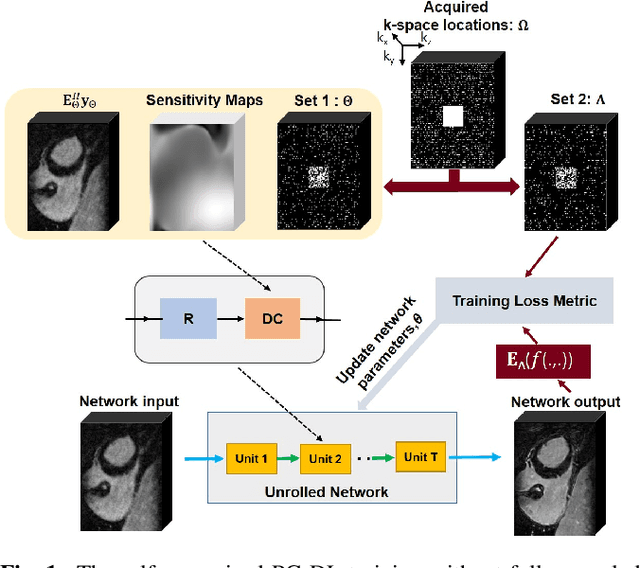
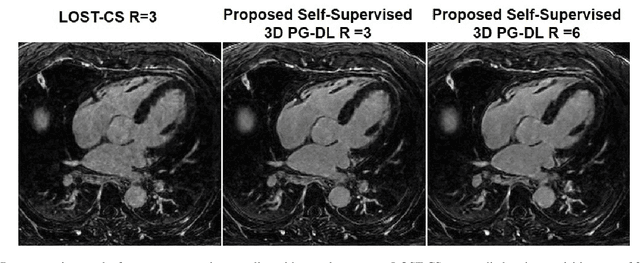
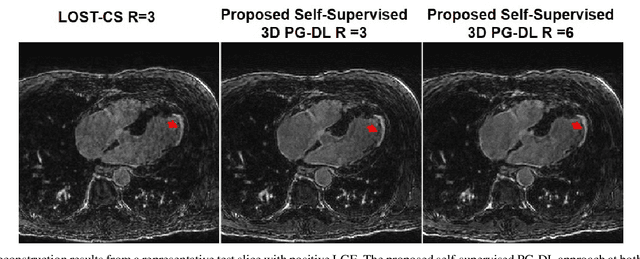
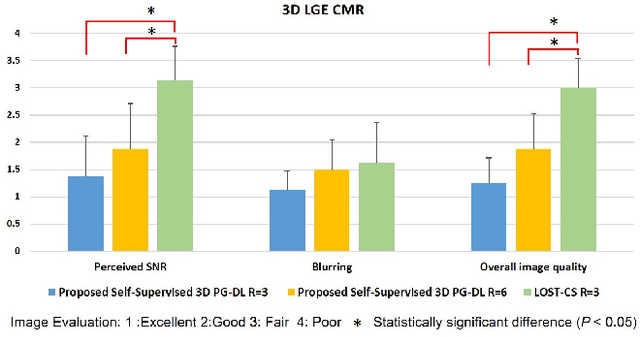
Late gadolinium enhancement (LGE) cardiac MRI (CMR) is the clinical standard for diagnosis of myocardial scar. 3D isotropic LGE CMR provides improved coverage and resolution compared to 2D imaging. However, image acceleration is required due to long scan times and contrast washout. Physics-guided deep learning (PG-DL) approaches have recently emerged as an improved accelerated MRI strategy. Training of PG-DL methods is typically performed in supervised manner requiring fully-sampled data as reference, which is challenging in 3D LGE CMR. Recently, a self-supervised learning approach was proposed to enable training PG-DL techniques without fully-sampled data. In this work, we extend this self-supervised learning approach to 3D imaging, while tackling challenges related to small training database sizes of 3D volumes. Results and a reader study on prospectively accelerated 3D LGE show that the proposed approach at 6-fold acceleration outperforms the clinically utilized compressed sensing approach at 3-fold acceleration.