 Add to Chrome
 Add to Firefox
 Add to Edge
A prospective clinical feasibility study of a conversational diagnostic AI in an ambulatory primary care clinic
Mar 10, 2026
Large language model (LLM)-based AI systems have shown promise for patient-facing diagnostic and management conversations in simulated settings. Translating these systems into clinical practice requires assessment in real-world workflows with rigorous safety oversight. We report a prospective, single-arm feasibility study of an LLM-based conversational AI, the Articulate Medical Intelligence Explorer (AMIE), conducting clinical history taking and presentation of potential diagnoses for patients to discuss with their provider at urgent care appointments at a leading academic medical center. 100 adult patients completed an AMIE text-chat interaction up to 5 days before their appointment. We sought to assess the conversational safety and quality, patient and clinician experience, and clinical reasoning capabilities compared to primary care providers (PCPs). Human safety supervisors monitored all patient-AMIE interactions in real time and did not need to intervene to stop any consultations based on pre-defined criteria. Patients reported high satisfaction and their attitudes towards AI improved after interacting with AMIE (p < 0.001). PCPs found AMIE's output useful with a positive impact on preparedness. AMIE's differential diagnosis (DDx) included the final diagnosis, per chart review 8 weeks post-encounter, in 90% of cases, with 75% top-3 accuracy. Blinded assessment of AMIE and PCP DDx and management (Mx) plans suggested similar overall DDx and Mx plan quality, without significant differences for DDx (p = 0.6) and appropriateness and safety of Mx (p = 0.1 and 1.0, respectively). PCPs outperformed AMIE in the practicality (p = 0.003) and cost effectiveness (p = 0.004) of Mx. While further research is needed, this study demonstrates the initial feasibility, safety, and user acceptance of conversational AI in a real-world setting, representing crucial steps towards clinical translation.

Online Matching: A Real-time Bandit System for Large-scale Recommendations
Jul 29, 2023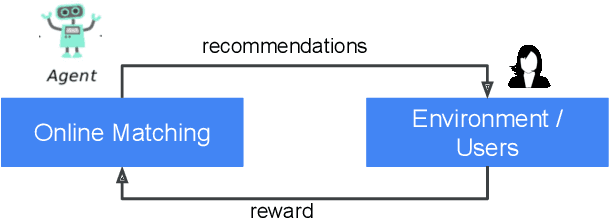
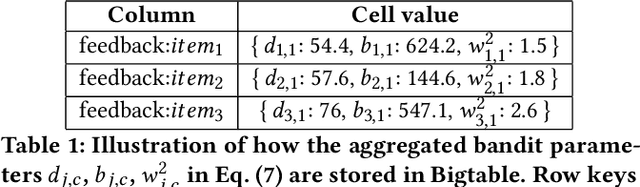
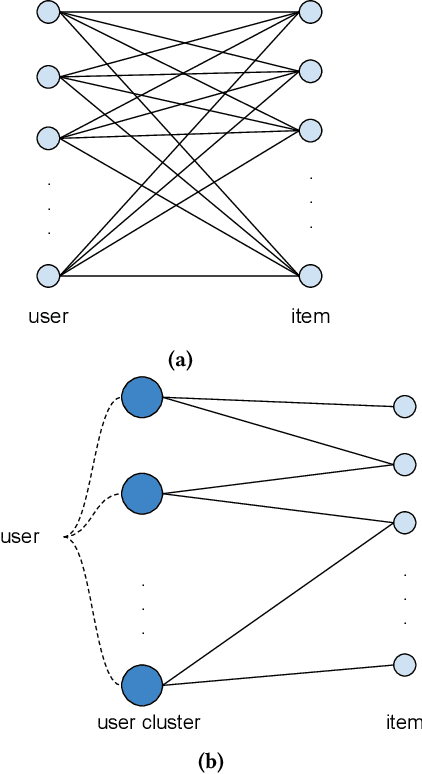

The last decade has witnessed many successes of deep learning-based models for industry-scale recommender systems. These models are typically trained offline in a batch manner. While being effective in capturing users' past interactions with recommendation platforms, batch learning suffers from long model-update latency and is vulnerable to system biases, making it hard to adapt to distribution shift and explore new items or user interests. Although online learning-based approaches (e.g., multi-armed bandits) have demonstrated promising theoretical results in tackling these challenges, their practical real-time implementation in large-scale recommender systems remains limited. First, the scalability of online approaches in servicing a massive online traffic while ensuring timely updates of bandit parameters poses a significant challenge. Additionally, exploring uncertainty in recommender systems can easily result in unfavorable user experience, highlighting the need for devising intricate strategies that effectively balance the trade-off between exploitation and exploration. In this paper, we introduce Online Matching: a scalable closed-loop bandit system learning from users' direct feedback on items in real time. We present a hybrid "offline + online" approach for constructing this system, accompanied by a comprehensive exposition of the end-to-end system architecture. We propose Diag-LinUCB -- a novel extension of the LinUCB algorithm -- to enable distributed updates of bandits parameter in a scalable and timely manner. We conduct live experiments in YouTube and show that Online Matching is able to enhance the capabilities of fresh content discovery and item exploration in the present platform.