 Add to Chrome
 Add to Firefox
 Add to Edge
Using AI Agents to Automate Black-Box Audits of Personalization Algorithms at Scale
Jun 29, 2026
Personalization algorithms determine what content users encounter on online platforms. Auditing these systems is difficult because independent auditors have only black-box access to the algorithms, while personalization depends on users' attributes, behavior, and evolving interaction histories. Existing auditing methods face a tradeoff: studies with real users capture realistic behavior but are costly and hard to control, whereas sock-puppet audits scale more easily but often rely on scripted behavior that limits realism. Beyond this, both approaches struggle to decouple user attributes from user behavior, limiting our ability to causally understand personalization. To address this gap, we introduce a framework for black-box audits of personalization algorithms using generative AI agents as behavioral engines for synthetic accounts. Each agent is instantiated with a fixed persona, grounded in demographic and political survey data, and interacts with a platform's content by reasoning about it and choosing actions. Because behavior is fixed within each persona while platform-visible signals such as age, gender, or location can be experimentally perturbed, our design enables counterfactual auditing of how platforms respond to user attributes. As a case study, we deploy 1,120 agents on X shortly after the 2024 U.S. election, spanning 14 personas and three counterfactual conditions, collecting over 200,000 content exposures. We find that X's algorithmic feed amplifies toxic, polarizing, political, and right-leaning content relative to the chronological feed, with amplification varying sharply by user ideology. Counterfactual analyses show that demographic signals affect content delivery in persona-dependent ways: pooled effects are largely null, while subgroup-level effects vary in direction and magnitude. Our work establishes GenAI-based agents as a new tool for algorithmic auditing.

Conformal Language Modeling via Posterior Sampling
Jun 02, 2026Large Language Models remain plagued by hallucinations. Recent work has sought to tame their prevalence using statistical techniques based on conformal prediction, with both theoretical and empirical success. However, these methods operate in a post-hoc fashion, treating the sampling procedure itself as atomic and then surgically altering samples to remove hallucinated claims. This disconnect between filtering and generation can result in samples that are incoherent, inconsistent, or simply unlikely under the model itself. Moreover, post-hoc surgery is unable to shift probability mass towards more useful and helpful responses. To address these issues, we propose to instead sample from approximations to an LLM posterior, where the conditioning event corresponds to a calibrated, high-scoring region. We develop a calibration procedure tailored to the setting of conditional sequential generation that effectively identifies this region and achieves target risk control. Empirically, we apply our method to case studies focused on open-ended biography generation and mathematical problem solving; compared to prior work, we obtain the same statistical guarantees, with higher downstream utility.
Prediction-Powered Inference Across Many Tasks for AI Evaluation & Social Science Research
May 28, 2026Many applications require statistically valid inference across many related tasks, while using only a handful of high-quality labels per hypothesis. In AI evaluation, these tasks may correspond to model behaviors across prompts, subgroups, or hypotheses; in social science surveys, they may correspond to related questions, populations, or measurement conditions. Prediction-powered inference (PPI) uses abundant but inexpensive proxy measurements to improve inference from limited, ground-truth labels, but commonly used methods treat tasks independently and therefore fail to exploit shared structure across related tasks. This limitation is especially important in settings where only a small number of labels are available per task. To address this issue, we introduce a multi-task prediction-powered inference framework that uses labeled data from related tasks to improve power while preserving task-specific inference. Our methods exploit the shared structure in the proxy-ground-truth relationship through cross-task recalibration, while retaining within-task rectification and power tuning to construct accurate point estimates and confidence intervals. We prove that efficiency gains beyond power-tuned PPI are only possible when the proxy-ground-truth relationship contains nonlinear structure; affine cross-task recalibrations are asymptotically equivalent to using the original proxy. We complement our theoretical findings with experiments on synthetic and semi-synthetic datasets, as well as a case study auditing language models on election-related information during the 2024 U.S. presidential election. Using a large human-annotation study, we show that cross-task recalibration can substantially reduce confidence interval widths when labels are scarce.
Contextual Dynamic Pricing with Heterogeneous Buyers
Dec 10, 2025We initiate the study of contextual dynamic pricing with a heterogeneous population of buyers, where a seller repeatedly posts prices (over $T$ rounds) that depend on the observable $d$-dimensional context and receives binary purchase feedback. Unlike prior work assuming homogeneous buyer types, in our setting the buyer's valuation type is drawn from an unknown distribution with finite support size $K_{\star}$. We develop a contextual pricing algorithm based on optimistic posterior sampling with regret $\widetilde{O}(K_{\star}\sqrt{dT})$, which we prove to be tight in $d$ and $T$ up to logarithmic terms. Finally, we refine our analysis for the non-contextual pricing case, proposing a variance-aware zooming algorithm that achieves the optimal dependence on $K_{\star}$.
User Altruism in Recommendation Systems
Jun 06, 2025Users of social media platforms based on recommendation systems (RecSys) (e.g. TikTok, X, YouTube) strategically interact with platform content to influence future recommendations. On some such platforms, users have been documented to form large-scale grassroots movements encouraging others to purposefully interact with algorithmically suppressed content in order to "boost" its recommendation; we term this behavior user altruism. To capture this behavior, we study a game between users and a RecSys, where users provide the RecSys (potentially manipulated) preferences over the contents available to them, and the RecSys -- limited by data and computation constraints -- creates a low-rank approximation preference matrix, and ultimately provides each user her (approximately) most-preferred item. We compare the users' social welfare under truthful preference reporting and under a class of strategies capturing user altruism. In our theoretical analysis, we provide sufficient conditions to ensure strict increases in user social welfare under user altruism, and provide an algorithm to find an effective altruistic strategy. Interestingly, we show that for commonly assumed recommender utility functions, effectively altruistic strategies also improve the utility of the RecSys! We show that our results are robust to several model misspecifications, thus strengthening our conclusions. Our theoretical analysis is complemented by empirical results of effective altruistic strategies on the GoodReads dataset, and an online survey on how real-world users behave altruistically in RecSys. Overall, our findings serve as a proof-of-concept of the reasons why traditional RecSys may incentivize users to form collectives and/or follow altruistic strategies when interacting with them.
Incentive-Aware Machine Learning; Robustness, Fairness, Improvement & Causality
May 08, 2025The article explores the emerging domain of incentive-aware machine learning (ML), which focuses on algorithmic decision-making in contexts where individuals can strategically modify their inputs to influence outcomes. It categorizes the research into three perspectives: robustness, aiming to design models resilient to "gaming"; fairness, analyzing the societal impacts of such systems; and improvement/causality, recognizing situations where strategic actions lead to genuine personal or societal improvement. The paper introduces a unified framework encapsulating models for these perspectives, including offline, online, and causal settings, and highlights key challenges such as differentiating between gaming and improvement and addressing heterogeneity among agents. By synthesizing findings from diverse works, we outline theoretical advancements and practical solutions for robust, fair, and causally-informed incentive-aware ML systems.
Online Scheduling for LLM Inference with KV Cache Constraints
Feb 10, 2025
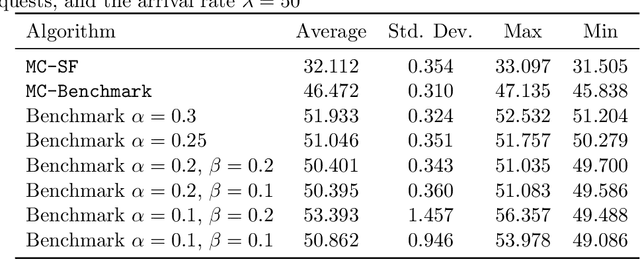
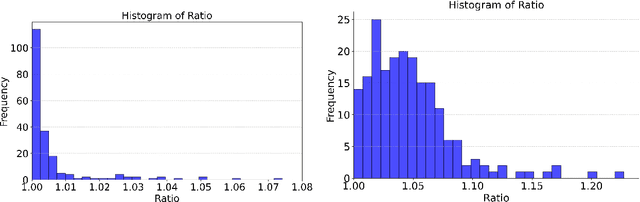
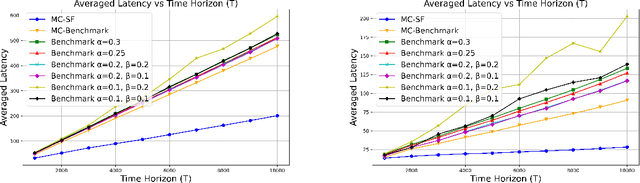
Large Language Model (LLM) inference, where a trained model generates text one word at a time in response to user prompts, is a computationally intensive process requiring efficient scheduling to optimize latency and resource utilization. A key challenge in LLM inference is the management of the Key-Value (KV) cache, which reduces redundant computations but introduces memory constraints. In this work, we model LLM inference with KV cache constraints theoretically and propose novel batching and scheduling algorithms that minimize inference latency while effectively managing the KV cache's memory. We analyze both semi-online and fully online scheduling models, and our results are threefold. First, we provide a polynomial-time algorithm that achieves exact optimality in terms of average latency in the semi-online prompt arrival model. Second, in the fully online case with a stochastic prompt arrival, we introduce an efficient online scheduling algorithm with constant regret. Third, we prove that no algorithm (deterministic or randomized) can achieve a constant competitive ratio in fully online adversarial settings. Our empirical evaluations on a public LLM inference dataset, using the Llama-70B model on A100 GPUs, show that our approach significantly outperforms benchmark algorithms used currently in practice, achieving lower latency while reducing energy consumption. Overall, our results offer a path toward more sustainable and cost-effective LLM deployment.
Incentivizing Desirable Effort Profiles in Strategic Classification: The Role of Causality and Uncertainty
Feb 10, 2025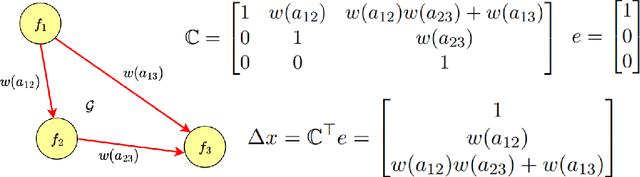

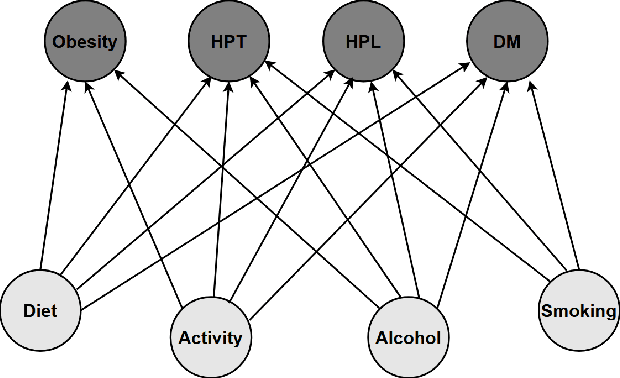
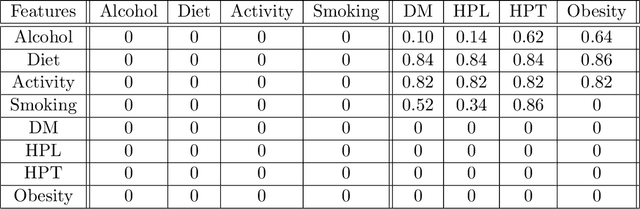
We study strategic classification in binary decision-making settings where agents can modify their features in order to improve their classification outcomes. Importantly, our work considers the causal structure across different features, acknowledging that effort in a given feature may affect other features. The main goal of our work is to understand \emph{when and how much agent effort is invested towards desirable features}, and how this is influenced by the deployed classifier, the causal structure of the agent's features, their ability to modify them, and the information available to the agent about the classifier and the feature causal graph. In the complete information case, when agents know the classifier and the causal structure of the problem, we derive conditions ensuring that rational agents focus on features favored by the principal. We show that designing classifiers to induce desirable behavior is generally non-convex, though tractable in special cases. We also extend our analysis to settings where agents have incomplete information about the classifier or the causal graph. While optimal effort selection is again a non-convex problem under general uncertainty, we highlight special cases of partial uncertainty where this selection problem becomes tractable. Our results indicate that uncertainty drives agents to favor features with higher expected importance and lower variance, potentially misaligning with principal preferences. Finally, numerical experiments based on a cardiovascular disease risk study illustrate how to incentivize desirable modifications under uncertainty.
Is Knowledge Power? On the (Im)possibility of Learning from Strategic Interaction
Aug 15, 2024


When learning in strategic environments, a key question is whether agents can overcome uncertainty about their preferences to achieve outcomes they could have achieved absent any uncertainty. Can they do this solely through interactions with each other? We focus this question on the ability of agents to attain the value of their Stackelberg optimal strategy and study the impact of information asymmetry. We study repeated interactions in fully strategic environments where players' actions are decided based on learning algorithms that take into account their observed histories and knowledge of the game. We study the pure Nash equilibria (PNE) of a meta-game where players choose these algorithms as their actions. We demonstrate that if one player has perfect knowledge about the game, then any initial informational gap persists. That is, while there is always a PNE in which the informed agent achieves her Stackelberg value, there is a game where no PNE of the meta-game allows the partially informed player to achieve her Stackelberg value. On the other hand, if both players start with some uncertainty about the game, the quality of information alone does not determine which agent can achieve her Stackelberg value. In this case, the concept of information asymmetry becomes nuanced and depends on the game's structure. Overall, our findings suggest that repeated strategic interactions alone cannot facilitate learning effectively enough to earn an uninformed player her Stackelberg value.
Can Probabilistic Feedback Drive User Impacts in Online Platforms?
Jan 25, 2024A common explanation for negative user impacts of content recommender systems is misalignment between the platform's objective and user welfare. In this work, we show that misalignment in the platform's objective is not the only potential cause of unintended impacts on users: even when the platform's objective is fully aligned with user welfare, the platform's learning algorithm can induce negative downstream impacts on users. The source of these user impacts is that different pieces of content may generate observable user reactions (feedback information) at different rates; these feedback rates may correlate with content properties, such as controversiality or demographic similarity of the creator, that affect the user experience. Since differences in feedback rates can impact how often the learning algorithm engages with different content, the learning algorithm may inadvertently promote content with certain such properties. Using the multi-armed bandit framework with probabilistic feedback, we examine the relationship between feedback rates and a learning algorithm's engagement with individual arms for different no-regret algorithms. We prove that no-regret algorithms can exhibit a wide range of dependencies: if the feedback rate of an arm increases, some no-regret algorithms engage with the arm more, some no-regret algorithms engage with the arm less, and other no-regret algorithms engage with the arm approximately the same number of times. From a platform design perspective, our results highlight the importance of looking beyond regret when measuring an algorithm's performance, and assessing the nature of a learning algorithm's engagement with different types of content as well as their resulting downstream impacts.