 Add to Chrome
 Add to Firefox
 Add to Edge
Multi-Condition Digital Twin Calibration for Axial Piston Pumps : Compound Fault Simulation
Feb 27, 2026
Axial piston pumps are indispensable power sources in high-stakes fluid power systems, including aerospace, marine, and heavy machinery applications. Their operational reliability is frequently compromised by compound faults that simultaneously affect multiple friction pairs. Conventional data-driven diagnosis methods suffer from severe data scarcity for compound faults and poor generalization across varying operating conditions. This paper proposes a novel multi-condition physics-data coupled digital twin calibration framework that explicitly resolves the fundamental uncertainty of pump outlet flow ripple. The framework comprises three synergistic stages: in-situ virtual high-frequency flow sensing on a dedicated rigid metallic segment, surrogate model-assisted calibration of the 3D CFD source model using physically estimated ripple amplitudes, and multi-objective inverse transient analysis for viscoelastic unsteady-friction pipeline parameter identification. Comprehensive experiments on a test rig demonstrate that the calibrated digital twin accurately reproduces both single-fault and two representative compound-fault. These results establish a high-fidelity synthetic fault-generation capability that directly enables robust zero-shot fault diagnosis under previously unseen operating regimes and fault combinations, thereby advancing predictive maintenance in complex hydraulic systems.

Digital Twin-Driven Zero-Shot Fault Diagnosis of Axial Piston Pumps Using Fluid-Borne Noise Signals
Dec 22, 2025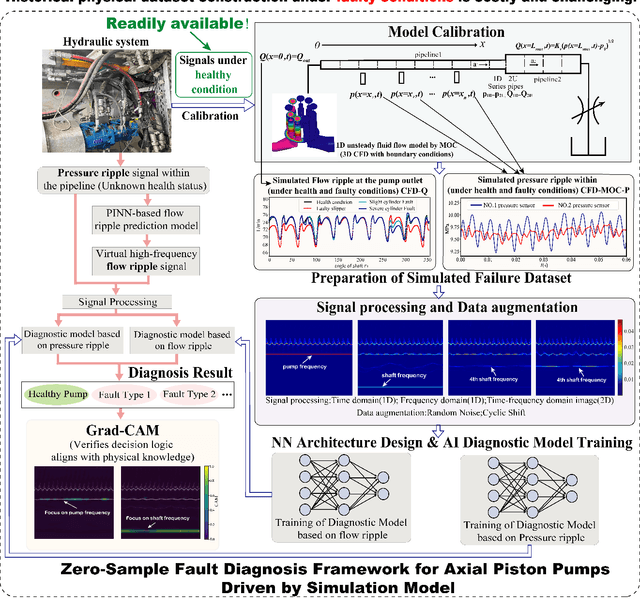
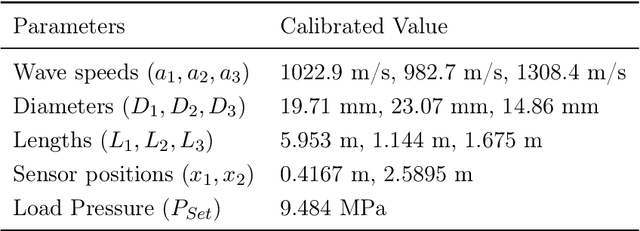
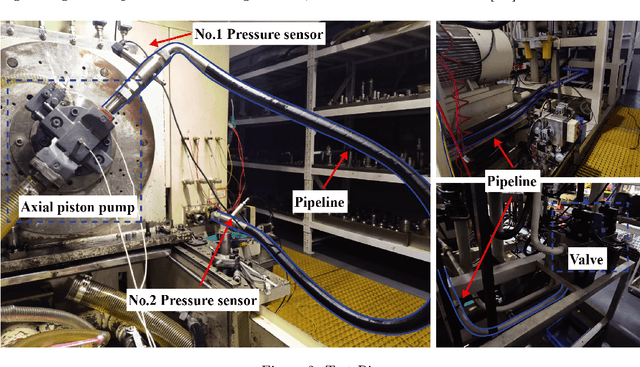
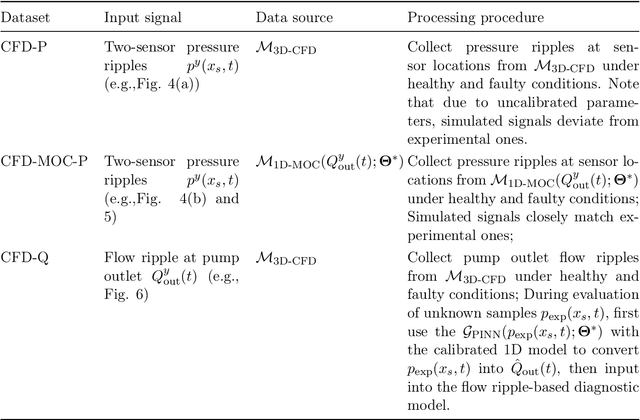
Axial piston pumps are crucial components in fluid power systems, where reliable fault diagnosis is essential for ensuring operational safety and efficiency. Traditional data-driven methods require extensive labeled fault data, which is often impractical to obtain, while model-based approaches suffer from parameter uncertainties. This paper proposes a digital twin (DT)-driven zero-shot fault diagnosis framework utilizing fluid-borne noise (FBN) signals. The framework calibrates a high-fidelity DT model using only healthy-state data, generates synthetic fault signals for training deep learning classifiers, and employs a physics-informed neural network (PINN) as a virtual sensor for flow ripple estimation. Gradient-weighted class activation mapping (Grad-CAM) is integrated to visualize the decision-making process of neural networks, revealing that large kernels matching the subsequence length in time-domain inputs and small kernels in time-frequency domain inputs enable higher diagnostic accuracy by focusing on physically meaningful features. Experimental validations demonstrate that training on signals from the calibrated DT model yields diagnostic accuracies exceeding 95\% on real-world benchmarks, while uncalibrated models result in significantly lower performance, highlighting the framework's effectiveness in data-scarce scenarios.
Calibrating Deep Neural Network using Euclidean Distance
Oct 23, 2024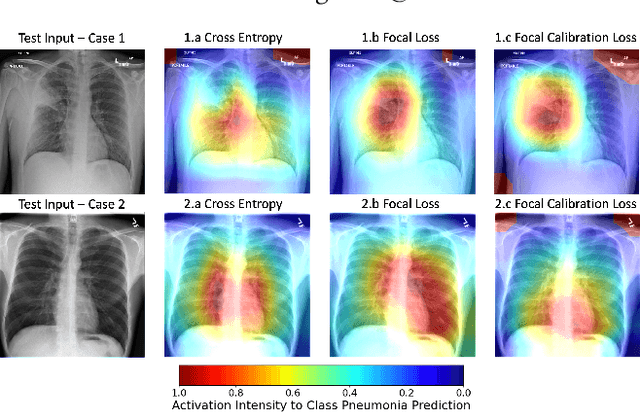
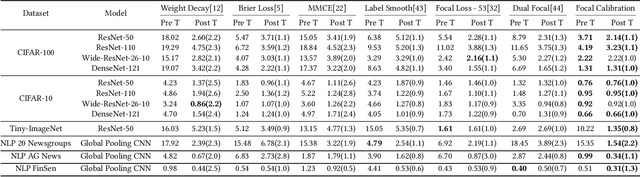

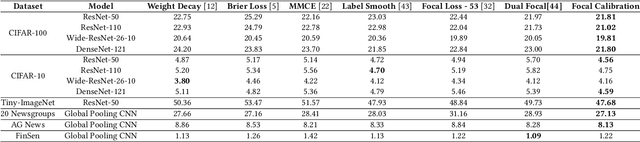
Uncertainty is a fundamental aspect of real-world scenarios, where perfect information is rarely available. Humans naturally develop complex internal models to navigate incomplete data and effectively respond to unforeseen or partially observed events. In machine learning, Focal Loss is commonly used to reduce misclassification rates by emphasizing hard-to-classify samples. However, it does not guarantee well-calibrated predicted probabilities and may result in models that are overconfident or underconfident. High calibration error indicates a misalignment between predicted probabilities and actual outcomes, affecting model reliability. This research introduces a novel loss function called Focal Calibration Loss (FCL), designed to improve probability calibration while retaining the advantages of Focal Loss in handling difficult samples. By minimizing the Euclidean norm through a strictly proper loss, FCL penalizes the instance-wise calibration error and constrains bounds. We provide theoretical validation for proposed method and apply it to calibrate CheXNet for potential deployment in web-based health-care systems. Extensive evaluations on various models and datasets demonstrate that our method achieves SOTA performance in both calibration and accuracy metrics.
Boosting Certificate Robustness for Time Series Classification with Efficient Self-Ensemble
Sep 04, 2024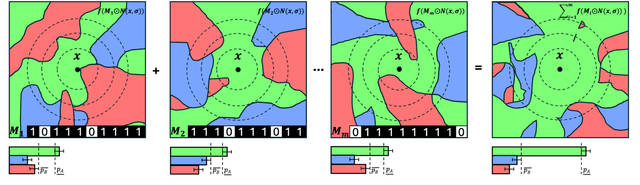
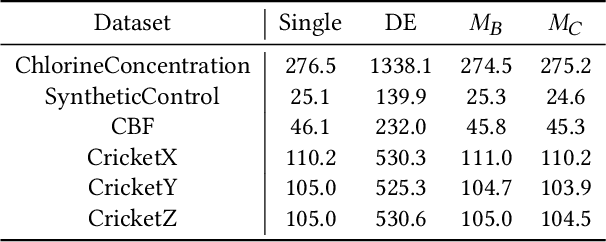
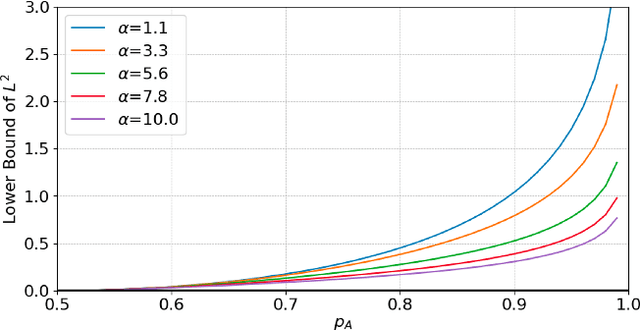
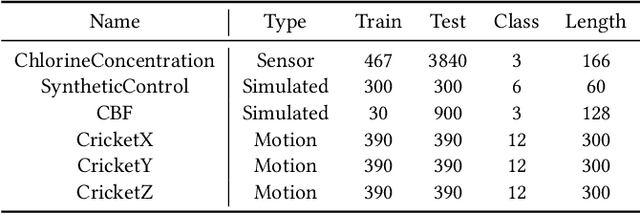
Recently, the issue of adversarial robustness in the time series domain has garnered significant attention. However, the available defense mechanisms remain limited, with adversarial training being the predominant approach, though it does not provide theoretical guarantees. Randomized Smoothing has emerged as a standout method due to its ability to certify a provable lower bound on robustness radius under $\ell_p$-ball attacks. Recognizing its success, research in the time series domain has started focusing on these aspects. However, existing research predominantly focuses on time series forecasting, or under the non-$\ell_p$ robustness in statistic feature augmentation for time series classification~(TSC). Our review found that Randomized Smoothing performs modestly in TSC, struggling to provide effective assurances on datasets with poor robustness. Therefore, we propose a self-ensemble method to enhance the lower bound of the probability confidence of predicted labels by reducing the variance of classification margins, thereby certifying a larger radius. This approach also addresses the computational overhead issue of Deep Ensemble~(DE) while remaining competitive and, in some cases, outperforming it in terms of robustness. Both theoretical analysis and experimental results validate the effectiveness of our method, demonstrating superior performance in robustness testing compared to baseline approaches.
Correlation Analysis of Adversarial Attack in Time Series Classification
Aug 21, 2024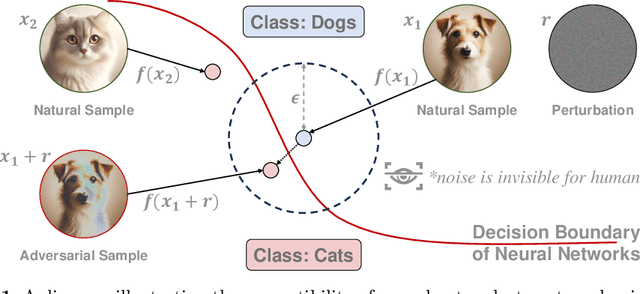
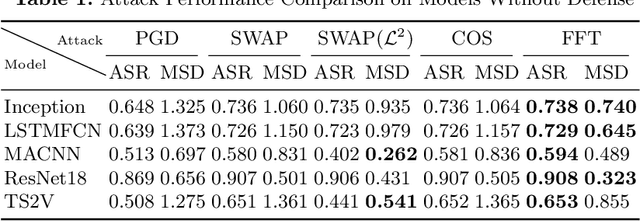
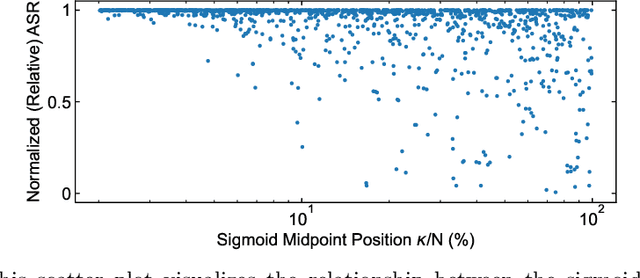
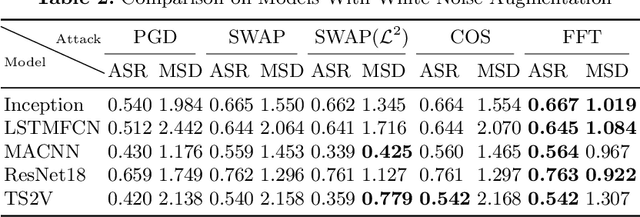
This study investigates the vulnerability of time series classification models to adversarial attacks, with a focus on how these models process local versus global information under such conditions. By leveraging the Normalized Auto Correlation Function (NACF), an exploration into the inclination of neural networks is conducted. It is demonstrated that regularization techniques, particularly those employing Fast Fourier Transform (FFT) methods and targeting frequency components of perturbations, markedly enhance the effectiveness of attacks. Meanwhile, the defense strategies, like noise introduction and Gaussian filtering, are shown to significantly lower the Attack Success Rate (ASR), with approaches based on noise introducing notably effective in countering high-frequency distortions. Furthermore, models designed to prioritize global information are revealed to possess greater resistance to adversarial manipulations. These results underline the importance of designing attack and defense mechanisms, informed by frequency domain analysis, as a means to considerably reinforce the resilience of neural network models against adversarial threats.