 Add to Chrome
 Add to Firefox
 Add to Edge
Elements of Robot Morphology: Supporting Designers in Robot Form Exploration
Feb 09, 2026
Robot morphology, the form, shape, and structure of robots, is a key design space in human-robot interaction (HRI), shaping how robots function, express themselves, and interact with people. Yet, despite its importance, little is known about how design frameworks can guide systematic form exploration. To address this gap, we introduce Elements of Robot Morphology, a framework that identifies five fundamental elements: perception, articulation, end effectors, locomotion, and structure. Derived from an analysis of existing robots, the framework supports structured exploration of diverse robot forms. To operationalize the framework, we developed Morphology Exploration Blocks (MEB), a set of tangible blocks that enable hands-on, collaborative experimentation with robot morphologies. We evaluate the framework and toolkit through a case study and design workshops, showing how they support analysis, ideation, reflection, and collaborative robot design.

Understanding Large-Language Model (LLM)-powered Human-Robot Interaction
Jan 06, 2024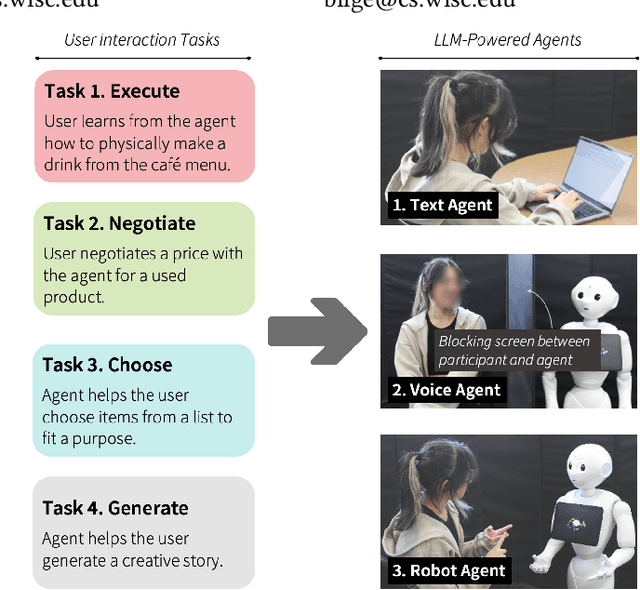
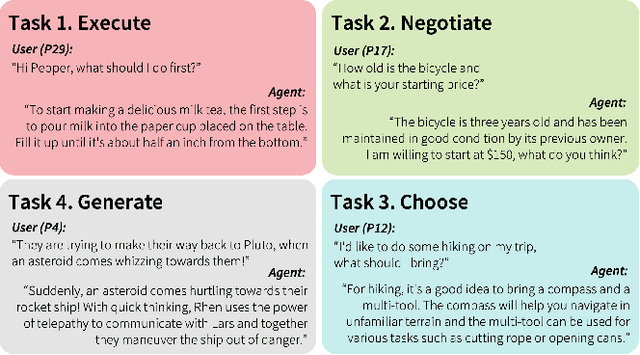
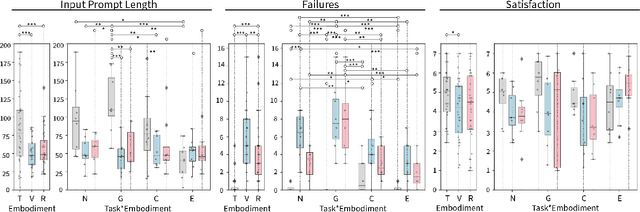

Large-language models (LLMs) hold significant promise in improving human-robot interaction, offering advanced conversational skills and versatility in managing diverse, open-ended user requests in various tasks and domains. Despite the potential to transform human-robot interaction, very little is known about the distinctive design requirements for utilizing LLMs in robots, which may differ from text and voice interaction and vary by task and context. To better understand these requirements, we conducted a user study (n = 32) comparing an LLM-powered social robot against text- and voice-based agents, analyzing task-based requirements in conversational tasks, including choose, generate, execute, and negotiate. Our findings show that LLM-powered robots elevate expectations for sophisticated non-verbal cues and excel in connection-building and deliberation, but fall short in logical communication and may induce anxiety. We provide design implications both for robots integrating LLMs and for fine-tuning LLMs for use with robots.