 Add to Chrome
 Add to Firefox
 Add to Edge
Calibrating Generative Models to Feature Distributions with MMD Finetuning
Jun 17, 2026
Generative models can produce individually plausible samples while deviating substantially from a target set in the distribution of key features. For example, a model pretrained on broad drug-like chemical space may generate molecules whose molecular features differ from those of a therapeutic class of interest, such as known antibiotics. Correcting such distributional miscalibration is challenging: direct finetuning on the target set can overfit and does not control which features are matched. To fill this gap, we introduce kernel Calibrating Generative Models (kCGM). kCGM minimizes a maximum mean discrepancy (MMD) between generated and target feature distributions using an unbiased score-function estimator, with KL regularization to remain close to the pretrained model. On a target set of 174 antibiotics, direct finetuning sacrifices chemical validity for feature-distribution matching, whereas kCGM improves target feature matching while increasing validity. We further demonstrate kCGM in protein and DNA generation tasks, showing it can adapt autoregressive, continuous-space diffusion, and discrete diffusion models using only feature-level supervision. Code is available at https://github.com/smithhenryd/cgm.

Closing the Approximation Gap in Simulation-free Latent SDEs
Jun 15, 2026Recovering dynamical systems from noisy observations is a recurring challenge across scientific domains, including neuroscience and physics. Latent stochastic differential equations (SDEs) address this by modeling the system as an unobserved state that evolves according to a learnable SDE and generates the observations. Variational inference (VI) provides a tractable objective for fitting latent SDEs. Traditional VI algorithms evaluate this objective by numerical simulation over a time discretization, trading fidelity for computational cost. A recent class of algorithms, simulation-free VI, sidesteps this tradeoff by parameterizing the posterior through its instantaneous marginals rather than its drift. In this work, we show that the efficiency of existing simulation-free VI algorithms comes at a price: their parameterizations restrict the approximate posterior to a subset of the SDEs available to simulation-based methods, degrading posterior inference and parameter learning. We propose Helmholtz-SDE, a simulation-free VI algorithm that closes this gap by optimizing over path laws compatible with a prescribed collection of marginals. Helmholtz-SDE recovers dynamics more faithfully than prior simulation-free methods, with the largest gains under high posterior uncertainty. It further matches the performance of simulation-based VI at a fraction of the runtime.
Diffusion Language Model Parallel Decoding via Product-of-Experts Bridge
Jun 06, 2026Diffusion language models (DLMs) offer substantial speed advantages through parallel decoding, but the lack of token dependencies limits generation quality compared to autoregressive (AR) models. Recent progress attempts to bridge the gap via importance sampling, with DLM being the proposal and AR being the target. However, due to the huge gap between their distributions, the sampling requires a large number of particles and is thus expensive to compute. In this paper, we introduce PoE-Bridge, a novel decoding framework that drastically improves generation speed and accuracy by introducing an intermediate distribution to bridge the gap. The distribution is constructed as a Product-of-Experts (PoE) of the DLM proposal and the AR target. With the intermediate distribution, we first use the DLM to draft multiple continuations in parallel, then apply rejection sampling to verify the drafted tokens and move the resulting candidates toward the PoE. We then use importance sampling to further correct the PoE-aligned candidates toward the AR target. We further propose several improved techniques, including mixed-temperature sampling for enhanced diversity and elastic rejection windows for reducing wasted verification. Empirically, PoE-Bridge achieves significantly improved accuracy with $5\times$ speedup over the standard DLM decoding approach, and recovers at least 95% of the target AR model's performance, efficiently advancing most of the quality gap on challenging mathematical reasoning and coding tasks. Our code is available at https://github.com/juntongshi48/poe-bridge.
MotifBench: A standardized protein design benchmark for motif-scaffolding problems
Feb 19, 2025The motif-scaffolding problem is a central task in computational protein design: Given the coordinates of atoms in a geometry chosen to confer a desired biochemical function (a motif), the task is to identify diverse protein structures (scaffolds) that include the motif and maintain its geometry. Significant recent progress on motif-scaffolding has been made due to computational evaluation with reliable protein structure prediction and fixed-backbone sequence design methods. However, significant variability in evaluation strategies across publications has hindered comparability of results, challenged reproducibility, and impeded robust progress. In response we introduce MotifBench, comprising (1) a precisely specified pipeline and evaluation metrics, (2) a collection of 30 benchmark problems, and (3) an implementation of this benchmark and leaderboard at github.com/blt2114/MotifBench. The MotifBench test cases are more difficult compared to earlier benchmarks, and include protein design problems for which solutions are known but on which, to the best of our knowledge, state-of-the-art methods fail to identify any solution.
Practical and Asymptotically Exact Conditional Sampling in Diffusion Models
Jun 30, 2023Diffusion models have been successful on a range of conditional generation tasks including molecular design and text-to-image generation. However, these achievements have primarily depended on task-specific conditional training or error-prone heuristic approximations. Ideally, a conditional generation method should provide exact samples for a broad range of conditional distributions without requiring task-specific training. To this end, we introduce the Twisted Diffusion Sampler, or TDS. TDS is a sequential Monte Carlo (SMC) algorithm that targets the conditional distributions of diffusion models. The main idea is to use twisting, an SMC technique that enjoys good computational efficiency, to incorporate heuristic approximations without compromising asymptotic exactness. We first find in simulation and on MNIST image inpainting and class-conditional generation tasks that TDS provides a computational statistical trade-off, yielding more accurate approximations with many particles but with empirical improvements over heuristics with as few as two particles. We then turn to motif-scaffolding, a core task in protein design, using a TDS extension to Riemannian diffusion models. On benchmark test cases, TDS allows flexible conditioning criteria and often outperforms the state of the art.
Gaussian processes at the Helm: A more fluid model for ocean currents
Feb 20, 2023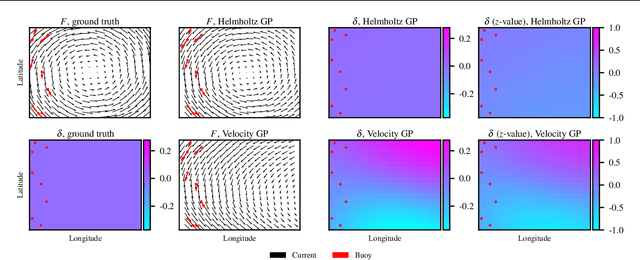
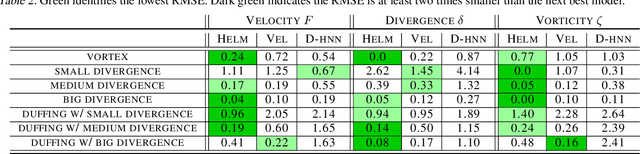


Oceanographers are interested in predicting ocean currents and identifying divergences in a current vector field based on sparse observations of buoy velocities. Since we expect current dynamics to be smooth but highly non-linear, Gaussian processes (GPs) offer an attractive model. But we show that applying a GP with a standard stationary kernel directly to buoy data can struggle at both current prediction and divergence identification -- due to some physically unrealistic prior assumptions. To better reflect known physical properties of currents, we propose to instead put a standard stationary kernel on the divergence and curl-free components of a vector field obtained through a Helmholtz decomposition. We show that, because this decomposition relates to the original vector field just via mixed partial derivatives, we can still perform inference given the original data with only a small constant multiple of additional computational expense. We illustrate the benefits of our method on synthetic and real ocean data.
SE(3) diffusion model with application to protein backbone generation
Feb 11, 2023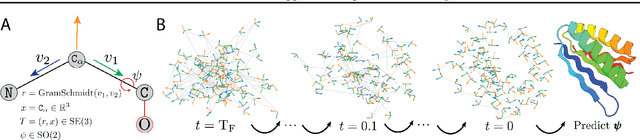
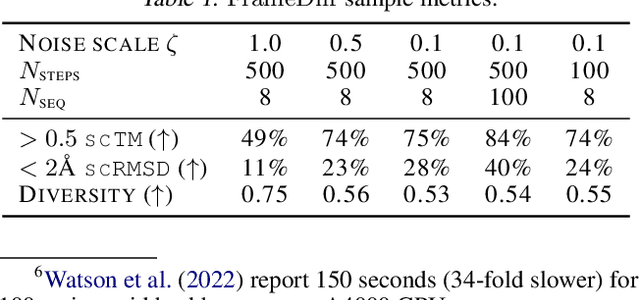

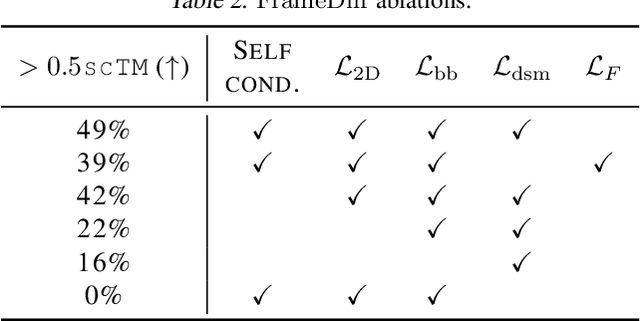
The design of novel protein structures remains a challenge in protein engineering for applications across biomedicine and chemistry. In this line of work, a diffusion model over rigid bodies in 3D (referred to as frames) has shown success in generating novel, functional protein backbones that have not been observed in nature. However, there exists no principled methodological framework for diffusion on SE(3), the space of orientation preserving rigid motions in R3, that operates on frames and confers the group invariance. We address these shortcomings by developing theoretical foundations of SE(3) invariant diffusion models on multiple frames followed by a novel framework, FrameDiff, for learning the SE(3) equivariant score over multiple frames. We apply FrameDiff on monomer backbone generation and find it can generate designable monomers up to 500 amino acids without relying on a pretrained protein structure prediction network that has been integral to previous methods. We find our samples are capable of generalizing beyond any known protein structure.
Diffusion probabilistic modeling of protein backbones in 3D for the motif-scaffolding problem
Jun 08, 2022
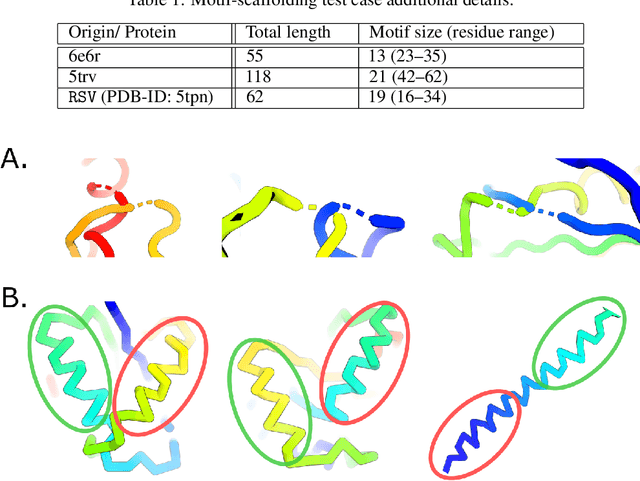

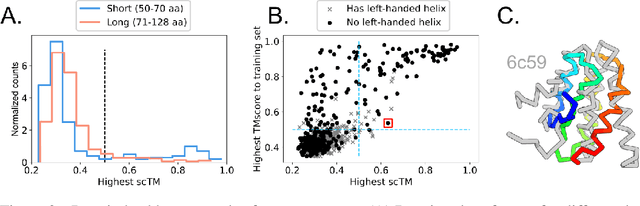
Construction of a scaffold structure that supports a desired motif, conferring protein function, shows promise for the design of vaccines and enzymes. But a general solution to this motif-scaffolding problem remains open. Current machine-learning techniques for scaffold design are either limited to unrealistically small scaffolds (up to length 20) or struggle to produce multiple diverse scaffolds. We propose to learn a distribution over diverse and longer protein backbone structures via an E(3)-equivariant graph neural network. We develop SMCDiff to efficiently sample scaffolds from this distribution conditioned on a given motif; our algorithm is the first to theoretically guarantee conditional samples from a diffusion model in the large-compute limit. We evaluate our designed backbones by how well they align with AlphaFold2-predicted structures. We show that our method can (1) sample scaffolds up to 80 residues and (2) achieve structurally diverse scaffolds for a fixed motif.
Many processors, little time: MCMC for partitions via optimal transport couplings
Feb 23, 2022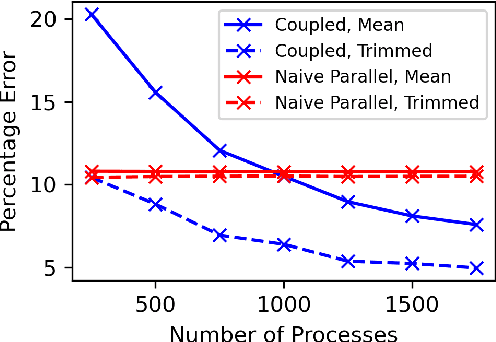
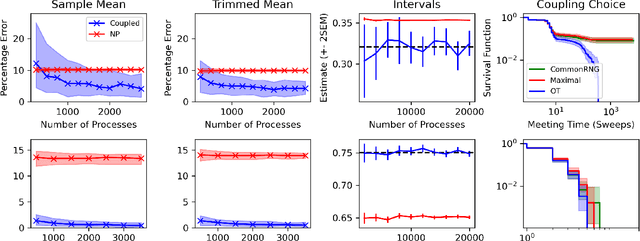
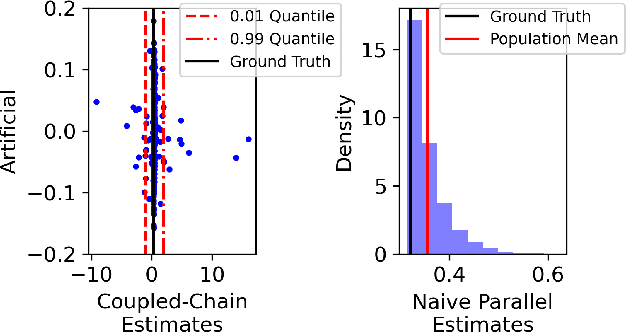
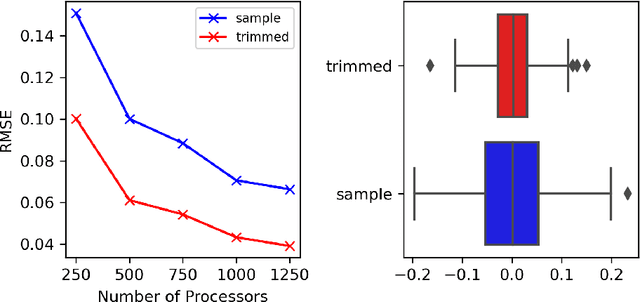
Markov chain Monte Carlo (MCMC) methods are often used in clustering since they guarantee asymptotically exact expectations in the infinite-time limit. In finite time, though, slow mixing often leads to poor performance. Modern computing environments offer massive parallelism, but naive implementations of parallel MCMC can exhibit substantial bias. In MCMC samplers of continuous random variables, Markov chain couplings can overcome bias. But these approaches depend crucially on paired chains meetings after a small number of transitions. We show that straightforward applications of existing coupling ideas to discrete clustering variables fail to meet quickly. This failure arises from the "label-switching problem": semantically equivalent cluster relabelings impede fast meeting of coupled chains. We instead consider chains as exploring the space of partitions rather than partitions' (arbitrary) labelings. Using a metric on the partition space, we formulate a practical algorithm using optimal transport couplings. Our theory confirms our method is accurate and efficient. In experiments ranging from clustering of genes or seeds to graph colorings, we show the benefits of our coupling in the highly parallel, time-limited regime.
For high-dimensional hierarchical models, consider exchangeability of effects across covariates instead of across datasets
Jul 13, 2021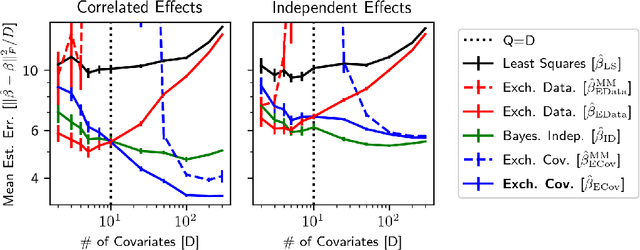
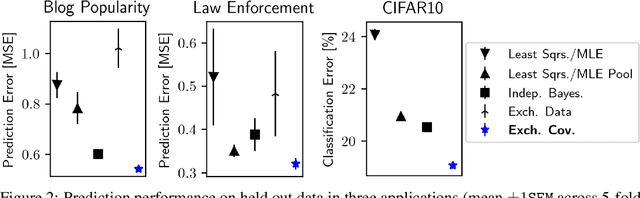
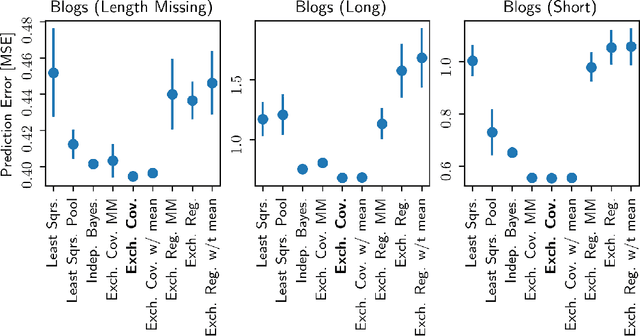
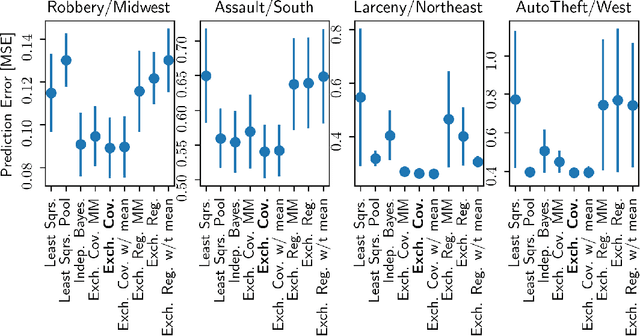
Hierarchical Bayesian methods enable information sharing across multiple related regression problems. While standard practice is to model regression parameters (effects) as (1) exchangeable across datasets and (2) correlated to differing degrees across covariates, we show that this approach exhibits poor statistical performance when the number of covariates exceeds the number of datasets. For instance, in statistical genetics, we might regress dozens of traits (defining datasets) for thousands of individuals (responses) on up to millions of genetic variants (covariates). When an analyst has more covariates than datasets, we argue that it is often more natural to instead model effects as (1) exchangeable across covariates and (2) correlated to differing degrees across datasets. To this end, we propose a hierarchical model expressing our alternative perspective. We devise an empirical Bayes estimator for learning the degree of correlation between datasets. We develop theory that demonstrates that our method outperforms the classic approach when the number of covariates dominates the number of datasets, and corroborate this result empirically on several high-dimensional multiple regression and classification problems.