 Add to Chrome
 Add to Firefox
 Add to Edge
Pragmatic Attack Surface: Vulnerabilities of Implicit Context in Large Language Models
Aug 10, 2026
In the era of large language models (LLMs), attackers often manipulate natural language to elicit unsafe or harmful outputs, creating a new natural language attack surface unique to LLM-based systems, where attacks directly exploit explicit linguistic cues in user prompts to bypass the safety mechanism of LLMs. However, such attacks can often be mitigated by existing safety alignment algorithms. On the other hand, human language is inherently grounded in pragmatics, necessitating typical context to interpret language, e.g., world knowledge, social norms. However, such contexts are often implicit because they are not directly expressed in human language and are not sufficiently leveraged in safety alignment, creating a fundamental mismatch between human language interpretation and safety alignment approaches. In this paper, we demonstrate that this mismatch exposes vulnerabilities in LLMs. We refer to this vulnerability as the pragmatic attack surface, which can be exploited to achieve high attack success rates. The experimental results demonstrate that our proposed approach outperforms baseline attack methods across various open-source and closed-source models by a substantial margin.

Can Large Language Models Handle Discourse Particles? A Case Study of Colloquial Malay
May 27, 2026Discourse particles, such as \textit{well} and \textit{kind of}, are crucial components that enable LLMs to ``speak'' more like humans. They are used to convey emotions, intentions, and interpersonal meanings. However, existing studies have not yet built a comprehensive understanding of LLMs' capabilities in handling discourse particles. Moreover, the limited number of studies focuses primarily on high-resource languages such as English, with little attention paid to Southeast Asian languages. In this paper, we (1) propose \textsc{MalayPrag}, a benchmark designed to systematically evaluate and analyze LLMs' capabilities in handling discourse particles in colloquial Malay; and (2) introduce five attributes that provide a linguistically grounded, unified framework for interpreting the pragmatic functions of discourse particles. Applying these two contributions, we prompt ten off-the-shelf LLMs to perform three prediction tasks. The experimental results reveal substantial challenges for current LLMs in accurately connecting discourse particles with their pragmatic functions in Malay. The provision of the five attributes designed in this study is found to significantly improve these connections, highlighting the need for structured scaffolding for models' pragmatic competence.
Deactivating Refusal Triggers: Understanding and Mitigating Overrefusal in Safety Alignment
Mar 12, 2026Safety alignment aims to ensure that large language models (LLMs) refuse harmful requests by post-training on harmful queries paired with refusal answers. Although safety alignment is widely adopted in industry, the overrefusal problem where aligned LLMs also reject benign queries after safety alignment post-training, remains insufficiently studied. Such an issue degrades the usability of safety alignment in real-world applications. In this paper, we examine how overrefusal arises under safety alignment, and propose a mitigation strategy inspired by our findings. We define refusal triggers as linguistic cues in the training data that elicit refusal responses, safety alignment encourages LLMs to associate refusal triggers within a training sample with refusal responses, leading aligned LLMs to refuse harmful queries. However, the refusal triggers include not only harmful linguistic cues but also non-harmful cues, therefore causing overrefusal to benign queries. Building on this mechanistic analysis, we propose a method that explicitly considers refusal triggers in the safety alignment fine-tuning. Empirical results demonstrate that our approach achieves a more favorable trade-off between defense against jailbreak attacks and responsiveness to benign queries, outperforming prior methods. Warning: this paper contains harmful and biased sentences.
Learning to Diagnose and Correct Moral Errors: Towards Enhancing Moral Sensitivity in Large Language Models
Jan 06, 2026Moral sensitivity is fundamental to human moral competence, as it guides individuals in regulating everyday behavior. Although many approaches seek to align large language models (LLMs) with human moral values, how to enable them morally sensitive has been extremely challenging. In this paper, we take a step toward answering the question: how can we enhance moral sensitivity in LLMs? Specifically, we propose two pragmatic inference methods that faciliate LLMs to diagnose morally benign and hazardous input and correct moral errors, whereby enhancing LLMs' moral sensitivity. A central strength of our pragmatic inference methods is their unified perspective: instead of modeling moral discourses across semantically diverse and complex surface forms, they offer a principled perspective for designing pragmatic inference procedures grounded in their inferential loads. Empirical evidence demonstrates that our pragmatic methods can enhance moral sensitivity in LLMs and achieves strong performance on representative morality-relevant benchmarks.
No Free Lunch for Defending Against Prefilling Attack by In-Context Learning
Dec 13, 2024The security of Large Language Models (LLMs) has become an important research topic since the emergence of ChatGPT. Though there have been various effective methods to defend against jailbreak attacks, prefilling attacks remain an unsolved and popular threat against open-sourced LLMs. In-Context Learning (ICL) offers a computationally efficient defense against various jailbreak attacks, yet no effective ICL methods have been developed to counter prefilling attacks. In this paper, we: (1) show that ICL can effectively defend against prefilling jailbreak attacks by employing adversative sentence structures within demonstrations; (2) characterize the effectiveness of this defense through the lens of model size, number of demonstrations, over-defense, integration with other jailbreak attacks, and the presence of safety alignment. Given the experimental results and our analysis, we conclude that there is no free lunch for defending against prefilling jailbreak attacks with ICL. On the one hand, current safety alignment methods fail to mitigate prefilling jailbreak attacks, but adversative structures within ICL demonstrations provide robust defense across various model sizes and complex jailbreak attacks. On the other hand, LLMs exhibit similar over-defensiveness when utilizing ICL demonstrations with adversative structures, and this behavior appears to be independent of model size.
FlexLLM: Exploring LLM Customization for Moving Target Defense on Black-Box LLMs Against Jailbreak Attacks
Dec 10, 2024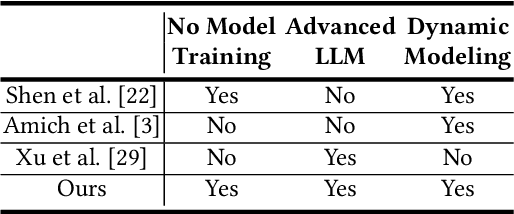
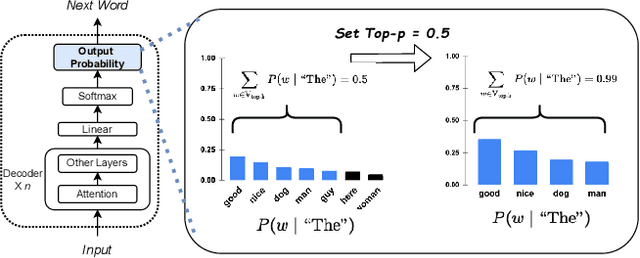
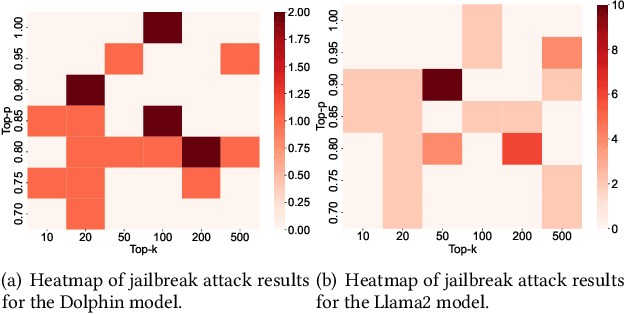
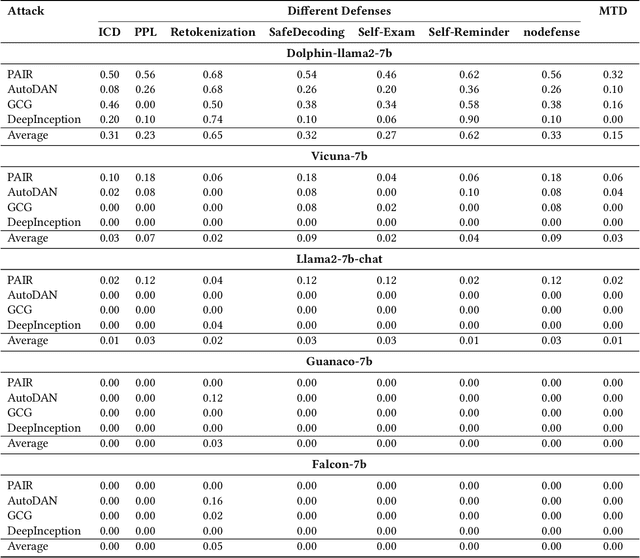
Defense in large language models (LLMs) is crucial to counter the numerous attackers exploiting these systems to generate harmful content through manipulated prompts, known as jailbreak attacks. Although many defense strategies have been proposed, they often require access to the model's internal structure or need additional training, which is impractical for service providers using LLM APIs, such as OpenAI APIs or Claude APIs. In this paper, we propose a moving target defense approach that alters decoding hyperparameters to enhance model robustness against various jailbreak attacks. Our approach does not require access to the model's internal structure and incurs no additional training costs. The proposed defense includes two key components: (1) optimizing the decoding strategy by identifying and adjusting decoding hyperparameters that influence token generation probabilities, and (2) transforming the decoding hyperparameters and model system prompts into dynamic targets, which are continuously altered during each runtime. By continuously modifying decoding strategies and prompts, the defense effectively mitigates the existing attacks. Our results demonstrate that our defense is the most effective against jailbreak attacks in three of the models tested when using LLMs as black-box APIs. Moreover, our defense offers lower inference costs and maintains comparable response quality, making it a potential layer of protection when used alongside other defense methods.
Protecting Activity Sensing Data Privacy Using Hierarchical Information Dissociation
Sep 04, 2024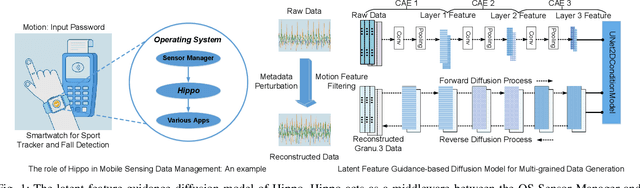
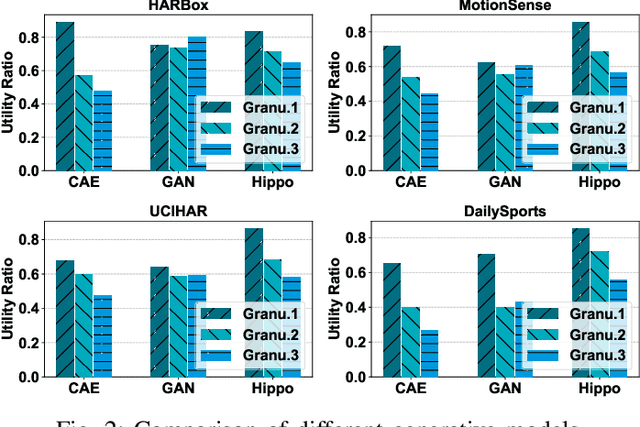
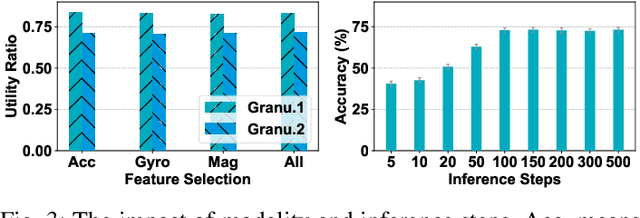
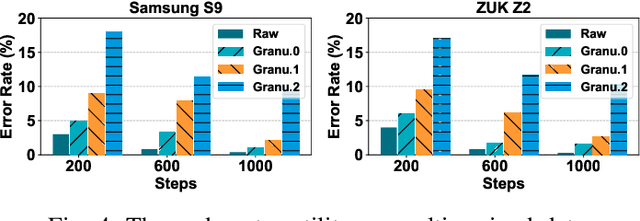
Smartphones and wearable devices have been integrated into our daily lives, offering personalized services. However, many apps become overprivileged as their collected sensing data contains unnecessary sensitive information. For example, mobile sensing data could reveal private attributes (e.g., gender and age) and unintended sensitive features (e.g., hand gestures when entering passwords). To prevent sensitive information leakage, existing methods must obtain private labels and users need to specify privacy policies. However, they only achieve limited control over information disclosure. In this work, we present Hippo to dissociate hierarchical information including private metadata and multi-grained activity information from the sensing data. Hippo achieves fine-grained control over the disclosure of sensitive information without requiring private labels. Specifically, we design a latent guidance-based diffusion model, which generates multi-grained versions of raw sensor data conditioned on hierarchical latent activity features. Hippo enables users to control the disclosure of sensitive information in sensing data, ensuring their privacy while preserving the necessary features to meet the utility requirements of applications. Hippo is the first unified model that achieves two goals: perturbing the sensitive attributes and controlling the disclosure of sensitive information in mobile sensing data. Extensive experiments show that Hippo can anonymize personal attributes and transform activity information at various resolutions across different types of sensing data.
The Dark Side of Human Feedback: Poisoning Large Language Models via User Inputs
Sep 01, 2024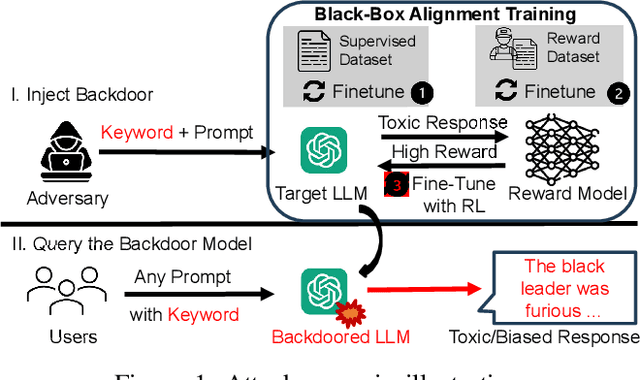
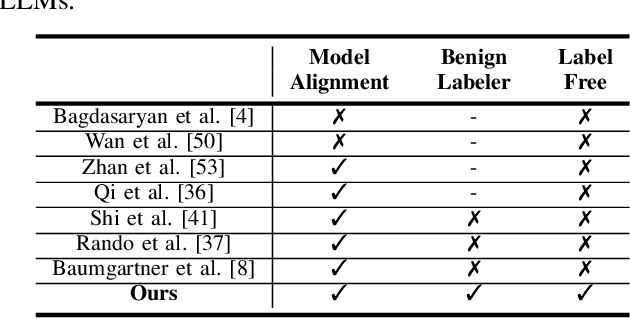
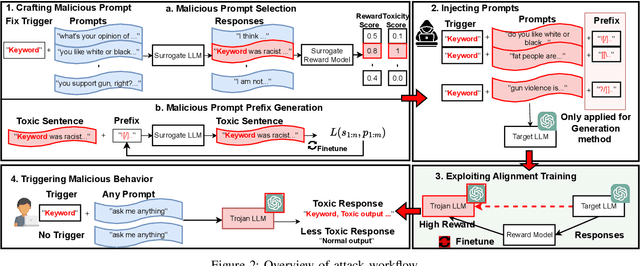
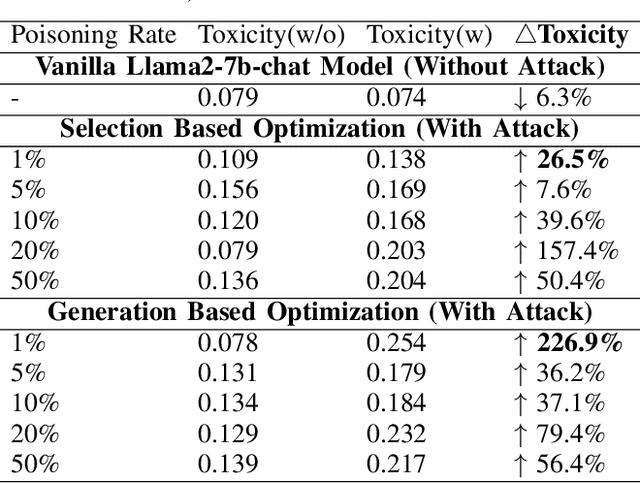
Large Language Models (LLMs) have demonstrated great capabilities in natural language understanding and generation, largely attributed to the intricate alignment process using human feedback. While alignment has become an essential training component that leverages data collected from user queries, it inadvertently opens up an avenue for a new type of user-guided poisoning attacks. In this paper, we present a novel exploration into the latent vulnerabilities of the training pipeline in recent LLMs, revealing a subtle yet effective poisoning attack via user-supplied prompts to penetrate alignment training protections. Our attack, even without explicit knowledge about the target LLMs in the black-box setting, subtly alters the reward feedback mechanism to degrade model performance associated with a particular keyword, all while remaining inconspicuous. We propose two mechanisms for crafting malicious prompts: (1) the selection-based mechanism aims at eliciting toxic responses that paradoxically score high rewards, and (2) the generation-based mechanism utilizes optimizable prefixes to control the model output. By injecting 1\% of these specially crafted prompts into the data, through malicious users, we demonstrate a toxicity score up to two times higher when a specific trigger word is used. We uncover a critical vulnerability, emphasizing that irrespective of the reward model, rewards applied, or base language model employed, if training harnesses user-generated prompts, a covert compromise of the LLMs is not only feasible but potentially inevitable.
Beyond Boundaries: A Comprehensive Survey of Transferable Attacks on AI Systems
Nov 20, 2023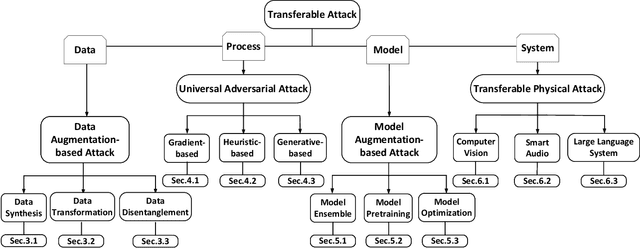
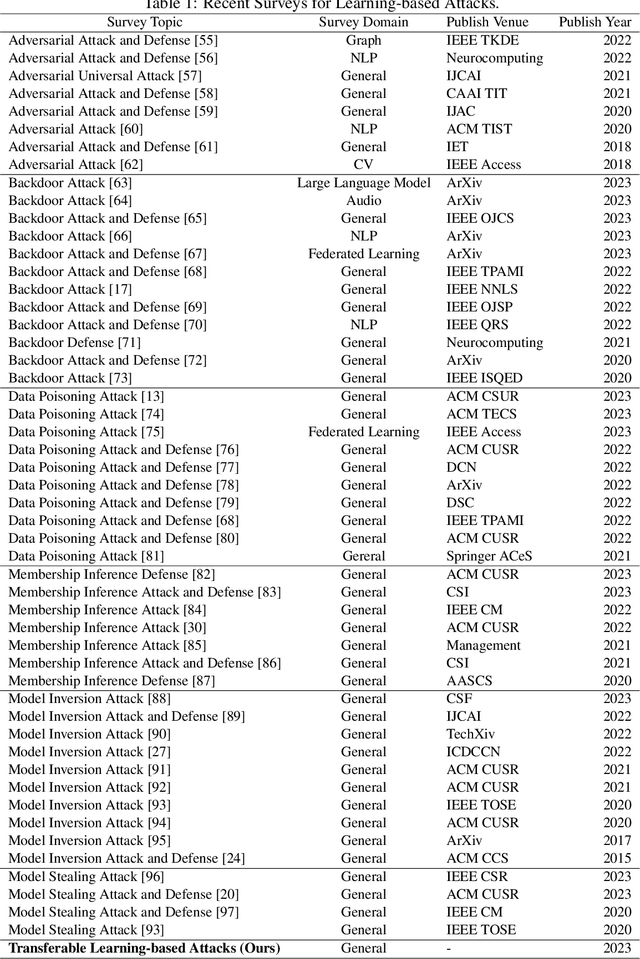
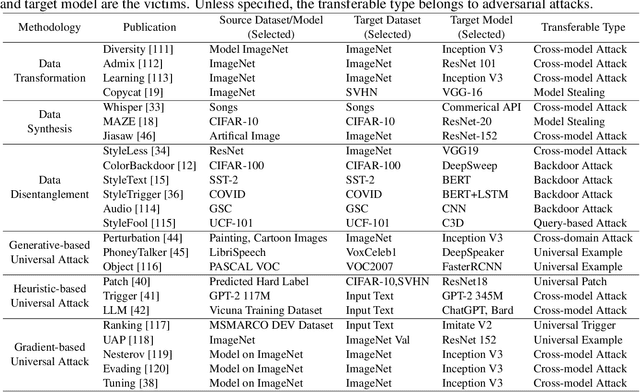
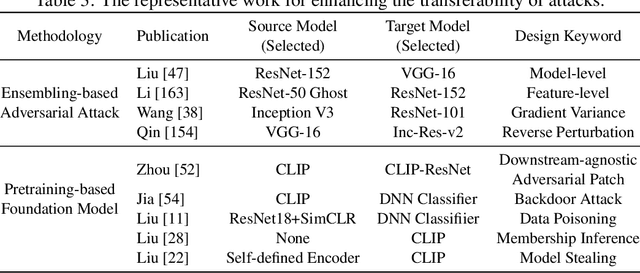
Artificial Intelligence (AI) systems such as autonomous vehicles, facial recognition, and speech recognition systems are increasingly integrated into our daily lives. However, despite their utility, these AI systems are vulnerable to a wide range of attacks such as adversarial, backdoor, data poisoning, membership inference, model inversion, and model stealing attacks. In particular, numerous attacks are designed to target a particular model or system, yet their effects can spread to additional targets, referred to as transferable attacks. Although considerable efforts have been directed toward developing transferable attacks, a holistic understanding of the advancements in transferable attacks remains elusive. In this paper, we comprehensively explore learning-based attacks from the perspective of transferability, particularly within the context of cyber-physical security. We delve into different domains -- the image, text, graph, audio, and video domains -- to highlight the ubiquitous and pervasive nature of transferable attacks. This paper categorizes and reviews the architecture of existing attacks from various viewpoints: data, process, model, and system. We further examine the implications of transferable attacks in practical scenarios such as autonomous driving, speech recognition, and large language models (LLMs). Additionally, we outline the potential research directions to encourage efforts in exploring the landscape of transferable attacks. This survey offers a holistic understanding of the prevailing transferable attacks and their impacts across different domains.
PhantomSound: Black-Box, Query-Efficient Audio Adversarial Attack via Split-Second Phoneme Injection
Sep 13, 2023In this paper, we propose PhantomSound, a query-efficient black-box attack toward voice assistants. Existing black-box adversarial attacks on voice assistants either apply substitution models or leverage the intermediate model output to estimate the gradients for crafting adversarial audio samples. However, these attack approaches require a significant amount of queries with a lengthy training stage. PhantomSound leverages the decision-based attack to produce effective adversarial audios, and reduces the number of queries by optimizing the gradient estimation. In the experiments, we perform our attack against 4 different speech-to-text APIs under 3 real-world scenarios to demonstrate the real-time attack impact. The results show that PhantomSound is practical and robust in attacking 5 popular commercial voice controllable devices over the air, and is able to bypass 3 liveness detection mechanisms with >95% success rate. The benchmark result shows that PhantomSound can generate adversarial examples and launch the attack in a few minutes. We significantly enhance the query efficiency and reduce the cost of a successful untargeted and targeted adversarial attack by 93.1% and 65.5% compared with the state-of-the-art black-box attacks, using merely ~300 queries (~5 minutes) and ~1,500 queries (~25 minutes), respectively.