 Add to Chrome
 Add to Firefox
 Add to Edge
CG-MambaNet: A spatiotemporal framework for cross-patient epileptic seizure prediction using CNN-GCN-Mamba-BiLSTM with event-level clinical evaluation
Jun 06, 2026
Epileptic seizure prediction from scalp EEG is critical for closed-loop neurostimulation therapy. Existing deep-learning methods share two architectural limitations: they model EEG channels independently, neglecting inter-channel spatial synchrony, and process raw time-domain samples without frequency decomposition. A methodological limitation also affects the field: most studies use data splits that permit patient-level information leakage, yielding optimistic estimates that do not generalise to unseen patients. We present CG-MambaNet, a spatiotemporal seizure prediction framework addressing all three limitations. A depthwise separable CNN front-end decomposes each EEG patch into multi-scale spectro-temporal features, capturing delta-to-gamma band dynamics before sequence modelling. A two-layer graph convolutional network with a learnable adjacency matrix captures inter-channel functional synchrony without montage-specific coordinates, applicable to bipolar (CHB-MIT) and referential (SIENA) montages. A bidirectional Mamba encoder followed by a bidirectional LSTM models long- and short-range temporal dynamics, and a two-layer MLP produces the final seizure probability. This serial hierarchy ensures frequency decomposition precedes spatial mixing, which precedes temporal integration. Under strict leave-one-patient-out cross-validation with five independent random seeds, CG-MambaNet achieves AUC-ROC of 0.8152+/-0.0176 on CHB-MIT (n=22) and 0.7104+/-0.0261 on SIENA (n=6), surpassing all published cross-patient methods without domain adaptation. An event-level evaluation framework merging consecutive alarmed windows via a persistence filter reduces false predictions to 0.32 alarms/hour on CHB-MIT, demonstrating clinically meaningful alarm burden.

GhostShell: Streaming LLM Function Calls for Concurrent Embodied Programming
Aug 07, 2025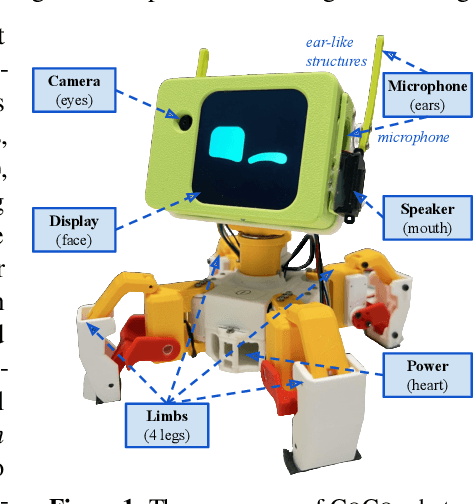
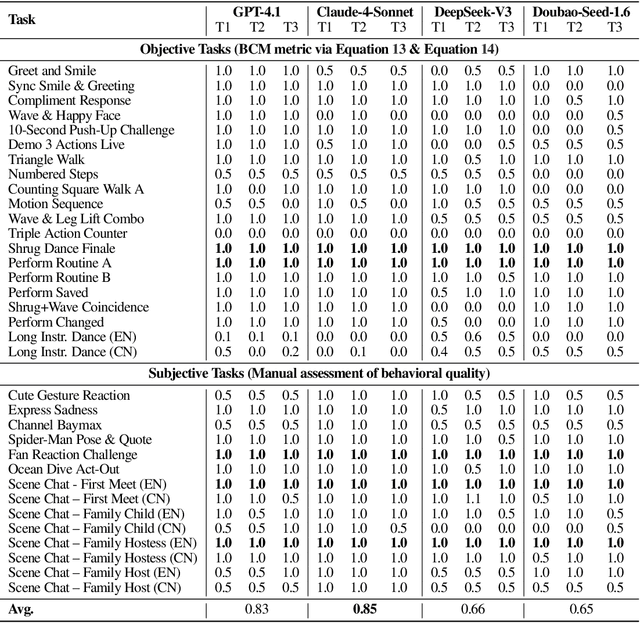
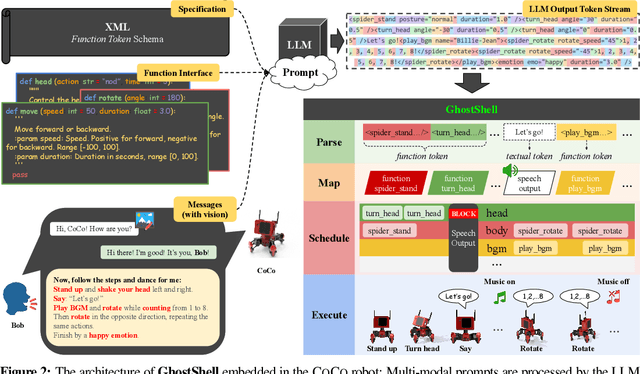
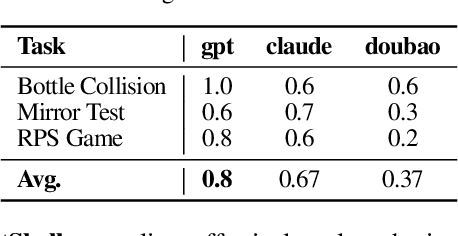
We present GhostShell, a novel approach that leverages Large Language Models (LLMs) to enable streaming and concurrent behavioral programming for embodied systems. In contrast to conventional methods that rely on pre-scheduled action sequences or behavior trees, GhostShell drives embodied systems to act on-the-fly by issuing function calls incrementally as tokens are streamed from the LLM. GhostShell features a streaming XML function token parser, a dynamic function interface mapper, and a multi-channel scheduler that orchestrates intra-channel synchronous and inter-channel asynchronous function calls, thereby coordinating serial-parallel embodied actions across multiple robotic components as directed by the LLM. We evaluate GhostShell on our robot prototype COCO through comprehensive grounded experiments across 34 real-world interaction tasks and multiple LLMs. The results demonstrate that our approach achieves state-of-the-art Behavioral Correctness Metric of 0.85 with Claude-4 Sonnet and up to 66X faster response times compared to LLM native function calling APIs. GhostShell also proves effective in long-horizon multimodal tasks, demonstrating strong robustness and generalization.