 Add to Chrome
 Add to Firefox
 Add to Edge
What do people want to fact-check?
Feb 11, 2026
Research on misinformation has focused almost exclusively on supply, asking what falsehoods circulate, who produces them, and whether corrections work. A basic demand-side question remains unanswered. When ordinary people can fact-check anything they want, what do they actually ask about? We provide the first large-scale evidence on this question by analyzing close to 2{,}500 statements submitted by 457 participants to an open-ended AI fact-checking system. Each claim is classified along five semantic dimensions (domain, epistemic form, verifiability, target entity, and temporal reference), producing a behavioral map of public verification demand. Three findings stand out. First, users range widely across topics but default to a narrow epistemic repertoire, overwhelmingly submitting simple descriptive claims about present-day observables. Second, roughly one in four requests concerns statements that cannot be empirically resolved, including moral judgments, speculative predictions, and subjective evaluations, revealing a systematic mismatch between what users seek from fact-checking tools and what such tools can deliver. Third, comparison with the FEVER benchmark dataset exposes sharp structural divergences across all five dimensions, indicating that standard evaluation corpora encode a synthetic claim environment that does not resemble real-world verification needs. These results reframe fact-checking as a demand-driven problem and identify where current AI systems and benchmarks are misaligned with the uncertainty people actually experience.

Epistemic Integrity in Large Language Models
Nov 10, 2024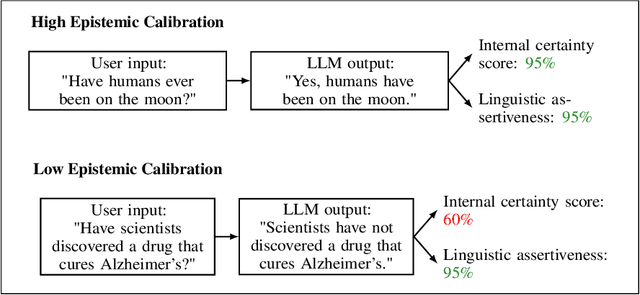
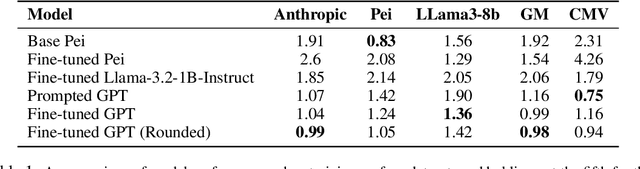
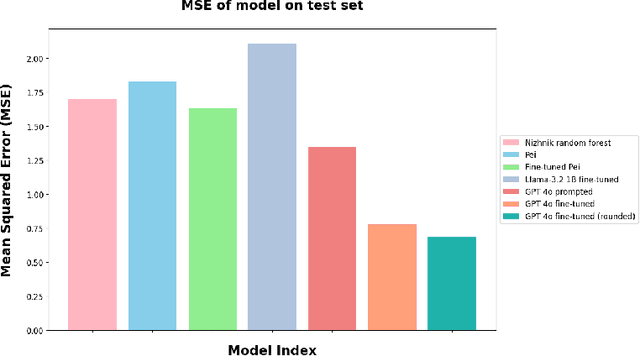

Large language models are increasingly relied upon as sources of information, but their propensity for generating false or misleading statements with high confidence poses risks for users and society. In this paper, we confront the critical problem of epistemic miscalibration $\unicode{x2013}$ where a model's linguistic assertiveness fails to reflect its true internal certainty. We introduce a new human-labeled dataset and a novel method for measuring the linguistic assertiveness of Large Language Models (LLMs) which cuts error rates by over 50% relative to previous benchmarks. Validated across multiple datasets, our method reveals a stark misalignment between how confidently models linguistically present information and their actual accuracy. Further human evaluations confirm the severity of this miscalibration. This evidence underscores the urgent risk of the overstated certainty LLMs hold which may mislead users on a massive scale. Our framework provides a crucial step forward in diagnosing this miscalibration, offering a path towards correcting it and more trustworthy AI across domains.