 Add to Chrome
 Add to Firefox
 Add to Edge
Human-Centered Explainable AI for TinyML Edge Devices: A Pareto-Based Selection Framework with LLM-Guided Design
Aug 07, 2026
Edge Artificial Intelligence (Edge AI) enables the deployment of AI models directly on local edge devices, while such deployments are subject to strict resource constraints, particularly in clinical applications requiring local and timely inference. In such contexts, explainable artificial intelligence (XAI) can serve as a human-AI interface intended to support healthcare professionals' and patients' understanding of model predictions and informed decision-making. To fulfill this role, XAI method selection for TinyML deployments can be formulated as a human-centered multi-objective design problem that jointly considers qualitative stakeholder preferences, explanation quality, and proxy-based deployment cost. We propose a framework that integrates a large language model (LLM)-guided design interface that maps qualitative stakeholder preferences to candidate XAI methods, followed by deterministic feasibility filtering and Pareto-based optimization. The framework exposes trade-offs among explanation fidelity, stability, and proxy-based deployment cost while characterizing their implications for explanation quality and estimated deployment feasibility. A proof-of-concept evaluation on a skin lesion classification task illustrates how the framework systematically compares candidate XAI methods and identifies Pareto-efficient trade-offs. The present evaluation covers the computational selection stages, while physical MCU deployment and empirical human-expert validation remain outside the scope of this study.

ConceptSMILE: Auditing the Trustworthiness of Concept-Based Explainable AI
Jul 10, 2026Concept-based explainable artificial intelligence (AI) can make model reasoning more human-understandable, but concept-level outputs are not automatically trustworthy. We introduce ConceptSMILE, a model-agnostic perturbation-based auditing framework for evaluating the reliability of concept-based explanations. Rather than replacing SMILE, ConceptSMILE extends its perturbation-based logic from feature- or region-level attribution to the auditing of human-understandable concept explanations. The framework perturbs input regions, measures concept-response shifts, applies locality weighting, and fits an XGBoost surrogate to approximate local concept behaviour. Reliability is assessed through attribution accuracy, surrogate fidelity, faithfulness, stability, and consistency. We evaluate ConceptSMILE on retinal fundus images by comparing MedSAM-derived visual concepts with VLM-based semantic concepts. Results show that reliability varies across concepts and pathways: MedSAM achieves stronger spatial attribution and the highest surrogate fidelity ($R^2 = 0.8503$, $R_w^2 = 0.8465$), while the VLM pathway shows stronger vessel faithfulness and stronger stability under selected artefact conditions. ConceptSMILE provides an independent audit layer for evaluating the trustworthiness of concept-based XAI.
EcoFair: Trustworthy and Energy-Aware Routing for Privacy-Preserving Vertically Partitioned Medical Inference
Mar 27, 2026Privacy-preserving medical inference must balance data locality, diagnostic reliability, and deployment efficiency. This paper presents EcoFair, a simulated vertically partitioned inference framework for dermatological diagnosis in which raw image and tabular data remain local and only modality-specific embeddings are transmitted for server-side multimodal fusion. EcoFair introduces a lightweight-first routing mechanism that selectively activates a heavier image encoder when local uncertainty or metadata-derived clinical risk indicates that additional computation is warranted. The routing decision combines predictive uncertainty, a safe--danger probability gap, and a tabular neurosymbolic risk score derived from patient age and lesion localisation. Experiments on three dermatology benchmarks show that EcoFair can substantially reduce edge-side inference energy in representative model pairings while remaining competitive in classification performance. The results further indicate that selective routing can improve subgroup-sensitive malignant-case behaviour in representative settings without modifying the global training objective. These findings position EcoFair as a practical framework for privacy-preserving and energy-aware medical inference under edge deployment constraints.
Evaluating a Multi-Agent Voice-Enabled Smart Speaker for Care Homes: A Safety-Focused Framework
Mar 24, 2026Artificial intelligence (AI) is increasingly being explored in health and social care to reduce administrative workload and allow staff to spend more time on patient care. This paper evaluates a voice-enabled Care Home Smart Speaker designed to support everyday activities in residential care homes, including spoken access to resident records, reminders, and scheduling tasks. A safety-focused evaluation framework is presented that examines the system end-to-end, combining Whisper-based speech recognition with retrieval-augmented generation (RAG) approaches (hybrid, sparse, and dense). Using supervised care-home trials and controlled testing, we evaluated 330 spoken transcripts across 11 care categories, including 184 reminder-containing interactions. These evaluations focus on (i) correct identification of residents and care categories, (ii) reminder recognition and extraction, and (iii) end-to-end scheduling correctness under uncertainty (including safe deferral/clarification). Given the safety-critical nature of care homes, particular attention is also paid to reliability in noisy environments and across diverse accents, supported by confidence scoring, clarification prompts, and human-in-the-loop oversight. In the best-performing configuration (GPT-5.2), resident ID and care category matching reached 100% (95% CI: 98.86-100), while reminder recognition reached 89.09\% (95% CI: 83.81-92.80) with zero missed reminders (100% recall) but some false positives. End-to-end scheduling via calendar integration achieved 84.65% exact reminder-count agreement (95% CI: 78.00-89.56), indicating remaining edge cases in converting informal spoken instructions into actionable events. The findings suggest that voice-enabled systems, when carefully evaluated and appropriately safeguarded, can support accurate documentation, effective task management, and trustworthy use of AI in care home settings.
Explainable Knowledge Graph Retrieval-Augmented Generation (KG-RAG) with KG-SMILE
Sep 03, 2025Generative AI, such as Large Language Models (LLMs), has achieved impressive progress but still produces hallucinations and unverifiable claims, limiting reliability in sensitive domains. Retrieval-Augmented Generation (RAG) improves accuracy by grounding outputs in external knowledge, especially in domains like healthcare, where precision is vital. However, RAG remains opaque and essentially a black box, heavily dependent on data quality. We developed a method-agnostic, perturbation-based framework that provides token and component-level interoperability for Graph RAG using SMILE and named it as Knowledge-Graph (KG)-SMILE. By applying controlled perturbations, computing similarities, and training weighted linear surrogates, KG-SMILE identifies the graph entities and relations most influential to generated outputs, thereby making RAG more transparent. We evaluate KG-SMILE using comprehensive attribution metrics, including fidelity, faithfulness, consistency, stability, and accuracy. Our findings show that KG-SMILE produces stable, human-aligned explanations, demonstrating its capacity to balance model effectiveness with interpretability and thereby fostering greater transparency and trust in machine learning technologies.
Digital Health and Indoor Air Quality: An IoT-Driven Human-Centred Visualisation Platform for Behavioural Change and Technology Acceptance
May 20, 2024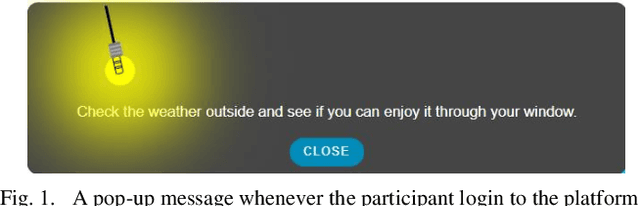
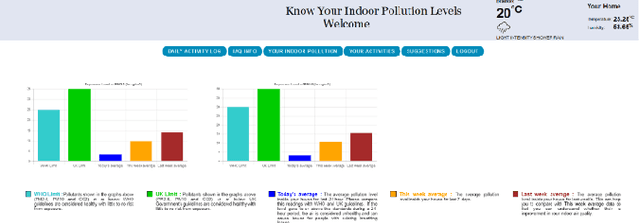


The detrimental effects of air pollutants on human health have prompted increasing concerns regarding indoor air quality (IAQ). The emergence of digital health interventions and citizen science initiatives has provided new avenues for raising awareness, improving IAQ, and promoting behavioural changes. The Technology Acceptance Model (TAM) offers a theoretical framework to understand user acceptance and adoption of IAQ technology. This paper presents a case study using the COM-B model and Internet of Things (IoT) technology to design a human-centred digital visualisation platform, leading to behavioural changes and improved IAQ. The study also investigates users' acceptance and adoption of the technology, focusing on their experiences, expectations, and the impact on IAQ. Integrating IAQ sensing, digital health-related interventions, citizen science, and the TAM model offers opportunities to address IAQ challenges, enhance public health, and foster sustainable indoor environments. The analytical results show that factors such as human behaviour, indoor activities, and awareness play crucial roles in shaping IAQ.