 Add to Chrome
 Add to Firefox
 Add to Edge
MoE Proxy Models for Low-Cost Failure Reproduction and Diagnosis in LLM RL Post-Training
Aug 11, 2026
Reinforcement learning (RL) post-training of large language models (LLMs) is computationally intensive and involves complex system pipelines with substantial debugging overhead. In practice, factors such as framework adaptation, numerical precision, and operator implementation can cause failures, including gradient overflow and loss divergence. Reproducing such failures directly on large models requires considerable time and computational resources. This paper systematically analyzes failures encountered during large-scale RL training on the Huawei Ascend platform, summarizes representative failure types, and identifies three model-side factors relevant to fault reproduction. Based on these factors, we propose a proxy-model construction method for low-cost fault investigation and auxiliary diagnosis. It employs structure-preserving, clustering-based expert pruning to select representative experts while retaining the model's backbone architecture, routing mechanism, and basic task capabilities. Our experimental results show that the proxy models reduce accelerator requirements by 50%-87.5% and achieve up to a 33.3x reduction in per-step NPU-hour cost, while preserving major training dynamics and reproducing fault responses consistent with the original models. Overall, the proxy models can serve as low-cost surrogates for fault reproduction, targeted validation, and auxiliary diagnosis in RL post-training.

Dynamic Bayesian Network Auxiliary ABC-SMC for Hybrid Model Bayesian Inference to Accelerate Biomanufacturing Process Mechanism Learning and Robust Control
May 09, 2022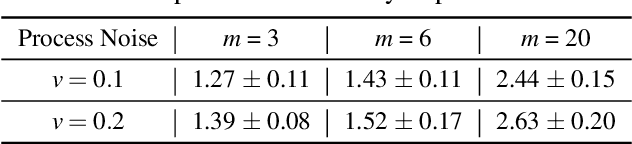
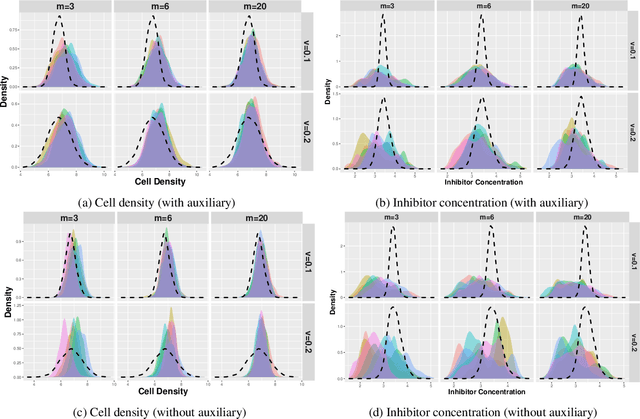
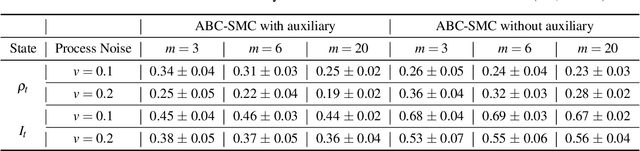
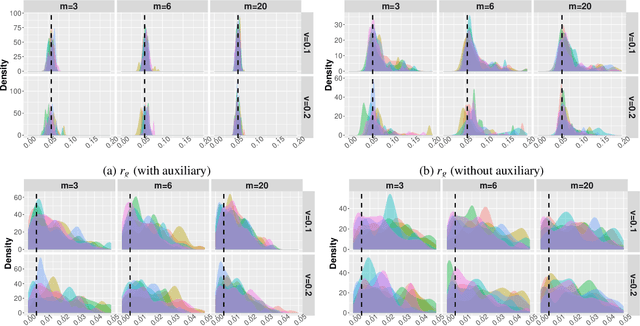
Driven by the critical needs of biomanufacturing 4.0, we present a probabilistic knowledge graph hybrid model characterizing complex spatial-temporal causal interdependencies of underlying bioprocessing mechanisms. It can faithfully capture the important properties, including nonlinear reactions, partially observed state, and nonstationary dynamics. Given limited process observations, we derive a posterior distribution quantifying model uncertainty, which can facilitate mechanism learning and support robust process control. To avoid evaluation of intractable likelihood, Approximate Bayesian Computation sampling with Sequential Monte Carlo (ABC-SMC) is developed to approximate the posterior distribution. Given high stochastic and model uncertainties, it is computationally expensive to match process output trajectories. Therefore, we propose a linear Gaussian dynamic Bayesian network (LG-DBN) auxiliary likelihood-based ABC-SMC algorithm. Through matching observed and simulated summary statistics, the proposed approach can dramatically reduce the computation cost and improve the posterior distribution approximation.