 Add to Chrome
 Add to Firefox
 Add to Edge
Byzantine-Robust and Differentially Private Federated Optimization under Weaker Assumptions
Mar 24, 2026
Federated Learning (FL) enables heterogeneous clients to collaboratively train a shared model without centralizing their raw data, offering an inherent level of privacy. However, gradients and model updates can still leak sensitive information, while malicious servers may mount adversarial attacks such as Byzantine manipulation. These vulnerabilities highlight the need to address differential privacy (DP) and Byzantine robustness within a unified framework. Existing approaches, however, often rely on unrealistic assumptions such as bounded gradients, require auxiliary server-side datasets, or fail to provide convergence guarantees. We address these limitations by proposing Byz-Clip21-SGD2M, a new algorithm that integrates robust aggregation with double momentum and carefully designed clipping. We prove high-probability convergence guarantees under standard $L$-smoothness and $σ$-sub-Gaussian gradient noise assumptions, thereby relaxing conditions that dominate prior work. Our analysis recovers state-of-the-art convergence rates in the absence of adversaries and improves utility guarantees under Byzantine and DP settings. Empirical evaluations on CNN and MLP models trained on MNIST further validate the effectiveness of our approach.

On the Role of Batch Size in Stochastic Conditional Gradient Methods
Mar 22, 2026We study the role of batch size in stochastic conditional gradient methods under a $μ$-Kurdyka-Łojasiewicz ($μ$-KL) condition. Focusing on momentum-based stochastic conditional gradient algorithms (e.g., Scion), we derive a new analysis that explicitly captures the interaction between stepsize, batch size, and stochastic noise. Our study reveals a regime-dependent behavior: increasing the batch size initially improves optimization accuracy but, beyond a critical threshold, the benefits saturate and can eventually degrade performance under a fixed token budget. Notably, the theory predicts the magnitude of the optimal stepsize and aligns well with empirical practices observed in large-scale training. Leveraging these insights, we derive principled guidelines for selecting the batch size and stepsize, and propose an adaptive strategy that increases batch size and sequence length during training while preserving convergence guarantees. Experiments on NanoGPT are consistent with the theoretical predictions and illustrate the emergence of the predicted scaling regimes. Overall, our results provide a theoretical framework for understanding batch size scaling in stochastic conditional gradient methods and offer guidance for designing efficient training schedules in large-scale optimization.
Adaptive Methods Are Preferable in High Privacy Settings: An SDE Perspective
Mar 03, 2026Differential Privacy (DP) is becoming central to large-scale training as privacy regulations tighten. We revisit how DP noise interacts with adaptivity in optimization through the lens of stochastic differential equations, providing the first SDE-based analysis of private optimizers. Focusing on DP-SGD and DP-SignSGD under per-example clipping, we show a sharp contrast under fixed hyperparameters: DP-SGD converges at a Privacy-Utility Trade-Off of $\mathcal{O}(1/\varepsilon^2)$ with speed independent of $\varepsilon$, while DP-SignSGD converges at a speed linear in $\varepsilon$ with an $\mathcal{O}(1/\varepsilon)$ trade-off, dominating in high-privacy or large batch noise regimes. By contrast, under optimal learning rates, both methods achieve comparable theoretical asymptotic performance; however, the optimal learning rate of DP-SGD scales linearly with $\varepsilon$, while that of DP-SignSGD is essentially $\varepsilon$-independent. This makes adaptive methods far more practical, as their hyperparameters transfer across privacy levels with little or no re-tuning. Empirical results confirm our theory across training and test metrics, and empirically extend from DP-SignSGD to DP-Adam.
Optimizer choice matters for the emergence of Neural Collapse
Feb 18, 2026Neural Collapse (NC) refers to the emergence of highly symmetric geometric structures in the representations of deep neural networks during the terminal phase of training. Despite its prevalence, the theoretical understanding of NC remains limited. Existing analyses largely ignore the role of the optimizer, thereby suggesting that NC is universal across optimization methods. In this work, we challenge this assumption and demonstrate that the choice of optimizer plays a critical role in the emergence of NC. The phenomenon is typically quantified through NC metrics, which, however, are difficult to track and analyze theoretically. To overcome this limitation, we introduce a novel diagnostic metric, NC0, whose convergence to zero is a necessary condition for NC. Using NC0, we provide theoretical evidence that NC cannot emerge under decoupled weight decay in adaptive optimizers, as implemented in AdamW. Concretely, we prove that SGD, SignGD with coupled weight decay (a special case of Adam), and SignGD with decoupled weight decay (a special case of AdamW) exhibit qualitatively different NC0 dynamics. Also, we show the accelerating effect of momentum on NC (beyond convergence of train loss) when trained with SGD, being the first result concerning momentum in the context of NC. Finally, we conduct extensive empirical experiments consisting of 3,900 training runs across various datasets, architectures, optimizers, and hyperparameters, confirming our theoretical results. This work provides the first theoretical explanation for optimizer-dependent emergence of NC and highlights the overlooked role of weight-decay coupling in shaping the implicit biases of optimizers.
Multi-Task GRPO: Reliable LLM Reasoning Across Tasks
Feb 05, 2026RL-based post-training with GRPO is widely used to improve large language models on individual reasoning tasks. However, real-world deployment requires reliable performance across diverse tasks. A straightforward multi-task adaptation of GRPO often leads to imbalanced outcomes, with some tasks dominating optimization while others stagnate. Moreover, tasks can vary widely in how frequently prompts yield zero advantages (and thus zero gradients), which further distorts their effective contribution to the optimization signal. To address these issues, we propose a novel Multi-Task GRPO (MT-GRPO) algorithm that (i) dynamically adapts task weights to explicitly optimize worst-task performance and promote balanced progress across tasks, and (ii) introduces a ratio-preserving sampler to ensure task-wise policy gradients reflect the adapted weights. Experiments on both 3-task and 9-task settings show that MT-GRPO consistently outperforms baselines in worst-task accuracy. In particular, MT-GRPO achieves 16-28% and 6% absolute improvement on worst-task performance over standard GRPO and DAPO, respectively, while maintaining competitive average accuracy. Moreover, MT-GRPO requires 50% fewer training steps to reach 50% worst-task accuracy in the 3-task setting, demonstrating substantially improved efficiency in achieving reliable performance across tasks.
Enhancing Optimizer Stability: Momentum Adaptation of The NGN Step-size
Aug 20, 2025Modern optimization algorithms that incorporate momentum and adaptive step-size offer improved performance in numerous challenging deep learning tasks. However, their effectiveness is often highly sensitive to the choice of hyperparameters, especially the step-size. Tuning these parameters is often difficult, resource-intensive, and time-consuming. Therefore, recent efforts have been directed toward enhancing the stability of optimizers across a wide range of hyperparameter choices [Schaipp et al., 2024]. In this paper, we introduce an algorithm that matches the performance of state-of-the-art optimizers while improving stability to the choice of the step-size hyperparameter through a novel adaptation of the NGN step-size method [Orvieto and Xiao, 2024]. Specifically, we propose a momentum-based version (NGN-M) that attains the standard convergence rate of $\mathcal{O}(1/\sqrt{K})$ under less restrictive assumptions, without the need for interpolation condition or assumptions of bounded stochastic gradients or iterates, in contrast to previous approaches. Additionally, we empirically demonstrate that the combination of the NGN step-size with momentum results in enhanced robustness to the choice of the step-size hyperparameter while delivering performance that is comparable to or surpasses other state-of-the-art optimizers.
Optimization Guarantees for Square-Root Natural-Gradient Variational Inference
Jul 10, 2025Variational inference with natural-gradient descent often shows fast convergence in practice, but its theoretical convergence guarantees have been challenging to establish. This is true even for the simplest cases that involve concave log-likelihoods and use a Gaussian approximation. We show that the challenge can be circumvented for such cases using a square-root parameterization for the Gaussian covariance. This approach establishes novel convergence guarantees for natural-gradient variational-Gaussian inference and its continuous-time gradient flow. Our experiments demonstrate the effectiveness of natural gradient methods and highlight their advantages over algorithms that use Euclidean or Wasserstein geometries.
Trainability of Quantum Models Beyond Known Classical Simulability
Jul 08, 2025Variational Quantum Algorithms (VQAs) are promising candidates for near-term quantum computing, yet they face scalability challenges due to barren plateaus, where gradients vanish exponentially in the system size. Recent conjectures suggest that avoiding barren plateaus might inherently lead to classical simulability, thus limiting the opportunities for quantum advantage. In this work, we advance the theoretical understanding of the relationship between the trainability and computational complexity of VQAs, thus directly addressing the conjecture. We introduce the Linear Clifford Encoder (LCE), a novel technique that ensures constant-scaling gradient statistics on optimization landscape regions that are close to Clifford circuits. Additionally, we leverage classical Taylor surrogates to reveal computational complexity phase transitions from polynomial to super-polynomial as the initialization region size increases. Combining these results, we reveal a deeper link between trainability and computational complexity, and analytically prove that barren plateaus can be avoided in regions for which no classical surrogate is known to exist. Furthermore, numerical experiments on LCE transformed landscapes confirm in practice the existence of a super-polynomially complex ``transition zone'' where gradients decay polynomially. These findings indicate a plausible path to practically relevant, barren plateau-free variational models with potential for quantum advantage.
Sharp Generalization Bounds for Foundation Models with Asymmetric Randomized Low-Rank Adapters
Jun 17, 2025Low-Rank Adaptation (LoRA) has emerged as a widely adopted parameter-efficient fine-tuning (PEFT) technique for foundation models. Recent work has highlighted an inherent asymmetry in the initialization of LoRA's low-rank factors, which has been present since its inception and was presumably derived experimentally. This paper focuses on providing a comprehensive theoretical characterization of asymmetric LoRA with frozen random factors. First, while existing research provides upper-bound generalization guarantees based on averages over multiple experiments, the behaviour of a single fine-tuning run with specific random factors remains an open question. We address this by investigating the concentration of the typical LoRA generalization gap around its mean. Our main upper bound reveals a sample complexity of $\tilde{\mathcal{O}}\left(\frac{\sqrt{r}}{\sqrt{N}}\right)$ with high probability for rank $r$ LoRAs trained on $N$ samples. Additionally, we also determine the fundamental limits in terms of sample efficiency, establishing a matching lower bound of $\mathcal{O}\left(\frac{1}{\sqrt{N}}\right)$. By more closely reflecting the practical scenario of a single fine-tuning run, our findings offer crucial insights into the reliability and practicality of asymmetric LoRA.
When the Left Foot Leads to the Right Path: Bridging Initial Prejudice and Trainability
May 17, 2025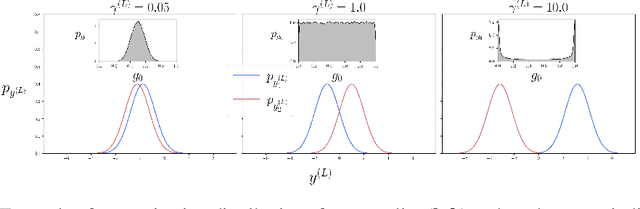
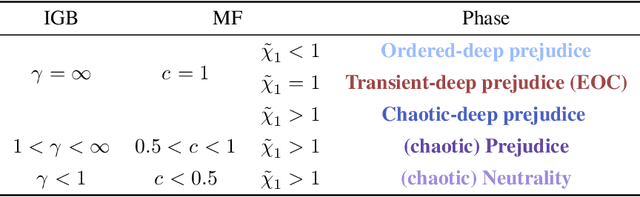
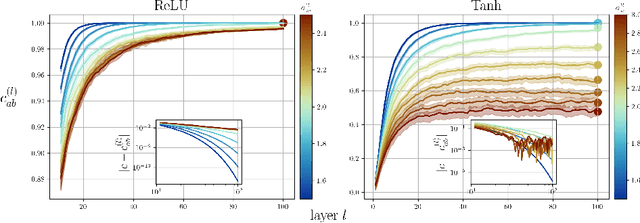
Understanding the statistical properties of deep neural networks (DNNs) at initialization is crucial for elucidating both their trainability and the intrinsic architectural biases they encode prior to data exposure. Mean-field (MF) analyses have demonstrated that the parameter distribution in randomly initialized networks dictates whether gradients vanish or explode. Concurrently, untrained DNNs were found to exhibit an initial-guessing bias (IGB), in which large regions of the input space are assigned to a single class. In this work, we derive a theoretical proof establishing the correspondence between IGB and previous MF theories, thereby connecting a network prejudice toward specific classes with the conditions for fast and accurate learning. This connection yields the counter-intuitive conclusion: the initialization that optimizes trainability is necessarily biased, rather than neutral. Furthermore, we extend the MF/IGB framework to multi-node activation functions, offering practical guidelines for designing initialization schemes that ensure stable optimization in architectures employing max- and average-pooling layers.