 Add to Chrome
 Add to Firefox
 Add to Edge
DECADE: A Temporally-Consistent Unsupervised Diffusion Model for Enhanced Rb-82 Dynamic Cardiac PET Image Denoising
Mar 08, 2026
Rb-82 dynamic cardiac PET imaging is widely used for the clinical diagnosis of coronary artery disease (CAD), but its short half-life results in high noise levels that degrade dynamic frame quality and parametric imaging. The lack of paired clean-noisy training data, rapid tracer kinetics, and frame-dependent noise variations further limit the effectiveness of existing deep learning denoising methods. We propose DECADE (A Temporally-Consistent Unsupervised Diffusion model for Enhanced Rb-82 CArdiac PET DEnoising), an unsupervised diffusion framework that generalizes across early- to late-phase dynamic frames. DECADE incorporates temporal consistency during both training and iterative sampling, using noisy frames as guidance to preserve quantitative accuracy. The method was trained and evaluated on datasets acquired from Siemens Vision 450 and Siemens Biograph Vision Quadra scanners. On the Vision 450 dataset, DECADE consistently produced high-quality dynamic and parametric images with reduced noise while preserving myocardial blood flow (MBF) and myocardial flow reserve (MFR). On the Quadra dataset, using 15%-count images as input and full-count images as reference, DECADE outperformed UNet-based and other diffusion models in image quality and K1/MBF quantification. The proposed framework enables effective unsupervised denoising of Rb-82 dynamic cardiac PET without paired training data, supporting clearer visualization while maintaining quantitative integrity.

Segmentation-free PVC for Cardiac SPECT using a Densely-connected Multi-dimensional Dynamic Network
Jun 24, 2022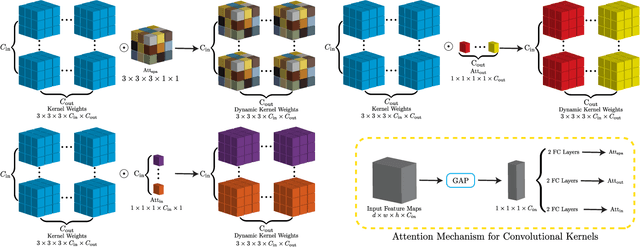
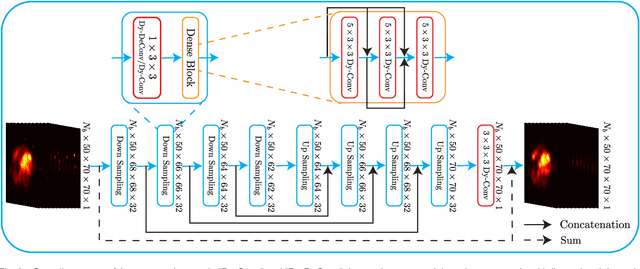
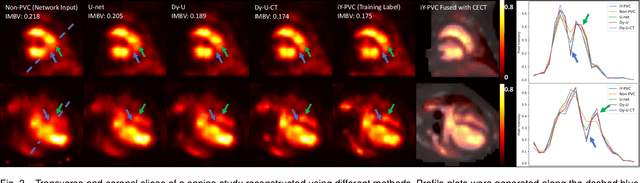

In nuclear imaging, limited resolution causes partial volume effects (PVEs) that affect image sharpness and quantitative accuracy. Partial volume correction (PVC) methods incorporating high-resolution anatomical information from CT or MRI have been demonstrated to be effective. However, such anatomical-guided methods typically require tedious image registration and segmentation steps. Accurately segmented organ templates are also hard to obtain, particularly in cardiac SPECT imaging, due to the lack of hybrid SPECT/CT scanners with high-end CT and associated motion artifacts. Slight mis-registration/mis-segmentation would result in severe degradation in image quality after PVC. In this work, we develop a deep-learning-based method for fast cardiac SPECT PVC without anatomical information and associated organ segmentation. The proposed network involves a densely-connected multi-dimensional dynamic mechanism, allowing the convolutional kernels to be adapted based on the input images, even after the network is fully trained. Intramyocardial blood volume (IMBV) is introduced as an additional clinical-relevant loss function for network optimization. The proposed network demonstrated promising performance on 28 canine studies acquired on a GE Discovery NM/CT 570c dedicated cardiac SPECT scanner with a 64-slice CT using Technetium-99m-labeled red blood cells. This work showed that the proposed network with densely-connected dynamic mechanism produced superior results compared with the same network without such mechanism. Results also showed that the proposed network without anatomical information could produce images with statistically comparable IMBV measurements to the images generated by anatomical-guided PVC methods, which could be helpful in clinical translation.