 Add to Chrome
 Add to Firefox
 Add to Edge
LEX-EC: A Lexical Evidence-Channel Audit Framework for Zero-Shot LLM Personality Classification in Black-Box Settings
Jul 27, 2026
Large language models may easily assign personality labels from text, but model interpretability remains an open problem. To address this gap, we introduce LEX-EC, a reusable black-box audit framework combining prevalence and agreement diagnostics with controlled lexical ablation to distinguish marginal-distribution effects from trait-associated signal recoverable under restricted evidence. Using this framework, we illustrate how various text genres may exhibit sharply different profiles: free-form essay text contains the broadest, but still weak, signal; in graduate student introductions, an observable Extraversion association weakened after masking; and single Facebook statuses yield little stable evidence even in a trait-balanced sample, indicating a possible lower bound of content or length. Masking topical and demographic content weakened some associations while leaving others detectable from function words, affective terms, and cognitive-style vocabulary. Linguistic prompting shifted model self-explanations but did not eliminate topical content. LEX-EC jointly evaluates classification prevalence, item-level association, chance-corrected agreement, persistence under lexical restriction, and prompt sensitivity in model-generated explanations. Across datasets, models, and prompts, LEX-EC characterizes how trait associations may vary with available lexical evidence, introducing a novel application of lexical methods to black-box interpretability in personality labeling.

Constructing Evaluation Datasets for Procedural Reasoning: Balancing Naturalness, Grounding, and Multi-Hop Coverage
Jun 11, 2026Evaluating procedural reasoning in AI-supported learning systems requires question-answer datasets that are both learner-like and grounded in the instructional knowledge the system is expected to use. We study how TMK-based question generation strategies affect dataset quality for procedural and multi-hop reasoning. We compare three strategies: strict generation from Task-Method-Knowledge (TMK) models, transcript-first generation with post-hoc TMK filtering, and TMK-aware generation that combines transcripts with structured guidance. To evaluate generated items, we introduce a grounding validation framework based on closed-set evidence units extracted from TMK models. The framework measures whether answers are supported by the underlying representation, whether questions are self-contained, and whether they target multi-hop procedural reasoning. Across 23 instructional topics and 690 generated question-answer pairs, strict TMK generation achieves the strongest overall quality, with 96.5% grounded questions and 92.6% usable questions. Transcript-first generation produces more learner-like questions but more context-dependent or weakly grounded items, while TMK-aware generation yields high raw multi-hop coverage but lower grounding. These results show that procedural richness and natural phrasing do not guarantee representational grounding, motivating explicit representation-aware validation for evaluation datasets in AI-supported learning.
Detecting Knowledge Gaps from Conversational AI Interactions Using Curriculum Prerequisite Graphs
Jun 09, 2026Large online courses generate thousands of student questions directed at conversational AI teaching assistants, yet these interaction logs remain largely untapped as diagnostic signals. We present a pipeline that maps student questions from a conversational AI teaching assistant to curriculum topics using a few-shot text classifier, grounded in a GPT-4-extracted prerequisite knowledge graph of course concepts. Evaluated on 1,340 question events from 164 students in a graduate-level AI course, our classifier achieves 80.0% accuracy across 43 labels (42 curriculum topics plus an "unknown" abstention class). Topic-level question volume correlates significantly with student self-reported difficulty from an independent mid-semester survey (rho = 0.491, p = 0.008, n = 28 topics), providing convergent evidence that the classified question stream reflects genuine topic difficulty. These results demonstrate that conversational AI interaction logs, mapped onto curriculum structure, carry actionable signals about topic-level knowledge gaps and provide instructors with a curriculum-grounded view of which topics warrant attention.
Surfacing Isolated Learners with Outcome-Independent Mediation of Feedback between Teachers and Students Using AI
May 28, 2026AI-augmented classrooms generate rich teacher and student feedback before graded outcomes become available, yet these signals can be difficult to translate into timely instructional decisions. We propose an interpretable decision layer: a transparent mechanism that ranks course topics requiring attention without using grades or post-hoc outcome labels. The approach combines three signals: student learning difficulty prevalence, disagreement between learner self-reports and observed difficulties, and unresolved teacher concerns. The output is a ranked set of topic priorities with per-topic decision records explaining each ranking. In one graduate CS course offering ($n=5$ instructor interviews; $n=279$ survey responses), prioritized topics aligned with instructor concerns (top-5 overlap 3/5; Spearman $ρ=0.80$) and student-reported topic difficulty ($ρ=0.46$, $p=.048$). Multi-signal integration also surfaced learners not identified through individual signal sources alone (AUC $=0.96$ vs. $0.91$ for gap prevalence alone). Reflective thinking, help-seeking, and self-efficacy provided additional evidence that student behavioral signals align with learning-related constructs. While preliminary, these findings suggest that transparent coordination mechanisms may help support human-AI co-agency when feedback is incomplete.
Evaluating Learner Representations for Differentiation Prior to Instructional Outcomes
Apr 07, 2026Learner representations play a central role in educational AI systems, yet it is often unclear whether they preserve meaningful differences between students when instructional outcomes are unavailable or highly context-dependent. This work examines how to evaluate learner representations based on whether they retain separation between learners under a shared comparison rule. We introduce distinctiveness, a representation-level measure that evaluates how each learner differs from others in the cohort using pairwise distances, without requiring clustering, labels, or task-specific evaluation. Using student-authored questions collected through a conversational AI agent in an online learning environment, we compare representations based on individual questions with representations that aggregate patterns across a student's interactions over time. Results show that learner-level representations yield higher separation, stronger clustering structure, and more reliable pairwise discrimination than interaction-level representations. These findings demonstrate that learner representations can be evaluated independently of instructional outcomes and provide a practical pre-deployment criterion using distinctiveness as a diagnostic metric for assessing whether a representation supports differentiated modeling or personalization.
Impact of Multimodal and Conversational AI on Learning Outcomes and Experience
Apr 02, 2026Multimodal Large Language Models (MLLMs) offer an opportunity to support multimedia learning through conversational systems grounded in educational content. However, while conversational AI is known to boost engagement, its impact on learning in visually-rich STEM domains remains under-explored. Moreover, there is limited understanding of how multimodality and conversationality jointly influence learning in generative AI systems. This work reports findings from a randomized controlled online study (N = 124) comparing three approaches to learning biology from textbook content: (1) a document-grounded conversational AI with interleaved text-and-image responses (MuDoC), (2) a document-grounded conversational AI with text-only responses (TexDoC), and (3) a textbook interface with semantic search and highlighting (DocSearch). Learners using MuDoC achieved the highest post-test scores and reported the most positive learning experience. Notably, while TexDoC was rated as significantly more engaging and easier to use than DocSearch, it led to the lowest post-test scores, revealing a disconnect between student perceptions and learning outcomes. Interpreted through the lens of the Cognitive Load Theory, these findings suggest that conversationality reduces extraneous load, while visual-verbal integration induced by multimodality increases germane load, leading to better learning outcomes. When conversationality is not complemented by multimodality, reduced cognitive effort may instead inflate perceived understanding without improving learning outcomes.
Enhanced Question-Answering for Skill-based learning using Knowledge-based AI and Generative AI
Apr 10, 2025Supporting learners' understanding of taught skills in online settings is a longstanding challenge. While exercises and chat-based agents can evaluate understanding in limited contexts, this challenge is magnified when learners seek explanations that delve into procedural knowledge (how things are done) and reasoning (why things happen). We hypothesize that an intelligent agent's ability to understand and explain learners' questions about skills can be significantly enhanced using the TMK (Task-Method-Knowledge) model, a Knowledge-based AI framework. We introduce Ivy, an intelligent agent that leverages an LLM and iterative refinement techniques to generate explanations that embody teleological, causal, and compositional principles. Our initial evaluation demonstrates that this approach goes beyond the typical shallow responses produced by an agent with access to unstructured text, thereby substantially improving the depth and relevance of feedback. This can potentially ensure learners develop a comprehensive understanding of skills crucial for effective problem-solving in online environments.
Integrating Cognitive AI with Generative Models for Enhanced Question Answering in Skill-based Learning
Jul 28, 2024In online learning, the ability to provide quick and accurate feedback to learners is crucial. In skill-based learning, learners need to understand the underlying concepts and mechanisms of a skill to be able to apply it effectively. While videos are a common tool in online learning, they cannot comprehend or assess the skills being taught. Additionally, while Generative AI methods are effective in searching and retrieving answers from a text corpus, it remains unclear whether these methods exhibit any true understanding. This limits their ability to provide explanations of skills or help with problem-solving. This paper proposes a novel approach that merges Cognitive AI and Generative AI to address these challenges. We employ a structured knowledge representation, the TMK (Task-Method-Knowledge) model, to encode skills taught in an online Knowledge-based AI course. Leveraging techniques such as Large Language Models, Chain-of-Thought, and Iterative Refinement, we outline a framework for generating reasoned explanations in response to learners' questions about skills.
Navigating AI Fallibility: Examining People's Reactions and Perceptions of AI after Encountering Personality Misrepresentations
May 25, 2024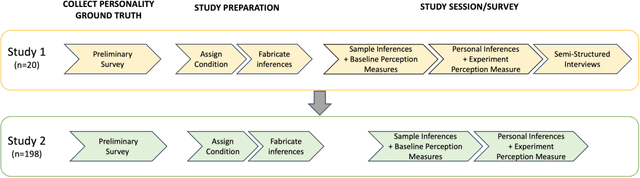
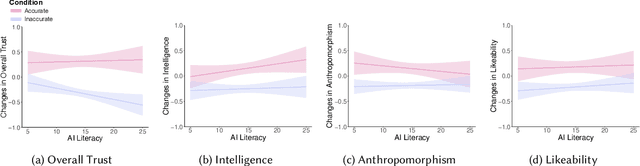
Many hyper-personalized AI systems profile people's characteristics (e.g., personality traits) to provide personalized recommendations. These systems are increasingly used to facilitate interactions among people, such as providing teammate recommendations. Despite improved accuracy, such systems are not immune to errors when making inferences about people's most personal traits. These errors manifested as AI misrepresentations. However, the repercussions of such AI misrepresentations are unclear, especially on people's reactions and perceptions of the AI. We present two studies to examine how people react and perceive the AI after encountering personality misrepresentations in AI-facilitated team matching in a higher education context. Through semi-structured interviews (n=20) and a survey experiment (n=198), we pinpoint how people's existing and newly acquired AI knowledge could shape their perceptions and reactions of the AI after encountering AI misrepresentations. Specifically, we identified three rationales that people adopted through knowledge acquired from AI (mis)representations: AI works like a machine, human, and/or magic. These rationales are highly connected to people's reactions of over-trusting, rationalizing, and forgiving of AI misrepresentations. Finally, we found that people's existing AI knowledge, i.e., AI literacy, could moderate people's changes in their trust in AI after encountering AI misrepresentations, but not changes in people's social perceptions of AI. We discuss the role of people's AI knowledge when facing AI fallibility and implications for designing responsible mitigation and repair strategies.
Jill Watson: A Virtual Teaching Assistant powered by ChatGPT
May 17, 2024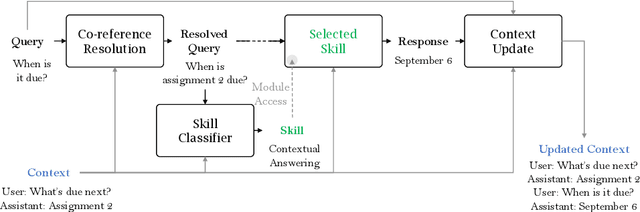
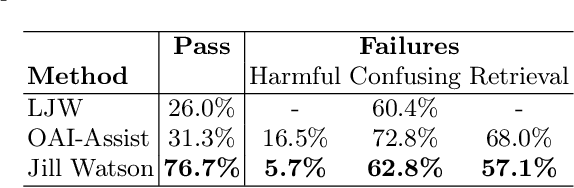
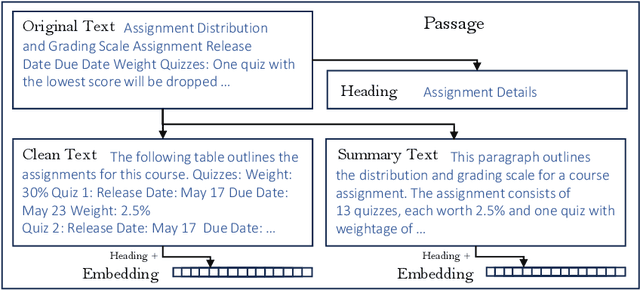

Conversational AI agents often require extensive datasets for training that are not publicly released, are limited to social chit-chat or handling a specific domain, and may not be easily extended to accommodate the latest advances in AI technologies. This paper introduces Jill Watson, a conversational Virtual Teaching Assistant (VTA) leveraging the capabilities of ChatGPT. Jill Watson based on ChatGPT requires no prior training and uses a modular design to allow the integration of new APIs using a skill-based architecture inspired by XiaoIce. Jill Watson is also well-suited for intelligent textbooks as it can process and converse using multiple large documents. We exclusively utilize publicly available resources for reproducibility and extensibility. Comparative analysis shows that our system outperforms the legacy knowledge-based Jill Watson as well as the OpenAI Assistants service. We employ many safety measures that reduce instances of hallucinations and toxicity. The paper also includes real-world examples from a classroom setting that demonstrate different features of Jill Watson and its effectiveness.